

Patient Basics: Anoscopy
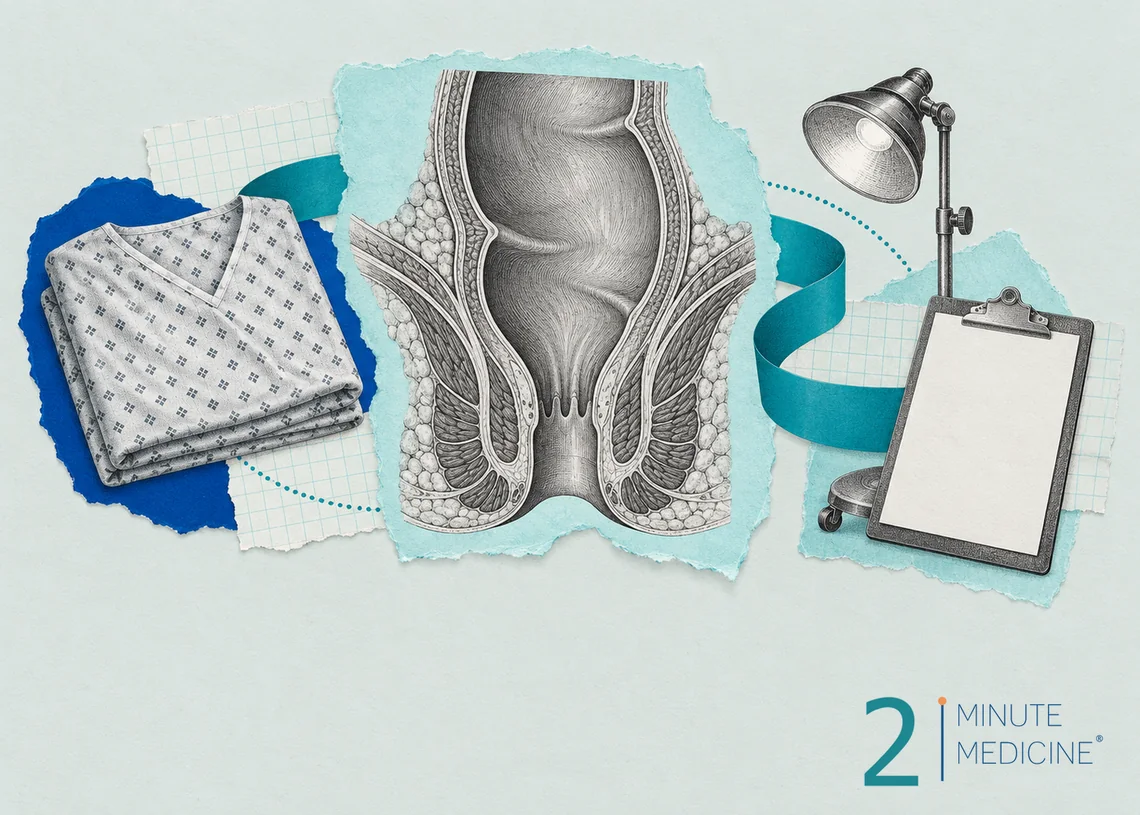
Anoscopy is a quick office test that lets a doctor look inside the anus and the lowest part of the rectum through a short, lighted tube called an anoscope. It takes a few minutes and needs little or no preparation. Most people feel pressure and an urge to have a bowel movement, but not much pain.
Key points
- Anoscopy helps find the cause of bleeding, pain, itching or a lump around the anus. Hemorrhoids and small tears (fissures) are common findings.
- You usually don’t need a bowel prep or sedation, and you can go back to normal activities right away.
- The doctor can take a tiny tissue sample (biopsy), swab for infections or treat hemorrhoids during the same visit.
- High-resolution anoscopy is a longer, magnified version used to look for early changes that could lead to anal cancer.
- Anoscopy sees only the last few inches of the bowel. A colonoscopy is needed to check the whole colon.
Why anoscopy is done
Your doctor may suggest anoscopy if you have:
- Bright red blood on the toilet paper or in the toilet
- Pain during or after bowel movements
- Itching, swelling or a lump near the anus
- Mucus or pus leaking from the anus
- An abnormal anal Pap test, which checks cells from the anus much like a cervical Pap test
The test can show internal hemorrhoids (swollen veins inside the anus), fissures, the inner opening of a tunnel under the skin (fistula), anal warts, inflammation of the rectum (proctitis), polyps and, less often, cancer. A doctor can also band hemorrhoids through the anoscope or collect swabs to test for sexually transmitted infections.
A primary care doctor, gastroenterologist, general surgeon or colorectal surgeon may do the test. Some sexual health and HIV clinics also do it.
How to get ready for anoscopy
- Most people need no special prep. Some doctors ask you to use a small enema or have a bowel movement beforehand.
- Empty your bladder just before the test.
- Tell your doctor if you take a blood thinner, have a latex allergy, or have severe pain that makes an exam hard.
- Before high-resolution anoscopy, you’ll usually be asked to avoid receptive anal sex, enemas, douching and creams in the anus for 24 hours, since they can affect the cell samples.
It’s normal to feel embarrassed. Doctors who do this test see it as routine, and you can ask for a chaperone in the room.
What happens during anoscopy
You’ll undress from the waist down and cover up with a sheet. You’ll lie on your left side with your knees pulled up toward your chest, or kneel and lean forward over the exam table. Some clinics use a tilting table.
The doctor first checks the skin around the anus and gently feels inside with a gloved, lubricated finger (a digital rectal exam). Then the lubricated anoscope is slid in with a smooth, rounded insert. The insert comes out, leaving a hollow tube, and a light shines through it. The doctor looks at the lining as the anoscope is slowly pulled back out. The whole exam usually takes less than five minutes.
Breathing slowly and letting the muscles relax helps it go in more easily. If a biopsy is taken, the area may be numbed first, and you may feel a pinch.
High-resolution anoscopy
High-resolution anoscopy (HRA) adds a magnifying scope outside the body and a mild vinegar solution on the lining, which makes abnormal cells show up. It takes longer, often 15 to 30 minutes. Any suspicious spots are biopsied, and some can be treated. HRA is mainly offered to people at higher risk of anal cancer, such as people with HIV, organ transplant recipients, and women who have had cancer or precancer of the vulva. A large study in people with HIV found that finding and treating these early changes lowered the chance of anal cancer.
Afterward
You can drive yourself home, eat normally and go back to work. Some lubricant may leak out. A few streaks of blood are common for a day or two after a biopsy or hemorrhoid banding. After banding, a dull ache or a feeling of fullness can last a few days. Warm baths and a stool softener can help.
Possible risks
Anoscopy is low risk. You may feel brief discomfort, and hemorrhoids can bleed a little when touched. Tearing of the lining is rare. Biopsies and banding carry a small risk of more bleeding or infection.
Your results
Your doctor can often tell you what they saw before you leave. Biopsy and swab results usually take a few days to two weeks. If the doctor sees something farther up the bowel, or if your bleeding isn’t explained, you may need a colonoscopy.
Anoscopy compared with other bowel tests
- Anoscopy looks at the anal canal and the lowest part of the rectum. No prep or sedation.
- Proctoscopy and flexible sigmoidoscopy reach farther, through the rectum and into the lower colon. You usually need an enema first.
- Colonoscopy checks the entire colon. It needs a full bowel prep and usually sedation, and polyps can be removed during it.
- Exam under anesthesia is done in an operating room when an exam would be too painful while awake, such as with a deep abscess, or when surgery is planned at the same time.
Rectal bleeding in someone over 45, or bleeding with weight loss or a change in bowel habits, usually needs a colonoscopy even if anoscopy finds hemorrhoids.
When to call your doctor
- Heavy bleeding or clots after the test
- Fever or chills
- Pain that gets worse instead of better
- Trouble passing urine after hemorrhoid banding
Common questions about anoscopy
How big is an anoscope?
A standard anoscope is a smooth plastic or metal tube, a few inches long and roughly as wide as a thumb. Only part of it goes inside. Smaller sizes are used for children and for people with a tight or painful anus, such as from a fissure.
Does anoscopy hurt?
Most people feel pressure and a strong urge to have a bowel movement, but little pain. It can hurt more if you have a fissure, an abscess or swollen hemorrhoids. Tell the doctor if it hurts, since numbing gel, a smaller scope or an exam under anesthesia are options.
Who performs an anoscopy?
Primary care doctors, gastroenterologists, general surgeons and colorectal surgeons all do anoscopy, often in a regular exam room. High-resolution anoscopy needs special training, so it’s usually done by colorectal surgeons, infectious disease doctors or other clinicians who work in anal cancer screening programs.
Is there a camera in an anoscope?
A standard anoscope has no camera. It’s a hollow tube, and the doctor looks through it directly with a light. Some clinics attach a small video camera to record images, and high-resolution anoscopy uses a magnifying scope outside the body.
Questions to ask your doctor
- What are you looking for with this test?
- Will you take a biopsy or treat anything during the exam?
- When will I get the results?
- Do I also need a colonoscopy?
- Should I have high-resolution anoscopy?
Learn more
- Anoscopy and high-resolution anoscopy (MedlinePlus, U.S. National Library of Medicine)
This guide is general information and doesn’t replace advice from your own doctor. Last updated October 2026.






 Get the app