

Patient Basics: Bunion (Hallux Valgus)
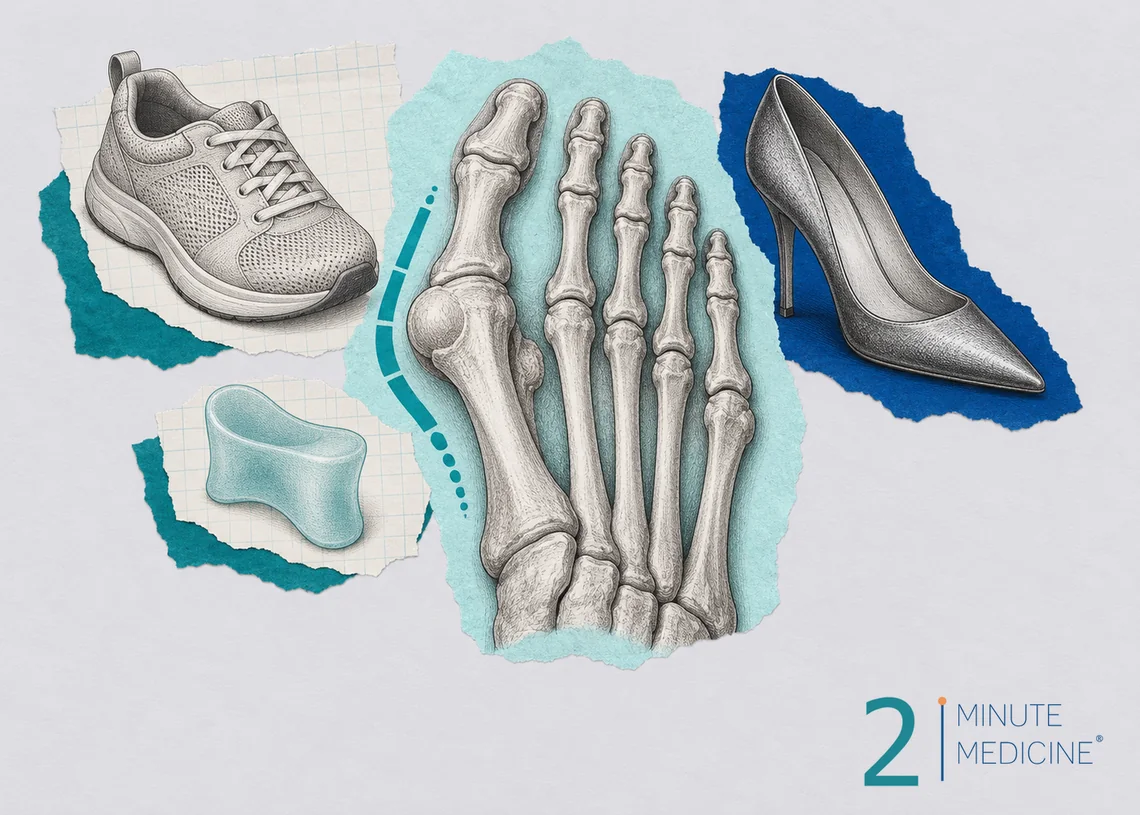
A bunion is a hard, bony bump that sticks out from the side of the foot where the big toe joins it. It forms when the big toe slowly leans toward the other toes and the joint at its base pushes outward. The medical name is hallux valgus. A bunion can’t be pushed back into place, but roomy shoes and pads ease the pain for most people, and surgery can straighten the toe when pain gets in the way of daily life.
Key points
- Inherited foot shape is the main cause. Tight, pointed or high-heeled shoes can speed it up and make it hurt more.
- Bunions are much more common in women, but men get them too.
- Signs include a sore bump, redness, swelling and a big toe that drifts toward the second toe.
- Wider shoes, pads, toe spacers, ice and pain relievers ease symptoms but don’t straighten the toe.
- Surgery is for pain that limits your activities, not for looks alone.
What causes a bunion
The big toe joint sits where the toe meets a long foot bone called the first metatarsal. With a bunion, the metatarsal drifts toward the inside of the foot while the toe angles toward its neighbors. The bump you see is mostly the end of that bone, sometimes with a swollen, fluid-filled cushion (bursa) over it.
Things that make a bunion more likely:
- Family traits. Foot shape and loose ligaments run in families. Many people with bunions have a parent with them.
- Flat feet or feet that roll inward when you walk
- Shoes that are narrow, pointed, tight or high-heeled. They don’t cause bunions by themselves, but they squeeze the toes and can make a bunion grow faster.
- Arthritis, such as rheumatoid arthritis
- Standing jobs and dance, which put repeated stress on the forefoot
Teens can get bunions too, usually because of inherited foot shape. A smaller bump on the outside of the foot, at the base of the little toe, is called a bunionette or tailor’s bunion.
Bunion symptoms
- A hard lump on the side of the foot at the big toe joint
- A big toe that turns in toward the second toe, and may cross over or under it
- Pain at the bump, often worse in shoes or when walking
- Redness, swelling or warmth over the joint
- Corns or calluses where the toes rub, or under the ball of the foot
- Stiffness in the big toe
- Pain under the ball of the foot as weight shifts to the smaller toes
- A bent second toe (hammertoe)
Is it a bunion or something else?
Several other problems cause big toe pain:
- Gout causes sudden, severe pain, redness and swelling in the big toe joint, often starting at night. It needs prompt care.
- Big toe arthritis (hallux rigidus) makes the joint stiff and sore, with a bump on top of the joint rather than on the side.
- Turf toe is a sprain from bending the toe too far back, common in athletes.
- Sesamoiditis causes pain under the ball of the big toe, from two small bones there.
- An ingrown toenail causes pain and redness along the edge of the nail.
How it’s diagnosed
A doctor or podiatrist can usually tell by looking at your foot and watching you walk. X-rays taken while you stand show how far the bones have shifted and whether there is arthritis. They are especially useful if surgery is being considered. If gout is possible, you may have a blood test or a sample of joint fluid taken.
Bunion treatment without surgery
- Change your shoes. Choose a wide, deep toe box, soft uppers and a low heel. A shoe repair shop can stretch shoes over the bump.
- Pad the bump. Gel or felt pads cut down on rubbing.
- Try toe spacers or a night splint. These can ease pain, but the toe drifts back once you stop using them.
- Use shoe inserts if you have flat feet.
- Ice and pain relievers. Ice for 15 to 20 minutes at a time, and take ibuprofen, naproxen or acetaminophen if needed.
- Steroid shot. A doctor may inject the swollen cushion over the joint if it stays inflamed.
Bunion correctors and “bunion removers” sold online may make the foot more comfortable, but none of them removes the bump or realigns the bone. No cream can dissolve a bunion.
Bunion surgery
Surgery is considered when pain keeps you from walking, working or exercising even after you change shoes, or when the toe is getting worse quickly or pushing on the second toe. It isn’t advised for looks alone, since every operation carries risks.
Most operations cut and shift the bones, then hold them with screws or plates while they heal. For a loose or severe bunion, the surgeon may fuse a joint further back in the foot. Fusing the big toe joint itself is an option when there is arthritis. Some surgeons use small cuts (minimally invasive surgery). Shaving off the bump alone is rarely enough.
Most people go home the same day. You will wear a special shoe or boot for about 6 weeks and keep the foot raised as much as you can at first. Swelling can last 6 months or more, and full recovery often takes most of a year. Possible problems include infection, stiffness, numbness, bones that heal slowly, ongoing pain and the bunion coming back.
Lowering your risk
- Wear shoes with room to wiggle your toes, and save high heels for short periods.
- Use arch supports if you have flat feet.
- Keep a healthy weight to lower the load on your feet.
Nothing is proven to stop a bunion from growing, but comfortable, roomy shoes may slow it and keep it from hurting.
When to see a doctor
- Big toe or foot pain that doesn’t go away
- A bump that makes it hard to find shoes that fit
- A toe that is changing shape quickly, or a second toe starting to cross
- Any sore, blister or callus on the foot if you have diabetes or poor circulation
See a doctor the same day for a big toe joint that suddenly becomes red, hot and swollen, especially with a fever.
Common questions about bunions
Can you pop a bunion back into place?
No. A bunion is a change in how the bones of the foot line up, built up over years. It isn’t a joint that has slipped out. Pushing or pulling on the toe can’t fix it and may hurt. Only surgery can realign the bones, and roomy shoes, pads and spacers ease the pain.
Can bunions go away on their own?
No. A bunion usually stays the same or slowly gets bigger over time. The pain often settles, though, with wider shoes, padding and less pressure on the bump. Many people live with a bunion for years without ever needing surgery.
Do men get bunions?
Yes, although they are much less common in men than in women. In men, bunions are more often linked to inherited foot shape or flat feet than to tight shoes. Treatment is the same: roomy shoes, padding and, if pain keeps getting in the way, surgery.
Questions to ask your doctor
- Is this a bunion, or could it be gout or arthritis?
- What kind of shoes or inserts should I wear?
- Will toe spacers or a splint help me?
- Am I a candidate for surgery, and which type?
- How long would recovery take, and when could I go back to work?
Learn more
This guide is general information and doesn’t replace advice from your own doctor. Last updated October 2026.






 Get the app