

Patient Basics: Lactose Intolerance
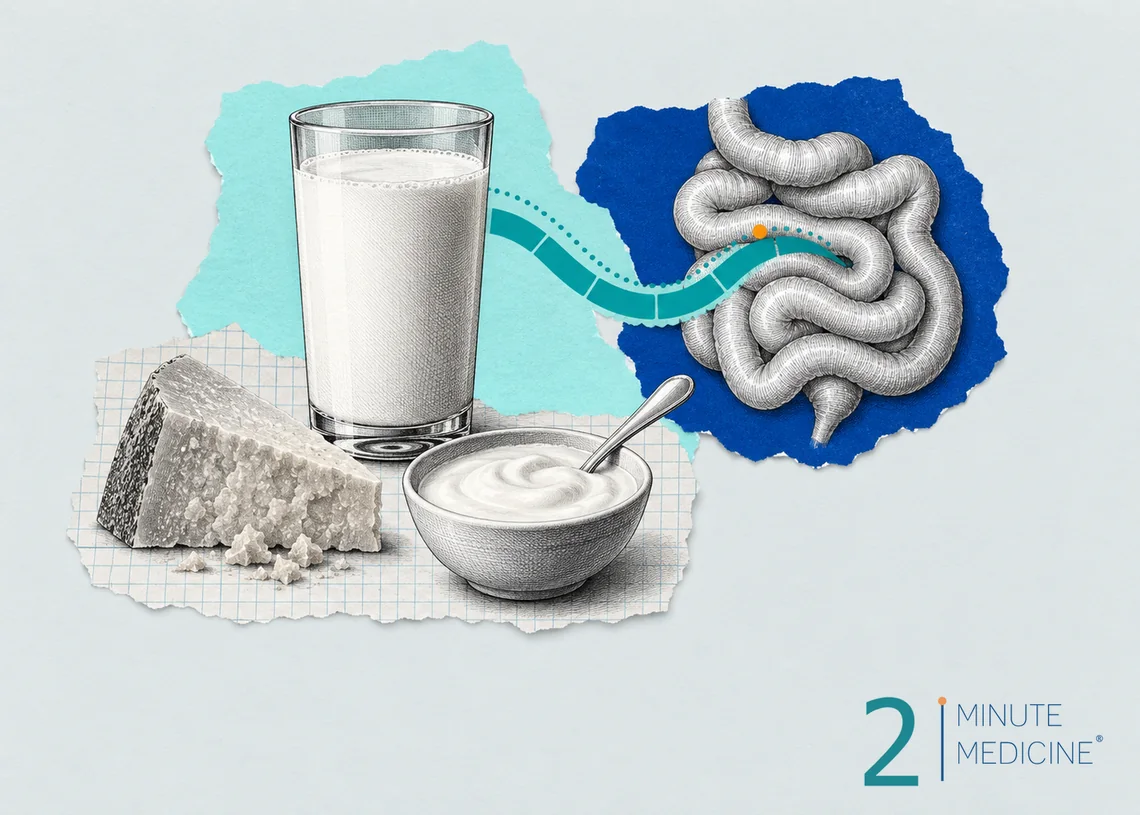
Lactose intolerance means your body has trouble digesting lactose, the natural sugar in milk, so dairy foods cause gas, bloating, cramps or diarrhea. It happens when the small intestine makes too little lactase, the enzyme that breaks lactose down. It is very common and not dangerous. Most people can still enjoy some dairy once they learn how much they can handle.
Key points
- About two-thirds of adults worldwide make less lactase after early childhood. Not all of them have symptoms.
- Symptoms tend to begin between half an hour and two hours after you have dairy.
- Many people can handle about a cup of milk at a time, especially with a meal.
- Lactose-free milk, hard cheeses, yogurt and lactase pills make dairy easier.
- Lactose intolerance is different from a milk allergy, which can be dangerous.
Why lactose intolerance happens
Lactase sits on the lining of the small intestine. It splits lactose into two simpler sugars that the body can absorb. Without enough lactase, lactose passes into the large intestine (colon). Bacteria there feed on it and make gas, and the sugar pulls water into the bowel. That causes the bloating, cramps and loose stools.
There are several reasons for low lactase:
- Lactase falls with age. This is the most common cause. In many people, lactase drops after about age 2, and symptoms often show up in the teens or adulthood. It is especially common in people of East Asian, West African, Native American, Hispanic, Jewish and Mediterranean descent, and less common in people of northern European descent.
- Damage to the small intestine. A stomach bug, celiac disease, Crohn’s disease, some medicines, chemotherapy or radiation can lower lactase. This kind often improves once the gut heals.
- Premature birth. Babies born early may have low lactase for a short time.
- Congenital lactase deficiency. A very rare inherited condition in which a baby makes no lactase from birth.
Lactose intolerance symptoms
- Bloating and a full feeling
- Gas
- Rumbling or gurgling in the belly
- Belly cramps or pain
- Diarrhea or loose stools
- Nausea, and sometimes vomiting
The more lactose you eat, the worse symptoms tend to be. Some people have constipation instead of diarrhea, likely because of the gases their gut bacteria make. Symptoms are the same in women and men, though in women they can be mistaken for period-related bloating or irritable bowel syndrome (IBS).
How to know if you’re lactose intolerant
- Try cutting out dairy. Stop all milk products for about 2 weeks and see if symptoms go away. Then add a glass of milk back and see if they return.
- Hydrogen breath test. You drink a lactose solution, then breathe into a bag every 15 to 30 minutes for a few hours. High hydrogen in your breath means lactose is reaching the colon.
- Stool acidity test. Used for babies and young children who can’t do a breath test.
Your doctor may also test for celiac disease or other gut problems if you have weight loss, blood in the stool or symptoms that don’t fit.
Lactose intolerance treatment
There is no cure for lactose that comes with age, but you can control symptoms by adjusting what and how you eat.
- Find your limit. Many people tolerate about 12 grams of lactose, the amount in a cup of milk, at one time. Spread dairy through the day.
- Eat dairy with other foods. A meal slows digestion and gives lactase more time to work.
- Choose lower-lactose dairy. Hard, aged cheeses such as cheddar, Swiss and Parmesan have very little lactose. Yogurt with live cultures and kefir are easier to digest than milk. Butter has only traces.
- Try lactose-free milk, which has lactase already added. It has the same calcium and protein as regular milk.
- Use lactase pills or drops (such as Lactaid) with the first bite or sip of dairy. They work for some people better than others.
- Build tolerance. Eating small amounts of dairy regularly can help your gut bacteria adjust, and symptoms may ease over time.
Probiotic supplements are sometimes suggested, but the evidence that they help is limited.
Getting enough calcium and vitamin D
If you eat little dairy, get calcium from fortified soy milk or other plant milks, tofu made with calcium, canned salmon or sardines with bones, kale, broccoli and fortified cereals or juice. Vitamin D comes from sunlight, fatty fish, eggs and fortified foods. Ask your doctor if you need a supplement.
Hidden lactose
Lactose shows up in bread, baked goods, pancake mixes, instant potatoes, soups, salad dressings, deli meats and candy. Look for milk, whey, curds, milk solids and dry milk powder on the label. Some pills use lactose as a filler, but the amount is usually too small to cause symptoms.
Lactose intolerance or milk allergy?
A milk allergy is an immune reaction to the proteins in milk, not the sugar. It can cause hives, swelling, vomiting, wheezing or a severe reaction called anaphylaxis, often within minutes. It is most common in babies and young children. Even tiny amounts of milk can trigger an allergy, while lactose intolerance depends on how much you eat. Lactose-free milk still contains milk protein, so it isn’t safe for someone with a milk allergy.
When to see a doctor
- Your symptoms started suddenly or have changed
- You lose weight without trying
- You see blood in your stool, have a fever, or diarrhea wakes you at night
- Avoiding dairy doesn’t help
- Your baby or child has ongoing diarrhea, poor growth or a rash after dairy
Common questions about lactose intolerance
Can lactose intolerance go away?
It depends on the cause. Lactose intolerance after a stomach bug or other gut illness often goes away as the intestine heals. The kind that comes with age doesn’t go away, but many people find they can handle more dairy if they eat small amounts regularly.
Can you develop lactose intolerance as an adult?
Yes. Lactase levels fall slowly over years, so many people first notice symptoms in their 20s, 30s or later. Illness, gut surgery or celiac disease can also bring it on. If dairy suddenly starts to bother you, a doctor can check for other causes.
Why do I get diarrhea after eating ice cream?
Ice cream has a fair amount of lactose, and people often eat a big serving on its own, without other food. If you’re lactose intolerant, that lactose reaches the colon, pulls in water and causes cramps and loose stools. Lactose-free ice cream or a lactase pill first can help.
Questions to ask your doctor
- Do my symptoms fit lactose intolerance, or could it be something else?
- Do I need a breath test?
- How much dairy can I try?
- Do I need a calcium or vitamin D supplement?
Learn more
- Lactose intolerance (National Institute of Diabetes and Digestive and Kidney Diseases)
- Lactose intolerance (MedlinePlus, U.S. National Library of Medicine)
This guide is general information and doesn’t replace advice from your own doctor. Last updated October 2026.







 Get the app