

Patient Basics: Osteosarcoma
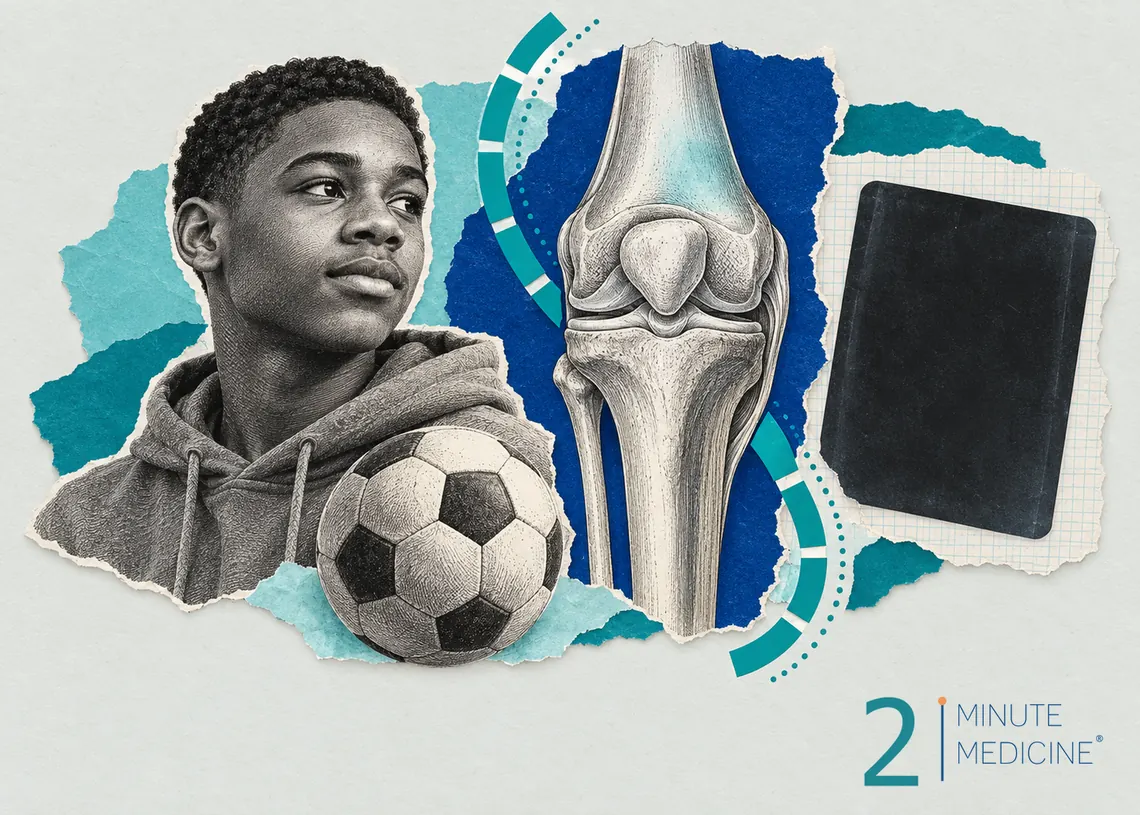
Osteosarcoma is a cancer that starts in bone, most often near the knee or at the top of the arm by the shoulder. It is the most common bone cancer in teens and young adults, and a smaller number of cases occur in adults over 60. The usual first sign is bone pain that doesn’t go away and is often worse at night. Treatment with chemotherapy and surgery cures many people, especially when the cancer hasn’t spread.
Key points
- Most cases happen between ages 10 and 30, often during or soon after the teenage growth spurt.
- Pain or swelling near a joint that lasts for weeks, or wakes you at night, needs an X-ray.
- A biopsy, ideally at a center that treats bone cancer, confirms the diagnosis.
- Most people have chemotherapy before and after surgery, and most can keep the arm or leg.
- With treatment, about 7 in 10 people whose cancer hasn’t spread when it is found survive long term.
What causes osteosarcoma
Osteosarcoma starts in the cells that build new bone. It is most common where bones grow fastest in teens: the lower end of the thighbone and the upper end of the shinbone, around the knee, and the top of the upper arm bone. In older adults, it more often affects the pelvis, jaw or spine.
Most of the time, there’s no known cause. Things linked to a higher risk include:
- Being a teen or young adult, and being male
- Radiation treatment for an earlier cancer, usually many years before
- Paget’s disease of bone, a condition of older adults in which bone grows abnormally
- Rare inherited conditions, such as Li-Fraumeni syndrome and hereditary retinoblastoma (an eye cancer of young children)
Sports injuries don’t cause osteosarcoma, though an injury sometimes draws attention to the area.
Osteosarcoma symptoms
- Bone pain that may come and go at first, then becomes constant. It is often worse at night or with activity.
- Swelling or a firm lump over the bone, which may feel warm
- A limp, or trouble moving the nearby joint
- A bone that breaks after a minor bump or fall
- Less often, tiredness, weight loss, or cough and shortness of breath if the cancer has spread to the lungs
In teens, the pain is often blamed on sports or “growing pains.” Growing pains usually affect both legs, are felt in the muscles, come at night and are gone by morning, with no swelling. Pain in one spot that lasts or keeps getting worse should be checked.
Osteosarcoma in adults
In adults over 60, osteosarcoma is often linked to Paget’s disease or past radiation. The symptoms are the same. It more often affects flat bones such as the pelvis, which can make surgery harder. Treatment is planned around a person’s overall health, since strong chemotherapy can be harder on older adults.
Lumps in the arm or leg
Most lumps in the arm, forearm or leg are not bone cancer. Common causes include soft fatty lumps (lipomas), cysts, swollen lymph nodes in the armpit, and fluid-filled lumps at the wrist (ganglion cysts). See a doctor if a lump:
- Feels hard and fixed to the bone
- Is growing
- Is larger than a golf ball
- Hurts, or comes with bone pain
- Comes back after being removed
How osteosarcoma is diagnosed
- X-ray. This is the first test. It can show bone being destroyed and new bone forming in an unusual pattern.
- MRI of the whole bone shows how far the tumor reaches into muscle, nerves and blood vessels.
- Biopsy. A doctor removes a sample of the tumor with a needle or a small cut. It should be planned with the surgeon who will do the main operation, because a poorly placed biopsy can make it harder to save the limb.
- Scans for spread. A CT scan of the chest looks for spread to the lungs, the most common site. A PET scan or bone scan checks other bones.
- Tests before treatment. These include blood tests, a hearing test and an ultrasound of the heart, because some chemotherapy drugs can affect them.
Ask about saving sperm or eggs before treatment starts, because chemotherapy can affect fertility.
Osteosarcoma treatment
Chemotherapy before surgery
Treatment usually starts with about 10 weeks of chemotherapy. The standard drugs are high-dose methotrexate, doxorubicin and cisplatin, often called MAP. Chemotherapy shrinks the tumor and kills cancer cells that may have spread but are too small to see.
Surgery
Next, the surgeon removes the tumor with a rim of healthy tissue around it. Most people have limb-sparing surgery, in which the missing bone is replaced with a metal implant or a bone graft. Children who are still growing may get an implant that can be lengthened. Sometimes the tumor surrounds major nerves or blood vessels, and removing the limb (amputation) is the safest choice. Modern artificial limbs let many people walk, run and play sports. Physical therapy is a big part of recovery.
Chemotherapy after surgery
After surgery, a pathologist checks how much of the tumor the chemotherapy killed. Then chemotherapy continues for several more months. Chemotherapy and surgery together usually take most of a year.
If the cancer has spread or comes back
Surgeons can often remove spots in the lungs. Other chemotherapy drugs, newer targeted drugs and radiation may be used. Clinical trials are an important option for osteosarcoma.
Side effects and follow-up
Chemotherapy can cause nausea, hair loss, mouth sores and a higher risk of infection. Cisplatin can cause hearing loss, and doxorubicin can affect the heart years later. After treatment, you’ll have scans of the chest and the tumor site every few months for several years, then less often. Survivors need long-term checkups for late effects.
When to see a doctor
- Bone or joint pain that lasts more than 2 weeks, or wakes you or your child at night
- A lump or swelling over a bone
- A limp with no clear reason
- A bone that breaks after a minor injury
Common questions about osteosarcoma
What is the survival rate for osteosarcoma?
It depends mostly on whether the cancer has spread when it is found. About 7 in 10 people with cancer that hasn’t spread survive long term. The rate is lower when the cancer has already reached the lungs or other bones, though some of these people are still cured.
Can osteosarcoma be prevented?
No, there is no known way to prevent it. Most people have no risk factors that could be changed. Children with an inherited condition such as Li-Fraumeni syndrome may have regular screening scans so that a cancer can be found early. Prompt checks for lasting bone pain help most.
How fast does osteosarcoma grow?
Most osteosarcomas are high grade, which means they grow and spread over weeks to months. That is why ongoing bone pain or a growing lump should be checked quickly. A few rarer types, which often grow on the surface of the bone, grow more slowly.
Can osteosarcoma come back after treatment?
Yes, in some people, most often in the lungs and usually within the first few years. That is why follow-up scans continue for years. When it comes back, surgery to remove the new spots, often along with other treatment, can still lead to long-term control or cure.
Questions to ask your doctor
- Has the cancer spread?
- Is this hospital a sarcoma center, and has the team treated many cases?
- Can the arm or leg be saved?
- What side effects should we expect, and how can we protect fertility and hearing?
- Is there a clinical trial that fits?
Learn more
- Osteosarcoma treatment (National Cancer Institute)
- Osteosarcoma (MedlinePlus, U.S. National Library of Medicine)
This guide is general information and doesn’t replace advice from your own doctor. Last updated October 2026.






 Get the app