• About
  • Masthead
  • License Content
  • Advertise
  • Press Releases
  • Newsroom
  • RSS/Email List
  • 2MM Podcast
  • Write for us
  • Contact Us
2 Minute Medicine
No Result
View All Result

No products in the cart.

Sign in
SUBSCRIBE
  • About
  • Specialties
    • All Specialties, All Recent Reports
    • Cardiology
    • Chronic Disease
    • Dermatology
    • Emergency
    • Endocrinology
    • Gastroenterology
    • Imaging and Intervention
    • Infectious Disease
    • Nephrology
    • Neurology
    • Obstetrics
    • Oncology
    • Ophthalmology
    • Pediatrics
    • Pharma
    • Preclinical
    • Psychiatry
    • Public Health
    • Pulmonology
    • Rheumatology
    • Surgery
    • Rewinds
    • The Scan
  • EvidencePulse™
  • HypeCheck™
  • AI News
  • Classics™
    • 2MM+ Online Access
    • Paperback and Ebook
  • Tools
    • NPI Registry Lookup
    • RVU Search
    • Physician Pay by Specialty
    • ICD-10 Code Lookup
    • FDA Drug Approvals
    • Drug Safety for Breastfeeding/Pregnancy
    • Clinical Guidelines
    • Medical Calculators
    • ECG Reference
      • QTc Calculator
      • Sgarbossa Criteria
      • ECG Axis Calculator
      • AV Block Helper
  • Rankings
    • Medical School Rankings
    • Residency Rankings
  • Partners
    • License Content
    • Advertise with Us
2 Minute Medicine
  • About
  • Specialties
    • All Specialties, All Recent Reports
    • Cardiology
    • Chronic Disease
    • Dermatology
    • Emergency
    • Endocrinology
    • Gastroenterology
    • Imaging and Intervention
    • Infectious Disease
    • Nephrology
    • Neurology
    • Obstetrics
    • Oncology
    • Ophthalmology
    • Pediatrics
    • Pharma
    • Preclinical
    • Psychiatry
    • Public Health
    • Pulmonology
    • Rheumatology
    • Surgery
    • Rewinds
    • The Scan
  • EvidencePulse™
  • HypeCheck™
  • AI News
  • Classics™
    • 2MM+ Online Access
    • Paperback and Ebook
  • Tools
    • NPI Registry Lookup
    • RVU Search
    • Physician Pay by Specialty
    • ICD-10 Code Lookup
    • FDA Drug Approvals
    • Drug Safety for Breastfeeding/Pregnancy
    • Clinical Guidelines
    • Medical Calculators
    • ECG Reference
      • QTc Calculator
      • Sgarbossa Criteria
      • ECG Axis Calculator
      • AV Block Helper
  • Rankings
    • Medical School Rankings
    • Residency Rankings
  • Partners
    • License Content
    • Advertise with Us
Sign in
SUBSCRIBE
2 Minute Medicine
Sign in
Subscribe
2 Minute MedicineFree on Google PlayGet
✦EvidencePulse™by 2 Minute Medicine3 reportsYou askedtop stroke trials 2026Synthesizing medical evidence...Top 2026 stroke trial results:OCEANIC — ischemic stroke: 6.2% vs 8.4%OPTION* — mRS 0–1: 43.6% vs 34.2%ORIENTAL* — mRS 0–2: 58.6% vs 46.6%*Higher sICH in intervention armsParticipants randomizedNOCEANIC12,327OPTION570ORIENTAL564Ask about guidelines or landmark trials...↑Try EvidencePulse™Ask the evidence. Get the signal.Try it now →
Home All Specialties Cardiology

Radial artery access associated with reduced mortality in management of acute coronary syndrome
byJeffrey CampbellandSai Folmsbee
November 10, 2015
in Cardiology
Reading Time: 2 mins read
Image-guided percutaneous drainage of pericardial effusions is safe and effective
Share on FacebookShare on TwitterShare on LinkedIn

1. In this systematic review and meta-analysis, radial percutaneous access during invasive management of acute coronary syndrome was associated with decreased mortality, major adverse coronary events, and major bleeding when compared to femoral access.

2. However, radial artery access was associated with higher cross-over to femoral access.

Evidence Rating Level: 1 (Excellent)

Study Rundown: Early invasive treatment of acute coronary syndrome (ACS; a group of diseases including heart attacks) frequently relies upon insertion of a catheter through blood vessels to relieve blockages in arteries supplying the heart. Typically, the catheter is inserted either through a major artery in the leg (i.e., the femoral artery) or arm (i.e., the radial artery) to access the heart’s blood supply. However, there is conflicting evidence about safety and efficacy of femoral vs. radial artery access. Therefore, this study analyzed data from four major trials that compared femoral vs. radial access in catheter-based management of ACS. Overall, compared to femoral access, radial access was associated with significantly decreased risk of death, major negative cardiac events, and major bleeding in the 30 days following the procedure. Notably, procedures using radial artery access took marginally longer than procedures using the femoral artery; procedures that began with radial access more frequently required conversion to femoral-based procedures than vice versa, although rates of conversion were low. Although the included studies required minimum levels of proficiency to complete the procedures, provider experience and expertise with femoral vs. radial access may have impacted results, which may impact the generalizability of this analysis to clinical care. Nevertheless, these results provide compelling evidence that radial access may be safer than femoral access for catheter-based treatment of ACS.

Click to read the study published today in the Annals of Internal Medicine

Relevant Reading: Bleeding, Blood Transfusion, and Increased Mortality After Percutaneous Coronary Intervention: Implications for Contemporary Practice

RELATED REPORTS

Catheter-guided aortic valve replacement and angioplasty has favorable outcomes compared to surgical intervention

Optical coherence tomography-guided angioplasty reduces adverse events compared to angiography guidance

In-Depth [systematic review and meta-analysis]: This systematic review and meta-analysis pooled data from 17 133 patients enrolled in four large, high-quality, randomized clinical trials evaluating radial vs. femoral access for cardiac catheterization during ACS. Patients were followed for 30 days post-procedure. Overall, radial access was associated with decreased risk of all-cause mortality (relative risk 0.73, 95%CI 0.59 – 0.90, I2 0%), major adverse cardiac events (RR 0.86, 95%CI 0.75 – 0.98, I2 11%), access-site bleeding (RR 0.36, 95%CI 0.28 – 0.47, I2 0%), and major bleeding (RR 0.57, 95% 0.37 – 0.88, I2 52%). There was a 6.3% rate of crossover from radial to femoral access, compared to a 1.7% of crossover from femoral to radial access, although there was a high degree of heterogeneity between studies for this outcome (I2 88%). Notably, of the four trials included, only two included patients with non-ST elevation myocardial infarcts (NSTEMI).

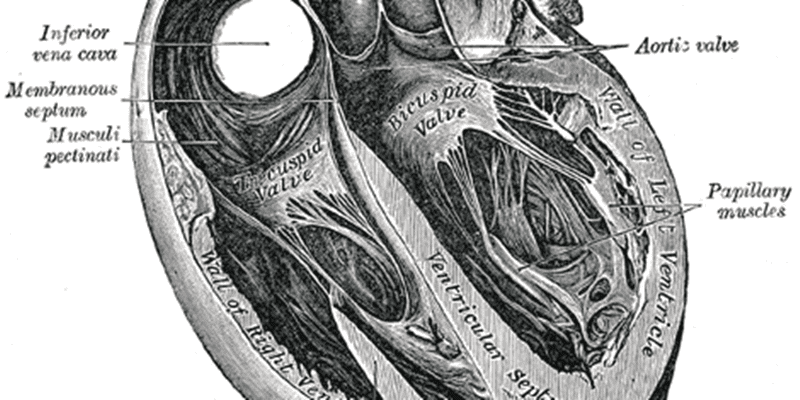
Image: PD

©2015 2 Minute Medicine, Inc. All rights reserved. No works may be reproduced without expressed written consent from 2 Minute Medicine, Inc. Inquire about licensing here. No article should be construed as medical advice and is not intended as such by the authors or by 2 Minute Medicine, Inc.

Tags: acute coronary syndromespercutaneous coronary intervention
Previous Post

2 Minute Medicine Rewind November 2 – November 8, 2015

Next Post

Long-term safety of silicone gel breast implants is unclear

RelatedReports

Heart catheter procedures collage: a smiling older man with a white beard and an engraved heart with a blue guidewire
Cardiology

Catheter-guided aortic valve replacement and angioplasty has favorable outcomes compared to surgical intervention

February 11, 2025
Cardiology

Optical coherence tomography-guided angioplasty reduces adverse events compared to angiography guidance

October 1, 2024
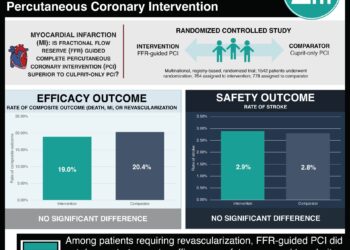
#VisualAbstract: FFR-Guided Complete Percutaneous Coronary Intervention Is Non-Superior to Culprit-Only Percutaneous Coronary Intervention
StudyGraphics

#VisualAbstract: FFR-Guided Complete Percutaneous Coronary Intervention Is Non-Superior to Culprit-Only Percutaneous Coronary Intervention

April 11, 2024
Cardiology

Percutaneous coronary intervention associated with decreased stable angina symptoms

January 5, 2024
Next Post

Long-term safety of silicone gel breast implants is unclear

Intensive systolic blood pressure reduction below 140 mmHg reduces risk of major cardiovascular events

Clinically undetected myocardial scars detected by cardiac MRI

✦ EvidencePulse™ by 2 Minute Medicine 3 reports You asked top stroke trials 2026 Synthesizing medical evidence... Top 2026 stroke trial results: OCEANIC — ischemic stroke: 6.2% vs 8.4% OPTION* — mRS 0–1: 43.6% vs 34.2% ORIENTAL* — mRS 0–2: 58.6% vs 46.6% *Higher sICH in intervention arms Participants randomizedN OCEANIC 12,327 OPTION 570 ORIENTAL 564 Ask about guidelines or landmark trials... Try EvidencePulse™ Get the signal. Try it now → Physician-trained medical AI by 2 Minute Medicine

2MM+ All Access

Full details →
$4.99 /month

3-day free trial · cancel anytime

  • ✓100+ physician-written reports
  • ✓EvidencePulse™ + HypeCheck™
  • ✓Ad-free reading + newsletters
Start 3-day free trial

Then $4.99/month. Manage renewal in your account.

2 Minute Medicine® is an award winning, physician-run, expert medical media company. Our content is curated, written and edited by practicing health professionals who have clinical and scientific expertise in their field of reporting. Our editorial management team is comprised of highly-trained MD physicians. Join numerous brands, companies, and hospitals who trust our licensed content.

Recent Reports

  • 2MM: Pharma Roundup – First DNA therapy approved which could reduce airway surgeries, novel siRNA targets dual lipid pathways, GLP-1s outperform metformin in prediabetes, and Zolgensma tumor risks under FDA review
  • Tafolecimab monotherapy reduced low-density lipoprotein cholesterol by more than 60% at week 12 in phase 3 CREDIT-5 results
  • In At-Risk Patients With Moderate Aortic Stenosis, TAVR Reduced 2-Year Death or Heart-Failure Events
License Content
Terms of Use | Disclaimer
Cookie Policy

Get the app

Read 2 Minute Medicine on iPhone, iPad and Android.

Download on the App StoreGet it on Google Play
QR code for www.2minutemedicine.com/app
On a computer? Scan this with your phone’s camera.
2MM+ All Access Full details →

The medical literature, distilled daily.

Monthly plan selected: $4.99 /month.

$4.99/month

3-day free trial · cancel anytime

Start 3-day free trial

Then $4.99/month. Manage renewal in your account.

Yearly plan selected: $49.90 /year.

$49.90/year

2 months free

Start 3-day free trial

Then $49.90/year.

Membership benefits

  • ✓100+ new physician-written study summaries monthly, 12,000+ searchable
  • ✓AI EvidencePulse™ + HypeCheck™
  • ✓Ad-free reading + newsletters
  • ✓FDA drug approvals + clinical calculators

Already a member? Sign in

  • Get the app
  • About
  • Specialties
    • All Specialties, All Recent Reports
    • Cardiology
    • Chronic Disease
    • Dermatology
    • Emergency
    • Endocrinology
    • Gastroenterology
    • Imaging and Intervention
    • Infectious Disease
    • Nephrology
    • Neurology
    • Obstetrics
    • Oncology
    • Ophthalmology
    • Pediatrics
    • Pharma
    • Preclinical
    • Psychiatry
    • Public Health
    • Pulmonology
    • Rheumatology
    • Surgery
    • Rewinds
    • The Scan
  • EvidencePulse™
  • HypeCheck™
  • AI News
  • Classics™
    • 2MM+ Online Access
    • Paperback and Ebook
  • Tools
    • NPI Registry Lookup
    • RVU Search
    • Physician Pay by Specialty
    • ICD-10 Code Lookup
    • FDA Drug Approvals
    • Drug Safety for Breastfeeding/Pregnancy
    • Clinical Guidelines
    • Medical Calculators
    • ECG Reference
      • QTc Calculator
      • Sgarbossa Criteria
      • ECG Axis Calculator
      • AV Block Helper
  • Rankings
    • Medical School Rankings
    • Residency Rankings
  • Partners
    • License Content
    • Advertise with Us
No Result
View All Result

© 2026 2 Minute Medicine, Inc. - Physician-written medical news.