

Patient Basics: Juvenile Arthritis
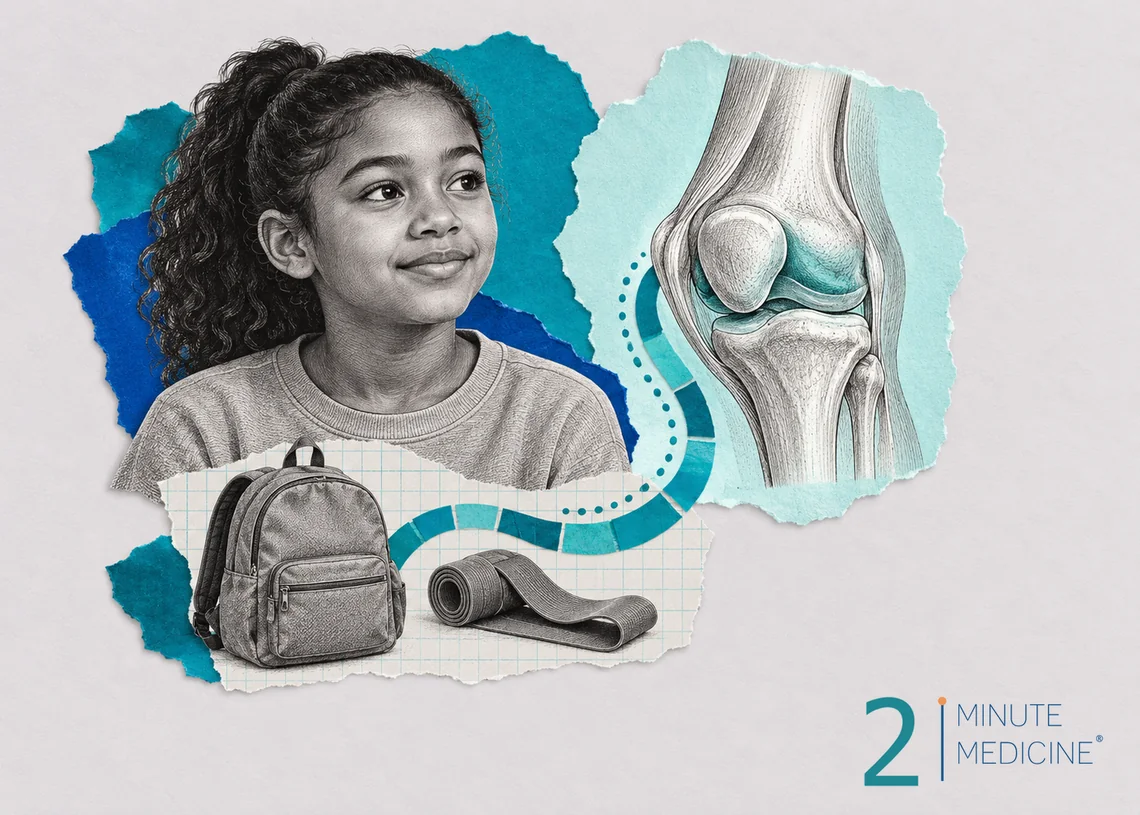
Juvenile arthritis means swollen, stiff joints in a child or teen that last for weeks. The most common kind is juvenile idiopathic arthritis (JIA), once called juvenile rheumatoid arthritis (JRA). It happens when the immune system mistakenly attacks the lining of the joints. With today’s medicines, most children with JIA can stay active, play sports and avoid joint damage.
Key points
- JIA starts before age 16 and lasts at least 6 weeks. It affects about 1 in 1,000 children.
- Look for a swollen joint, stiffness or a limp in the morning, or a child who stops using an arm or leg.
- No single blood test proves it. Doctors decide after ruling out infection, injury and other causes.
- Children with JIA need regular eye exams, because a silent eye inflammation can harm vision.
- Medicines and physical therapy can control it and protect the joints.
What causes juvenile arthritis
JIA is an autoimmune disease. The immune system, which normally fights germs, attacks the thin lining inside a joint (the synovium). The lining swells and makes extra fluid, so the joint becomes puffy, warm and stiff. The exact trigger is unknown, but genes and something in the environment, possibly an infection, both seem to play a part. Nothing a parent did causes it, and it isn’t contagious.
Juvenile arthritis symptoms
- A swollen knee, ankle, wrist, finger or other joint
- Stiffness that is worst after sleep or a nap and eases as the day goes on
- Limping in the morning, or not wanting to walk
- Limited range of motion, such as an elbow or knee that won’t fully straighten
- Tiredness and being less active than usual
Young children often don’t say it hurts. Instead, a parent notices that the child walks oddly, avoids using a hand, or wants to be carried.
Types of juvenile arthritis
- Oligoarticular JIA affects 4 or fewer joints, often a knee or ankle. It’s the most common type and often starts in young girls between ages 1 and 4. It carries the highest risk of eye inflammation.
- Polyarticular JIA affects 5 or more joints, often the small joints of the hands and feet on both sides of the body. When a blood test for rheumatoid factor is positive, it acts much like adult rheumatoid arthritis and usually starts in the teen years.
- Systemic JIA (Still’s disease) causes high fevers once or twice a day for at least 2 weeks, along with a pale pink, blotchy rash that comes and goes with the fever. The joints may swell later.
- Enthesitis-related arthritis causes pain where tendons attach to bone, such as the heel, along with arthritis in the hips, knees or lower back. It’s more common in boys older than 8.
- Psoriatic arthritis comes with psoriasis, pitted nails or a family history of psoriasis. A whole finger or toe may swell like a sausage.
How juvenile arthritis is diagnosed
Doctors call it JIA when a child under 16 has arthritis in at least one joint for 6 weeks or more, and nothing else explains it. A children’s joint specialist (pediatric rheumatologist) usually makes the diagnosis.
- Exam. The doctor checks each joint for swelling, warmth and how far it moves.
- Blood tests look for inflammation (ESR and CRP) and check the blood count. Tests such as ANA, rheumatoid factor and HLA-B27 help sort out the type. Many children with JIA have normal results.
- Imaging. X-rays, ultrasound or MRI can show fluid, swelling or joint damage.
- Joint fluid. If infection is possible, the doctor may draw fluid from the joint with a needle to test it.
Other causes of joint pain in children
- After a virus. A cold or stomach bug can leave joints sore or swollen for days to weeks. In toddlers, a sudden limp from an irritated hip (transient synovitis) usually clears within 2 weeks.
- Reactive arthritis follows a gut, throat or urinary infection and usually fades within weeks to months.
- Infection inside the joint (septic arthritis) causes fever and a hot, very painful joint. It’s an emergency, especially in babies.
- Rheumatic fever can follow untreated strep throat. Joint pain moves from one large joint to another. Some children get a faint pink rash of rings with clear centers on the trunk. It can damage the heart.
- Lupus in children can cause joint pain with a red rash across the cheeks and nose, mouth sores, hair loss, fevers, tiredness, and swelling of the legs or foamy urine from kidney involvement.
- Growing pains cause aching in both legs at night, with no swelling or limp the next morning. They aren’t arthritis.
Rarely, bone and joint pain is an early sign of leukemia, especially with night pain, bruising, pale skin or fevers.
Treatment
The goal is to calm the inflammation fast, prevent joint damage and keep your child moving.
- Anti-inflammatory medicines (NSAIDs) such as naproxen or ibuprofen ease pain and stiffness.
- Steroid shots into a joint can settle one or a few swollen joints for months.
- Methotrexate, taken as a weekly pill or shot, slows the immune attack in children with several joints involved.
- Biologic drugs block specific signals that drive inflammation. Examples include etanercept, adalimumab, tocilizumab, abatacept, anakinra and canakinumab. A pill called tofacitinib is another choice for some children. They raise the risk of some infections.
- Physical and occupational therapy keep joints flexible, build strength and help with tasks like writing.
Living with juvenile arthritis
- Eye checks. An inflammation inside the eye (uveitis) can develop without redness or pain. An eye doctor should check your child with a special microscope (slit lamp), as often as every 3 months for children at highest risk.
- Activity. Exercise and sports are encouraged. Swimming and biking are gentle on joints.
- School. A 504 plan can allow extra time between classes, an elevator pass or a second set of books.
- Vaccines. Check with the care team, because some medicines affect which vaccines are given and when.
- Growth. Long-lasting inflammation can affect bone growth, such as one leg growing longer than the other. Regular checkups catch this early.
When to see a doctor
- A swollen joint, or a limp, that lasts more than a few days
- Morning stiffness that keeps coming back
- Fevers with a rash or joint pain
- Your child with JIA has blurry vision, a red or painful eye, or a fever while on medicine that lowers immunity
Get care right away if a child has a fever with a hot, very painful joint, or refuses to move an arm or leg or put weight on it.
Common questions about juvenile arthritis
Can you get arthritis at 16 or 17?
Yes. Teens can get JIA, rheumatoid arthritis, psoriatic arthritis, lupus, reactive arthritis and inflammation of the spine. If arthritis starts at 16 or later, doctors use the adult name, such as rheumatoid arthritis, but the tests and treatments are much the same.
What is the youngest age to get arthritis?
JIA can start in a child’s first year or two, though it’s rare before 6 months of age. Oligoarticular JIA often starts between ages 1 and 4. In a baby with a swollen joint and fever, infection is the bigger worry, and the child needs care right away.
Does juvenile arthritis go away?
For many children, it does settle. Some go into lasting remission and can stop medicine, while others have flares into adulthood. Oligoarticular JIA has the best chance of going away. Early treatment gives the best chance of protecting joints and growth either way.
What does a juvenile arthritis rash look like?
In systemic JIA, the rash is pale pink or salmon-colored, flat and blotchy. It usually shows up with the fever, often on the chest, thighs or arms, and fades within hours. It doesn’t usually itch. Psoriatic arthritis may come with scaly patches of psoriasis instead.
Questions to ask your doctor
- Which type of JIA does my child have?
- How often does my child need eye exams?
- What are the side effects of this medicine, and what should I watch for?
- Which sports and activities are OK?
- What should we tell the school?
Learn more
- Juvenile idiopathic arthritis (National Institute of Arthritis and Musculoskeletal and Skin Diseases)
- Juvenile arthritis (MedlinePlus, U.S. National Library of Medicine)
This guide is general information and doesn’t replace advice from your own doctor. Last updated October 2026.
RelatedReports






 Get the app