

Patient Basics: Polymyalgia Rheumatica
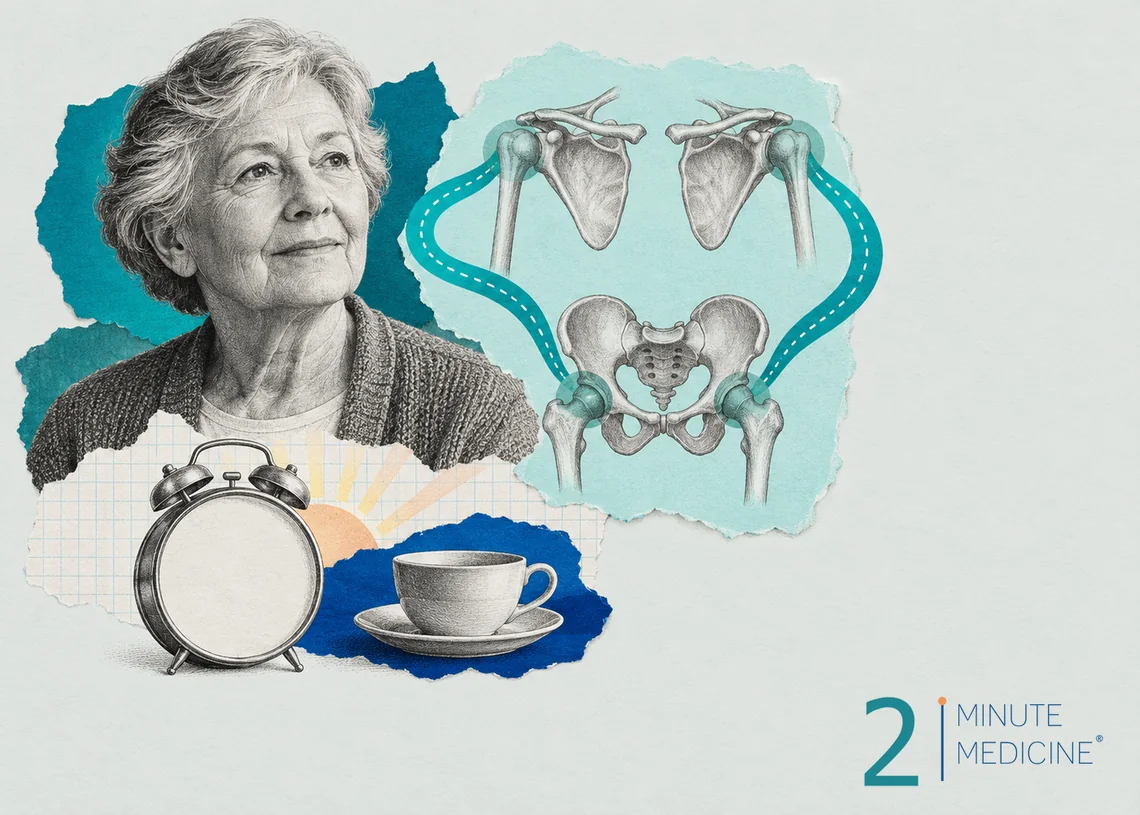
Polymyalgia rheumatica (PMR) is an inflammatory condition that causes aching and stiffness in the shoulders, neck, upper arms, hips and thighs. The stiffness is worst in the morning and can make it hard to get out of bed or get dressed. It almost always starts after age 50. Low-dose steroid medicine usually brings fast relief, often within a few days.
Key points
- PMR is more common in women than men, and most people are around 70 when it starts.
- Pain and stiffness usually affect both sides of the body and come on over days to a few weeks.
- Blood tests for inflammation are usually high, but no single test confirms PMR.
- Treatment with a steroid such as prednisone usually lasts a year or more, with the dose lowered slowly.
- Some people with PMR also develop giant cell arteritis, which can cause blindness. A new headache, jaw pain or vision change needs urgent care.
What causes polymyalgia rheumatica
Doctors don’t know exactly what causes PMR. The immune system becomes overactive and inflames the lining of joints and the small fluid-filled cushions near them (bursae), mainly around the shoulders and hips. The muscles themselves are not damaged, even though they hurt.
Age is the biggest risk factor. PMR is most common in people of Northern European descent, and genes likely play a part. Some experts think an infection may set it off in people who are prone to it.
Symptoms of polymyalgia rheumatica
- Aching and stiffness in both shoulders and upper arms, often spreading to the neck
- Pain and stiffness in the hips, buttocks and thighs
- Morning stiffness that lasts 45 minutes or longer
- Trouble raising the arms to brush your hair or put on a coat
- Trouble getting out of bed, a chair or a car
- Stiffness after sitting still for a while
- Tiredness, low fever, poor appetite, weight loss or low mood
Some people also have swollen wrists or hands. The muscles feel weak because moving hurts, but their actual strength is normal.
Giant cell arteritis
Giant cell arteritis (also called temporal arteritis) is inflammation of large arteries, especially those in the head. It is closely linked to PMR. Warning signs are:
- A new headache, often at the temples
- Tenderness of the scalp, for example when brushing your hair
- Jaw pain when chewing
- Blurred or double vision, or sudden loss of vision in one eye
Get emergency care the same day for any of these. Giant cell arteritis is treated with higher doses of steroids, and starting quickly can prevent permanent vision loss.
How polymyalgia rheumatica is diagnosed
Your doctor will ask about your symptoms and examine your joints and muscles. Tests help confirm PMR and rule out conditions that look like it, such as rheumatoid arthritis, thyroid disease, muscle inflammation, infections and some cancers.
- Blood tests for inflammation. The erythrocyte sedimentation rate (ESR) and C-reactive protein (CRP) are usually high.
- Other blood tests check for rheumatoid arthritis, thyroid problems and muscle damage. In PMR these are normal.
- Ultrasound or MRI of the shoulders and hips can show inflamed bursae.
- Response to treatment. Most people feel much better within a few days of starting low-dose prednisone. If you don’t, your doctor will look for another cause.
Treatment for polymyalgia rheumatica
Steroid medicine
Low-dose prednisone or another corticosteroid is the main treatment. After a few weeks, your doctor lowers the dose very slowly, often over one to two years. Going too fast can bring symptoms back, which is common. If they return, the dose usually goes back up a little.
Never stop steroids suddenly. After long use, the body makes less of its own cortisol, and stopping all at once can make you very ill.
Protecting against side effects
Long-term steroids can thin bones and raise blood sugar, blood pressure and weight. They can also cause cataracts, trouble sleeping and mood changes, and they make infections more likely. To lower these risks, your doctor may:
- Check your bone density and suggest calcium, vitamin D or a bone-strengthening medicine
- Check your blood sugar and blood pressure regularly
- Make sure your vaccines are up to date
- Arrange eye checks
Other medicines
If symptoms keep returning or you can’t lower the steroid dose, your doctor may add methotrexate or sarilumab. Both can help you take less prednisone. NSAIDs such as ibuprofen do little for PMR on their own.
Living with polymyalgia rheumatica
- Stay active. Walking, swimming and gentle stretching keep joints moving and help protect bones and muscles.
- A physical therapist can suggest exercises for the shoulders and hips.
- Eat a healthy diet low in added sugar and salt while you take steroids.
- Lower your risk of falls by clearing clutter and using night lights.
- Carry a card or list that says you take steroids, in case of an emergency.
When to see a doctor
- You have new pain and stiffness in your shoulders or hips that lasts more than a couple of weeks
- Your symptoms come back while your steroid dose is being lowered
- You have side effects from steroids, such as high blood sugar or mood changes
Get care the same day for headache, scalp tenderness, jaw pain when chewing or any change in vision.
Common questions about polymyalgia rheumatica
How long does polymyalgia rheumatica last?
For most people, PMR lasts one to three years, and then the steroid can be stopped. Some people need treatment for longer, sometimes at a very low dose for several years. Symptoms can come back after treatment ends, so tell your doctor if the stiffness returns.
Is polymyalgia rheumatica serious?
PMR itself doesn’t damage joints or organs, and it responds well to treatment. It can be disabling without treatment, though. The main concerns are its link to giant cell arteritis, which can cause blindness, and side effects from long-term steroids, so regular checkups are important.
Is polymyalgia rheumatica the same as fibromyalgia?
No. Both cause widespread aching, but fibromyalgia doesn’t cause inflammation, high blood test markers or the morning stiffness of PMR. Fibromyalgia can start at any age and doesn’t respond to low-dose steroids. PMR almost always starts after 50 and usually improves within days of starting prednisone.
Questions to ask your doctor
- How sure are you that this is PMR?
- How long will I need to take steroids?
- How will we protect my bones and blood sugar?
- What should I do if my symptoms come back as the dose goes down?
- Which symptoms of giant cell arteritis should I watch for?
Learn more
- Polymyalgia rheumatica (MedlinePlus, U.S. National Library of Medicine)
- Polymyalgia rheumatica (NHS)
This guide is general information and doesn’t replace advice from your own doctor. Last updated October 2026.






 Get the app