• About
  • Masthead
  • License Content
  • Advertise
  • Press Releases
  • Newsroom
  • RSS/Email List
  • 2MM Podcast
  • Write for us
  • Contact Us
2 Minute Medicine
No Result
View All Result

No products in the cart.

Sign in
SUBSCRIBE
  • About
  • Specialties
    • All Specialties, All Recent Reports
    • Cardiology
    • Chronic Disease
    • Dermatology
    • Emergency
    • Endocrinology
    • Gastroenterology
    • Imaging and Intervention
    • Infectious Disease
    • Nephrology
    • Neurology
    • Obstetrics
    • Oncology
    • Ophthalmology
    • Pediatrics
    • Pharma
    • Preclinical
    • Psychiatry
    • Public Health
    • Pulmonology
    • Rheumatology
    • Surgery
    • Rewinds
    • The Scan
  • EvidencePulse™
  • HypeCheck™
  • AI News
  • Classics™
    • 2MM+ Online Access
    • Paperback and Ebook
  • Tools
    • NPI Registry Lookup
    • RVU Search
    • ICD-10 Code Lookup
    • Medical School Rankings
    • FDA Drug Approvals
    • Drug Safety for Breastfeeding/Pregnancy
    • Clinical Guidelines
    • Medical Calculators
  • Partners
    • License Content
    • Advertise with Us
2 Minute Medicine
  • About
  • Specialties
    • All Specialties, All Recent Reports
    • Cardiology
    • Chronic Disease
    • Dermatology
    • Emergency
    • Endocrinology
    • Gastroenterology
    • Imaging and Intervention
    • Infectious Disease
    • Nephrology
    • Neurology
    • Obstetrics
    • Oncology
    • Ophthalmology
    • Pediatrics
    • Pharma
    • Preclinical
    • Psychiatry
    • Public Health
    • Pulmonology
    • Rheumatology
    • Surgery
    • Rewinds
    • The Scan
  • EvidencePulse™
  • HypeCheck™
  • AI News
  • Classics™
    • 2MM+ Online Access
    • Paperback and Ebook
  • Tools
    • NPI Registry Lookup
    • RVU Search
    • ICD-10 Code Lookup
    • Medical School Rankings
    • FDA Drug Approvals
    • Drug Safety for Breastfeeding/Pregnancy
    • Clinical Guidelines
    • Medical Calculators
  • Partners
    • License Content
    • Advertise with Us
Sign in
SUBSCRIBE
2 Minute Medicine
Sign in
Subscribe
2 Minute MedicineFree on Google PlayGet
✦EvidencePulse™by 2 Minute Medicine3 reportsYou askedtop stroke trials 2026Synthesizing medical evidence...Top 2026 stroke trial results:OCEANIC — ischemic stroke: 6.2% vs 8.4%OPTION* — mRS 0–1: 43.6% vs 34.2%ORIENTAL* — mRS 0–2: 58.6% vs 46.6%*Higher sICH in intervention armsParticipants randomizedNOCEANIC12,327OPTION570ORIENTAL564Ask about guidelines or landmark trials...↑Try EvidencePulse™Ask the evidence. Get the signal.Try it now →
Home All Specialties Chronic Disease

Use of prescription drugs affecting fracture risk not changed after fracture

byJames EnglandandAnees Daud
August 24, 2016
in Chronic Disease, Public Health
Reading Time: 3 mins read
Share on FacebookShare on TwitterShare on LinkedIn

1. In a retrospective cohort study of Medicare beneficiaries, there was no overall change in prescribing patterns of drugs that increased or decreased fracture risk before and after fragility fractures.

2. There was a subset of patients for whom the prescribing of high risk medications decreased, but this was matched by new prescriptions of these medications for other patients.

Evidence Rating Level: 2 (Good)      

Study Rundown: For an aging population, fragility fractures are common and are associated with significant morbidity and mortality. While risk of fragility fractures is affected my many non-modifiable factors such as age, gender, and genetics, decreasing the use of medications associated with fragility fractures presents an opportunity to improve care. Medications that can increase risk of fragility fractures include those associated with increased falls (sedatives, hypnotics, opioids, antihypertensives), decreased bone density (glucocorticoids, PPIs, anticonvulsants), or through unknown mechanisms (antipsychotics). Medications that help reduce the risk of fractures include bisphosphonates.

This study evaluated the use of prescription medications that increased or decreased risk of fractures to evaluate changes in prescribing patterns following incident fractures. The results showed that use of studied medications did not change significantly following fragility fractures. There was a subset of patients for whom the use of implicated medications decreased, however this was matched by new prescriptions for other patients. Additionally, there was not a clinically significant increase in the use of bisphosphonates following the fragility fracture. This study highlighted the importance for in-depth review of medications following major medical events such as fragility fractures. The weakness of the study included not evaluating the overall outcomes after the incident fracture. Also, the study did not explore the indication for the medications used.

Click to read the study, published today in JAMA Internal Medicine

RELATED REPORTS

2 Minute Medicine Rewind Aug 24th, 2026 

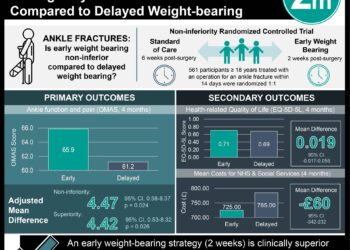
#VisualAbstract: Early Weight-Bearing Improves Outcomes in Surgically Treated Ankle Fractures Compared to Delayed Weight-Bearing

Relevant Reading: Fall risk-increasing drugs and falls: a cross-sectional study among elderly patients in primary care

In-Depth [retrospective cohort]: This study evaluated 168 133 patients with a fragility fracture (hip, shoulder, or wrist), from 2007 to 2011. Patients were Medicare beneficiaries enrolled for at least 4 months who resided in the community (rather than skilled nursing facility), and were excluded if they were enrolled in hospice, nursing home, or did not fill any prescriptions during the study periods. A total of 21 drug classes were investigated due to prior studies linking them to increased risk of fragility fractures. These included: benzodiazepines, barbiturates, opioids, hypnotics, SSRIs, antihypertensives, diuretics, glucocorticoids, PPIs, antipsychotics and others.

Prior to the index fracture, 76% of patients were on at least one study medication in the preceding 4 months. Following the fracture, the proportion of patients on at least 1 non-opioid implicated medication was 80.5% for hip fractures, 74.3% for wrist, and 76.9% for shoulder. There was a group of patients with reduced use of medications implicated in fracture risk, but this was matched with a group of patients that began new medications with fracture risk. The use of drugs that increase bone density did rise following fragility fractures significantly (p < 0.001), however the absolute number was very small (21.1% vs. 22.7%), and so not clinically significant.

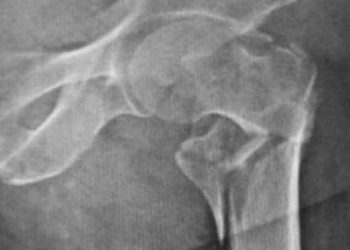
Image: CC/Wiki

©2016 2 Minute Medicine, Inc. All rights reserved. No works may be reproduced without expressed written consent from 2 Minute Medicine, Inc. Inquire about licensing here. No article should be construed as medical advice and is not intended as such by the authors or by 2 Minute Medicine, Inc.

Tags: fracture
Previous Post

Rates of intussusception increase with rotavirus vaccine

Next Post

Team-based care systems compare favorably with traditional practice models

RelatedReports

Surgical outcomes collage: an operating lamp above a steel tray of scalpel, forceps and scissors beside a folded drape
Weekly Rewinds

2 Minute Medicine Rewind Aug 24th, 2026 

August 26, 2026
#VisualAbstract: Early Weight-Bearing Improves Outcomes in Surgically Treated Ankle Fractures Compared to Delayed Weight-Bearing
StudyGraphics

#VisualAbstract: Early Weight-Bearing Improves Outcomes in Surgically Treated Ankle Fractures Compared to Delayed Weight-Bearing

July 4, 2024
Bisphosphonate use and risk of atypical femur fractures
Chronic Disease

Comparison of hip fracture risk assessment tools for elderly patients

July 3, 2024
Diet and nutrition collage: a plate of greens, tomato, chickpeas, walnuts and whole-grain bread with a fork and olive oil
Chronic Disease

Higher quality plant-based diets are associated with less hip fractures than unhealthy ones

March 6, 2024
Next Post
HOSPITAL score predicts risk of 30-day potentially avoidable readmission to hospital

Team-based care systems compare favorably with traditional practice models

70-gene signature test may accurately determine prognosis in early stage breast cancer

Severe subtype of acute lymphoblastic leukemia susceptible to FDA-approved kinase inhibitors

Inotuzumab ozogamicin linked to better outcomes than standard chemotherapy for ALL: The INO-VATE ALL trial

✦ EvidencePulse™ by 2 Minute Medicine 3 reports You asked top stroke trials 2026 Synthesizing medical evidence... Top 2026 stroke trial results: OCEANIC — ischemic stroke: 6.2% vs 8.4% OPTION* — mRS 0–1: 43.6% vs 34.2% ORIENTAL* — mRS 0–2: 58.6% vs 46.6% *Higher sICH in intervention arms Participants randomizedN OCEANIC 12,327 OPTION 570 ORIENTAL 564 Ask about guidelines or landmark trials... Try EvidencePulse™ Get the signal. Try it now → Physician-trained medical AI by 2 Minute Medicine

2MM+ All Access

Full details →
$4.99 /month

3-day free trial · cancel anytime

  • ✓100+ physician-written reports
  • ✓EvidencePulse™ + HypeCheck™
  • ✓Ad-free reading + newsletters
Start 3-day free trial

Then $4.99/month. Manage renewal in your account.

NPI Lookup · Free

Look up any US clinician

Search by name or NPI number, live from the CMS NPI Registry.

  • OIG exclusion check
  • Licenses and specialties
  • No account needed
Open NPI Lookup →

2 Minute Medicine® is an award winning, physician-run, expert medical media company. Our content is curated, written and edited by practicing health professionals who have clinical and scientific expertise in their field of reporting. Our editorial management team is comprised of highly-trained MD physicians. Join numerous brands, companies, and hospitals who trust our licensed content.

Recent Reports

  • Early mitral valve surgery may improve long-term survival in asymptomatic severe mitral regurgitation
  • CDC reports increasing early-season influenza activity and at least 900 deaths nationwide
  • A concentrated exposure therapy intervention may be more effective than digital cognitive behavioural therapy in obsessive-compulsive disorder
License Content
Terms of Use | Disclaimer
Cookie Policy

Get the app

Read 2 Minute Medicine on iPhone, iPad and Android.

Download on the App StoreGet it on Google Play
QR code for www.2minutemedicine.com/app
On a computer? Scan this with your phone’s camera.
2MM+ All Access Full details →

The medical literature, distilled daily.

Monthly plan selected: $4.99 /month.

$4.99/month

3-day free trial · cancel anytime

Start 3-day free trial

Then $4.99/month. Manage renewal in your account.

Yearly plan selected: $49.90 /year.

$49.90/year

2 months free

Start 3-day free trial

Then $49.90/year.

Membership benefits

  • ✓100+ physician-written reports
  • ✓AI EvidencePulse™ + HypeCheck™
  • ✓Ad-free reading + newsletters
  • ✓NPI watchlist + bulk NPI verification

Already a member? Sign in

  • Get the app
  • About
  • Specialties
    • All Specialties, All Recent Reports
    • Cardiology
    • Chronic Disease
    • Dermatology
    • Emergency
    • Endocrinology
    • Gastroenterology
    • Imaging and Intervention
    • Infectious Disease
    • Nephrology
    • Neurology
    • Obstetrics
    • Oncology
    • Ophthalmology
    • Pediatrics
    • Pharma
    • Preclinical
    • Psychiatry
    • Public Health
    • Pulmonology
    • Rheumatology
    • Surgery
    • Rewinds
    • The Scan
  • EvidencePulse™
  • HypeCheck™
  • AI News
  • Classics™
    • 2MM+ Online Access
    • Paperback and Ebook
  • Tools
    • NPI Registry Lookup
    • RVU Search
    • ICD-10 Code Lookup
    • Medical School Rankings
    • FDA Drug Approvals
    • Drug Safety for Breastfeeding/Pregnancy
    • Clinical Guidelines
    • Medical Calculators
  • Partners
    • License Content
    • Advertise with Us
No Result
View All Result

© 2026 2 Minute Medicine, Inc. - Physician-written medical news.