• About
  • Masthead
  • License Content
  • Advertise
  • Submit Press Release
  • RSS/Email List
  • 2MM Podcast
  • Write for us
  • Contact Us
2 Minute Medicine
No Result
View All Result

No products in the cart.

SUBSCRIBE
  • Specialties
    • All Specialties, All Recent Reports
    • Cardiology
    • Chronic Disease
    • Dermatology
    • Emergency
    • Endocrinology
    • Gastroenterology
    • Imaging and Intervention
    • Infectious Disease
    • Nephrology
    • Neurology
    • Obstetrics
    • Oncology
    • Ophthalmology
    • Pediatrics
    • Pharma
    • Preclinical
    • Psychiatry
    • Public Health
    • Pulmonology
    • Rheumatology
    • Surgery
  • AI EvidencePulse™
  • Pharma
  • AI News
  • The Scan+
  • Classics™+
    • 2MM+ Online Access
    • Paperback and Ebook
  • Rewinds
  • Podcasts
  • Partners
    • License Content
    • Submit Press Release
    • Advertise with Us
  • Account
    • Subscribe
    • Sign-in
    • My account
2 Minute Medicine
  • Specialties
    • All Specialties, All Recent Reports
    • Cardiology
    • Chronic Disease
    • Dermatology
    • Emergency
    • Endocrinology
    • Gastroenterology
    • Imaging and Intervention
    • Infectious Disease
    • Nephrology
    • Neurology
    • Obstetrics
    • Oncology
    • Ophthalmology
    • Pediatrics
    • Pharma
    • Preclinical
    • Psychiatry
    • Public Health
    • Pulmonology
    • Rheumatology
    • Surgery
  • AI EvidencePulse™
  • Pharma
  • AI News
  • The Scan+
  • Classics™+
    • 2MM+ Online Access
    • Paperback and Ebook
  • Rewinds
  • Podcasts
  • Partners
    • License Content
    • Submit Press Release
    • Advertise with Us
  • Account
    • Subscribe
    • Sign-in
    • My account
SUBSCRIBE
2 Minute Medicine
Subscribe
Home All Specialties Cardiology

Heart transplantation after circulatory death noninferior to standard-care transplantation

byNhat Hung (Benjamin) LamandKiera Liblik
June 26, 2023
in Cardiology, Surgery
Reading Time: 2 mins read
0
Share on FacebookShare on Twitter

1. In this randomized controlled trial, compared to heart transplantation from a brain death donor, recipients of hearts from donors following circulatory death had similar six-month survival.

2. There were no significant differences in the number of serious adverse events 30 days post-operatively between standard-care and post-circulatory death transplantation.

Evidence Rating Level: 1 (Excellent)

Study Rundown: Heart transplantation has previously been restricted to hearts obtained from donors after brain death, which allows for in situ assessment of cardiac function and suitability prior to procurement. Due to the disproportionate need for heart transplants relative to availability, the utilization of hearts from donors after circulatory death has been researched. Extracorporeal machine perfusion enables the reanimation of the heart and ex-situ assessment of cardiac function following circulatory death. Evidence supporting this practice is limited. The current study was a multicenter randomized trial where adult heart transplant candidates were assigned to receive either a heart after donor circulatory death or only a heart obtained after donor brain death. In the as-treated primary analysis, compared to recipients of heart after donor brain death, patients who received a heart after circulatory death had a similar six-month risk-adjusted survival rate. The numbers of per-patient serious adverse events were similar across both groups at 30 days. Although these were short-term results, this trial demonstrated the noninferiority of heart transplantation following donor circulatory death compared to standard-care transplantation of the heart after donor brain death.

Click here to read the study in NEJM

In-Depth [randomized controlled trial]: The current randomized controlled trial assessed heart transplantation following donor circulatory death compared to standard-care transplantation after donor brain death. Circulatory-death donors were eligible if they were classified as Maastricht category III, between 18 to 49 years of age, and had a functional warm ischemic time of 30 minutes or less. Potential donors were excluded if they had a history of cardiac surgery, coronary artery disease, or severe heart disease. Brain-death donor hearts were screened as per the institutional standard of care. In total, 180 adult heart transplantation candidates on a waiting list were randomized in a 3:1 ratio to receive a heart after donor circulatory death or to receive only a heart after donor brain death. Overall, the as-treated primary analysis assessed 80 patients who received a heart after donor circulatory death and 86 who received a heart after donor brain death. The primary outcome was risk-adjusted survival at six months. The risk-adjusted survival at six months was 94% (95% Confidence Interval [CI], 88 to 99) for patients who had received a heart from a circulatory-death donor and 90% (95% CI, 84 to 97) for patients who had received a heart from a brain-death donor, resulting in a least-squares mean difference of -3 percentage points (90% CI,-10 to 3; p<0.001). The mean number of graft-associated serious adverse events within 30 days was 0.2 among circulatory-death donor heart recipients and 0.1 among brain-death donor heart recipients. In summary, this trial provided early short-term evidence of noninferiority of heart transplantation after donor circulatory death compared to the standard-care approach with hearts from brain-death donors.

RELATED REPORTS

Clopidogrel monotherapy is superior to aspirin for secondary prevention in coronary artery disease

Influenza vaccination improves survival and reduces readmissions in patients hospitalized for acute heart failure

World Health Organization warns that one in six infections now antibiotic resistant

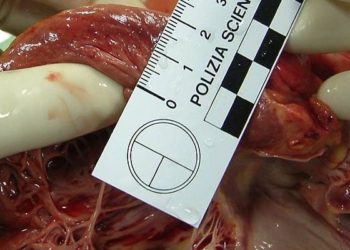
Image: PD

©2023 2 Minute Medicine, Inc. All rights reserved. No works may be reproduced without expressed written consent from 2 Minute Medicine, Inc. Inquire about licensing here. No article should be construed as medical advice and is not intended as such by the authors or by 2 Minute Medicine, Inc.

Tags: cardiologycirculatory deathHeart TransplantSurgerytransplanttransplant medicine
Previous Post

Neoadjuvant FOLFOX compared to Chemoradiotherapy in Locally Advanced Rectal Cancer

Next Post

Craniotomy and decompressive craniectomy comparable in managing acute subdural hematoma

RelatedReports

Nearly Half of All Pediatric Buprenorphine Exposures Result in Hospitalization
Cardiology

Clopidogrel monotherapy is superior to aspirin for secondary prevention in coronary artery disease

October 30, 2025
Medical vaccine exemptions increase after elimination of nonmedical exemptions
Cardiology

Influenza vaccination improves survival and reduces readmissions in patients hospitalized for acute heart failure

October 29, 2025
Implementation of pneumococcal vaccine programs linked to decreased antibiotic prescription
The Scan by 2 Minute Medicine®

World Health Organization warns that one in six infections now antibiotic resistant

October 23, 2025
β-blockers linked to improved survival in preserved ejection fraction heart failure
Cardiology

Multidomain rehabilitation after myocardial infarction improves outcomes in older adults

October 15, 2025
Next Post
Brain injuries linked with increased military suicide risk

Craniotomy and decompressive craniectomy comparable in managing acute subdural hematoma

Survival greater in cervical cancer patients undergoing abdominal hysterectomy compared to minimally invasive techniques: the LACC trial

Defunctioning stoma in anterior resection for rectal cancer does not impact anastomotic leakage

Adolescents’ muscle strength associated with lower cardiometabolic risk

Physical activity improves mental well-being after traumatic events

2 Minute Medicine® is an award winning, physician-run, expert medical media company. Our content is curated, written and edited by practicing health professionals who have clinical and scientific expertise in their field of reporting. Our editorial management team is comprised of highly-trained MD physicians. Join numerous brands, companies, and hospitals who trust our licensed content.

Recent Reports

  • Opioid overdose associated with concomitant use of hydrocodone and selective serotonin reuptake inhibitors
  • Analysis of arrhythmia and its risk factors in patients with COVID-19
  • Tai chi or cognitive behavioural therapy for treating insomnia in middle-aged and older adults: randomised non-inferiority trial
License Content
Terms of Use | Disclaimer
Cookie Policy
Privacy Statement (EU)
Disclaimer

© 2025 2 Minute Medicine, Inc. - Physician-written medical news.

  • Specialties
    • All Specialties, All Recent Reports
    • Cardiology
    • Chronic Disease
    • Dermatology
    • Emergency
    • Endocrinology
    • Gastroenterology
    • Imaging and Intervention
    • Infectious Disease
    • Nephrology
    • Neurology
    • Obstetrics
    • Oncology
    • Ophthalmology
    • Pediatrics
    • Pharma
    • Preclinical
    • Psychiatry
    • Public Health
    • Pulmonology
    • Rheumatology
    • Surgery
  • AI EvidencePulse™
  • Pharma
  • AI News
  • The Scan
  • Classics™
    • 2MM+ Online Access
    • Paperback and Ebook
  • Rewinds
  • Podcasts
  • Partners
    • License Content
    • Submit Press Release
    • Advertise with Us
  • Account
    • Subscribe
    • Sign-in
    • My account
No Result
View All Result

© 2025 2 Minute Medicine, Inc. - Physician-written medical news.