• About
  • Masthead
  • License Content
  • Advertise
  • Press Releases
  • Newsroom
  • RSS/Email List
  • 2MM Podcast
  • Write for us
  • Contact Us
2 Minute Medicine
No Result
View All Result

No products in the cart.

Sign in
SUBSCRIBE
  • About
  • Specialties
    • All Specialties, All Recent Reports
    • Cardiology
    • Chronic Disease
    • Dermatology
    • Emergency
    • Endocrinology
    • Gastroenterology
    • Imaging and Intervention
    • Infectious Disease
    • Nephrology
    • Neurology
    • Obstetrics
    • Oncology
    • Ophthalmology
    • Pediatrics
    • Pharma
    • Preclinical
    • Psychiatry
    • Public Health
    • Pulmonology
    • Rheumatology
    • Surgery
    • Rewinds
    • The Scan
  • EvidencePulse™
  • HypeCheck™
  • AI News
  • Classics™
    • 2MM+ Online Access
    • Paperback and Ebook
  • Tools
    • NPI Registry Lookup
    • RVU Search
  • Partners
    • License Content
    • Advertise with Us
2 Minute Medicine
  • About
  • Specialties
    • All Specialties, All Recent Reports
    • Cardiology
    • Chronic Disease
    • Dermatology
    • Emergency
    • Endocrinology
    • Gastroenterology
    • Imaging and Intervention
    • Infectious Disease
    • Nephrology
    • Neurology
    • Obstetrics
    • Oncology
    • Ophthalmology
    • Pediatrics
    • Pharma
    • Preclinical
    • Psychiatry
    • Public Health
    • Pulmonology
    • Rheumatology
    • Surgery
    • Rewinds
    • The Scan
  • EvidencePulse™
  • HypeCheck™
  • AI News
  • Classics™
    • 2MM+ Online Access
    • Paperback and Ebook
  • Tools
    • NPI Registry Lookup
    • RVU Search
  • Partners
    • License Content
    • Advertise with Us
Sign in
SUBSCRIBE
2 Minute Medicine
Sign in
Subscribe
2 Minute MedicineFree on Google PlayGet
✦ EvidencePulse™ by 2 Minute Medicine 2026 evidence scan 3 reports You asked top stroke trials 2026 Synthesizing medical evidence... Top 2026 stroke trial results: OCEANIC — ischemic stroke: 6.2% vs 8.4% OPTION* — mRS 0–1: 43.6% vs 34.2% ORIENTAL* — mRS 0–2: 58.6% vs 46.6% *Higher sICH in intervention arms Participants randomizedN OCEANIC 12,327 OPTION 570 ORIENTAL 564 Ask about guidelines or landmark trials... ↑ Try EvidencePulse™ Ask the evidence.
Get the signal.
Try it now → Physician-trained medical AI by 2 Minute Medicine
Home All Specialties Cardiology

Baxdrostat reduces blood pressure in previously treatment-resistant hypertension
byNhat Hung (Benjamin) LamandKiera Liblik
February 9, 2023
in Cardiology, Chronic Disease
Reading Time: 2 mins read
UTI associated with increased risk of preeclampsia
Share on FacebookShare on TwitterShare on LinkedIn

1. Compared to placebo, baxdrostat showed a dose-dependent reduction in blood pressure in patients with treatment-resistant hypertension. 

2. Baxdrostat was not associated with deaths, serious adverse events, or adrenocortical insufficiency.

Evidence Rating Level: 1 (Excellent)

Study Rundown: Hypertension is a leading risk factor for developing cardiovascular diseases, stroke, and death worldwide. While effective medications exist, 10% of patients have treatment-resistant hypertension. This means hypertension which persists despite the use of three distinct antihypertensives. The guidelines recommend adding a fourth agent, typically spironolactone, which is an aldosterone receptor antagonist. This medication, however, carries dose-limiting adverse events. Aldosterone synthase represents a novel yet elusive therapeutic target, due to its similarity to an enzyme required for cortisol synthesis. Baxdrostat is a newly developed specific aldosterone synthase inhibitor. The current study was a phase two trial to assess the efficacy and safety of baxdrostat in managing treatment-resistant hypertension. It was shown that, compared to a placebo, baxdrostat being added to patients’ current regimen resulted in a dose-dependent reduction in systolic and diastolic blood pressures. Its safety profile was also acceptable, with no drug-related serious adverse events and no adrenocortical insufficiency. Overall, despite its limited sample size and follow-up, the study demonstrated that baxdrostat was efficacious and safe in managing treatment-resistant hypertension and warrants further investigation into this novel therapy.

Click here to read the study in NEJM

In-Depth [randomized controlled trial]: The current study was a phase two randomized, double-blind, placebo-controlled, dose-ranging trial to assess the efficacy and safety of baxdrostat in managing treatment-resistant depression. Adults 18 years of age or older with treatment-resistant hypertension and a mean resting blood pressure of at least 130/80 mmHg were included. Exclusion criteria were a mean blood pressure of 180/110 mmHg or higher, an estimated glomerular filtration rate (GFR) of 45 or lower, or uncontrolled diabetes. A total of 275 patients were randomized 1:1:1:1 to receive baxdrostat 0.5mg, 1mg, 2mg, or a placebo once daily. The primary outcome was the change in mean systolic blood pressure from baseline to 12 weeks in the baxdrostat groups compared to placebo. At 12 weeks, the changes from baseline in systolic blood pressure were -20.3 mmHg, -17.5 mmHg, -12.1 mmHg, and -9.4 mmHg in the baxdrostat 2mg, 1mg, 0.5mg, and placebo groups, respectively. The difference in the change from baseline in systolic blood pressure between the baxdrostat 2mg and placebo groups was -11.0 mmHg (95% Confidence Interval [CI], -16.4 to -5.5; p=0.003), and the difference between the baxdrostat 1mg and placebo groups was -8.1 mmHg (95% CI, -13.5 to -2.8; p=0.003). The difference in the change from baseline in diastolic blood pressure was -5.2 mmHg (95% CI, -8.7 to -1.6) between the baxdrostat 2mg and placebo groups. The most common adverse events were urinary tract infections, hyperkalemia, headache, and fatigue. The rates of these events did not differ between groups and no adrenocortical insufficiency occurred. These results demonstrated that baxdrostat resulted in dose-dependent reductions in systolic and diastolic blood pressures among patients with treatment-resistant hypertension while maintaining an acceptable safety profile.

RELATED REPORTS

Chronic exposure to particulate matter is associated with increased cardiovascular risk

The mortality in-hospital for patients undergoing elective catheter ablation for atrial fibrillation is low

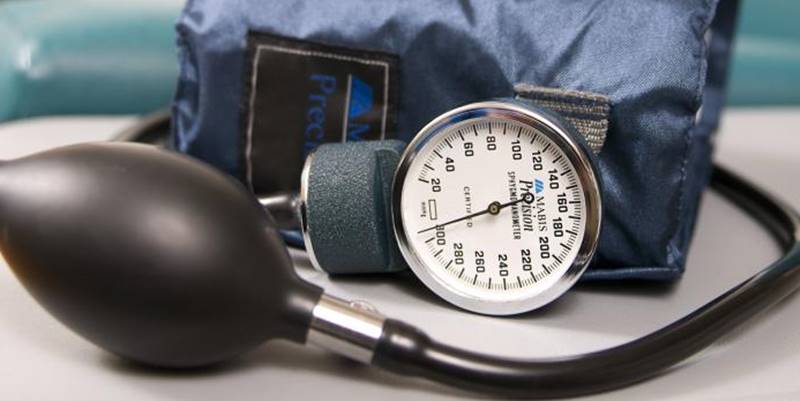
Image: PD

©2023 2 Minute Medicine, Inc. All rights reserved. No works may be reproduced without expressed written consent from 2 Minute Medicine, Inc. Inquire about licensing here. No article should be construed as medical advice and is not intended as such by the authors or by 2 Minute Medicine, Inc.

Tags: adrenocortical insufficiencyaldosterone synthase inhibitorbaxdrostatblood pressurecardiologychronic diseasehypertensiontreatment-resistant hypertension
Previous Post

Wellness Check: Spirituality

Next Post

The 2 Minute Medicine Podcast Episode 8

RelatedReports

A senior woman looks thoughtfully at a balance scale with a stethoscope and a heart illustration, symbolizing the assessment of cardiovascular risk and treatment decisions.
Cardiology

Chronic exposure to particulate matter is associated with increased cardiovascular risk

September 10, 2026
Rivaroxaban likely reduces risk of recurrent stroke in specific subgroup of patients with embolic stroke of undetermined source
Cardiology

The mortality in-hospital for patients undergoing elective catheter ablation for atrial fibrillation is low

September 4, 2026
Prevalence of hypertension among adolescents varies by race and BMI
Cardiology

A health coaching intervention may improve blood pressure control in postpartum women

August 12, 2026
Sleep duration, sleepiness, chronotype have variable associations with teen self-regulation
Weekly Rewinds

2 Minute Medicine Rewind August 10, 2026

August 10, 2026
Next Post

The 2 Minute Medicine Podcast Episode 8

Successful regional implementation of pediatric chest pain algorithm

Meningococcal group B vaccine effective at preventing meningococcal disease in children

Pediatric DKA associated with recent acute care visits

Glucagon-like peptide-1 receptor agonist may reduce incidence of diabetic retinopathy

✦ EvidencePulse™ by 2 Minute Medicine 2026 evidence scan 3 reports You asked top stroke trials 2026 Synthesizing medical evidence... Top 2026 stroke trial results: OCEANIC — ischemic stroke: 6.2% vs 8.4% OPTION* — mRS 0–1: 43.6% vs 34.2% ORIENTAL* — mRS 0–2: 58.6% vs 46.6% *Higher sICH in intervention arms Participants randomizedN OCEANIC 12,327 OPTION 570 ORIENTAL 564 Ask about guidelines or landmark trials... Try EvidencePulse™ Get the signal. Try it now → Physician-trained medical AI by 2 Minute Medicine

2MM+ All Access

Full details →
$4.99 /month

3-day free trial · cancel anytime

  • ✓100+ physician-written reports
  • ✓EvidencePulse™ + HypeCheck™
  • ✓Ad-free reading + newsletters
Start 3-day free trial

Then $4.99/month. Manage renewal in your account.

NPI Lookup · Free

Look up any US clinician

Search by name or NPI number, live from the CMS NPI Registry.

  • OIG exclusion check
  • Licenses and specialties
  • No account needed
Open NPI Lookup →

2 Minute Medicine® is an award winning, physician-run, expert medical media company. Our content is curated, written and edited by practicing health professionals who have clinical and scientific expertise in their field of reporting. Our editorial management team is comprised of highly-trained MD physicians. Join numerous brands, companies, and hospitals who trust our licensed content.

Recent Reports

  • Optogenetic therapy may partially restore vision in retinitis pigmentosa
  • An artificial intelligence system for human papillomavirus-positive dual stain cervical cancer screening reads p16-Ki67 slides
  • Elevated low-density lipoprotein cholesterol is a risk factor for atherosclerotic disease irrespective of familial hypercholesterolemia status
License Content
Terms of Use | Disclaimer
Cookie Policy

Get the app

Read 2 Minute Medicine on iPhone, iPad and Android.

Download on the App StoreGet it on Google Play
QR code for www.2minutemedicine.com/app
On a computer? Scan this with your phone’s camera.
2MM+ All Access Full details →

The medical literature, distilled daily.

Monthly plan selected: $4.99 /month.

$4.99/month

3-day free trial · cancel anytime

Start 3-day free trial

Then $4.99/month. Manage renewal in your account.

Yearly plan selected: $49.90 /year.

$49.90/year

2 months free

Start 3-day free trial

Then $49.90/year.

Membership benefits

  • ✓100+ physician-written reports
  • ✓AI EvidencePulse™ + HypeCheck™
  • ✓Ad-free reading + newsletters
  • ✓NPI watchlist + bulk NPI verification

Already a member? Sign in

  • Get the app
  • About
  • Specialties
    • All Specialties, All Recent Reports
    • Cardiology
    • Chronic Disease
    • Dermatology
    • Emergency
    • Endocrinology
    • Gastroenterology
    • Imaging and Intervention
    • Infectious Disease
    • Nephrology
    • Neurology
    • Obstetrics
    • Oncology
    • Ophthalmology
    • Pediatrics
    • Pharma
    • Preclinical
    • Psychiatry
    • Public Health
    • Pulmonology
    • Rheumatology
    • Surgery
    • Rewinds
    • The Scan
  • EvidencePulse™
  • HypeCheck™
  • AI News
  • Classics™
    • 2MM+ Online Access
    • Paperback and Ebook
  • Tools
    • NPI Registry Lookup
    • RVU Search
  • Partners
    • License Content
    • Advertise with Us
No Result
View All Result

© 2026 2 Minute Medicine, Inc. - Physician-written medical news.