• About
  • Masthead
  • License Content
  • Advertise
  • Submit Press Release
  • RSS/Email List
  • 2MM Podcast
  • Write for us
  • Contact Us
2 Minute Medicine
No Result
View All Result

No products in the cart.

SUBSCRIBE
  • About
  • Specialties
    • All Specialties, All Recent Reports
    • Cardiology
    • Chronic Disease
    • Dermatology
    • Emergency
    • Endocrinology
    • Gastroenterology
    • Imaging and Intervention
    • Infectious Disease
    • Nephrology
    • Neurology
    • Obstetrics
    • Oncology
    • Ophthalmology
    • Pediatrics
    • Pharma
    • Preclinical
    • Psychiatry
    • Public Health
    • Pulmonology
    • Rheumatology
    • Surgery
  • Tools+
    • EvidencePulse™
    • HypeCheck™
    • NPI Registry Lookup
    • RVU Search
  • Pharma
  • AI Roundup
  • The Scan+
  • Classics™+
    • 2MM+ Online Access
    • Paperback and Ebook
  • Rewinds
  • Partners
    • License Content
    • Submit Press Release
    • Advertise with Us
  • Account
    • Subscribe
    • My account
    • Cart
    • Sign-in
2 Minute Medicine
  • About
  • Specialties
    • All Specialties, All Recent Reports
    • Cardiology
    • Chronic Disease
    • Dermatology
    • Emergency
    • Endocrinology
    • Gastroenterology
    • Imaging and Intervention
    • Infectious Disease
    • Nephrology
    • Neurology
    • Obstetrics
    • Oncology
    • Ophthalmology
    • Pediatrics
    • Pharma
    • Preclinical
    • Psychiatry
    • Public Health
    • Pulmonology
    • Rheumatology
    • Surgery
  • Tools+
    • EvidencePulse™
    • HypeCheck™
    • NPI Registry Lookup
    • RVU Search
  • Pharma
  • AI Roundup
  • The Scan+
  • Classics™+
    • 2MM+ Online Access
    • Paperback and Ebook
  • Rewinds
  • Partners
    • License Content
    • Submit Press Release
    • Advertise with Us
  • Account
    • Subscribe
    • My account
    • Cart
    • Sign-in
SUBSCRIBE
2 Minute Medicine
Subscribe
EvidencePulse™ by 2 Minute Medicine 2026 evidence scan 3 reports You asked top stroke trials 2026 Synthesizing medical evidence... Top 2026 stroke trial results: OCEANIC — ischemic stroke: 6.2% vs 8.4% OPTION* — mRS 0–1: 43.6% vs 34.2% ORIENTAL* — mRS 0–2: 58.6% vs 46.6% *Higher sICH in intervention arms Participants randomizedN OCEANIC 12,327 OPTION 570 ORIENTAL 564 Ask about guidelines or landmark trials... ↑ Try EvidencePulse™ Ask the evidence.
Get the signal.
Try it now → Physician-trained medical AI by 2 Minute Medicine
Home All Specialties Cardiology

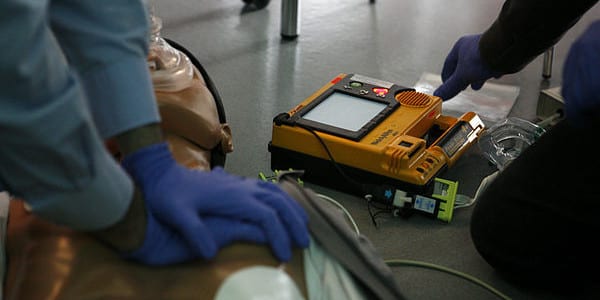
Black and Hispanic persons less likely to receive bystander CPR
byAndrew LeeandKiera Liblik
November 14, 2022
in Cardiology, Emergency, Public Health
Reading Time: 3 mins read
Cardiac mortality paradoxically lower during times of national cardiology conferences
Share on FacebookShare on Twitter

1. Black and Hispanic persons were less likely than White persons to receive bystander cardiopulmonary resuscitation (CPR) at home and in public.

2. The incidence of survival to discharge was lower for Black and Hispanic persons compared to White persons for both home and public cardiac arrests.

Evidence Rating Level: 1 (Excellent)

Study Rundown: CPR is an important intervention that significantly improves the odds of survival for persons with out-of-hospital cardiac arrest. Racial and ethnic disparities in survival outcomes for cardiac arrests have been previously reported. In the current study, Black and Hispanic persons were less likely than White persons to receive bystander CPR at home and in public locations. In context analyses, the incidence of bystander CPR was lower for Black and Hispanic persons in predominantly White, predominantly Black, or Hispanic and integrated neighborhoods when the cardiac arrest occurred at home or in public. The incidence of bystander CPR was also lower for Black and Hispanic persons compared to White persons in all neighborhoods regardless of the median annual household income. Additionally, Black and Hispanic persons had a lower incidence of both survival to discharge and favorable neurologic discharge than White persons for both home and public cardiac arrests. Black and Hispanic persons were less likely than White persons to receive bystander CPR in workplace settings, recreational facilities, and public transportation centers. The strengths of this study are the numerous context variables that were analyzed including racial and ethnic makeup of the neighborhood of arrest, median household income of the neighborhood, urbanicity, and persons initiating CPR. Although, information on the race and number of bystanders was not available.

Click to read the study in NEJM

Relevant Reading: Advanced cardiac life support in out-of-hospital cardiac arrest

RELATED REPORTS

Chronic exposure to particulate matter is associated with increased cardiovascular risk

The mortality in-hospital for patients undergoing elective catheter ablation for atrial fibrillation is low

Mortality in the post-housing period is high among homeless people in Ottawa, Canada

In-Depth [retrospective cohort]: The Cardiac Arrest Registry to Enhance Survival (CARES) is a multicenter registry of out-of-hospital cardiac arrests. This study utilized the CARES database to examine the incidence of bystander CPR in racial and ethnic groups. Analyses were stratified according to racial or ethnic makeup and the income of the neighborhood in which the arrest occurred. Multivariate logistic regression models were created for cardiac arrests that occurred at home or in public locations. These models also adjusted for age and sex, the calendar year of arrest, the cause of arrest, urbanicity, neighborhood racial and ethnic makeup, and neighborhood median income. A total of 84,296 cardiac arrests occurred at home and 25,758 arrests occurred in public. Black and Hispanic persons were less likely to receive bystander CPR at home (adjusted odds ratio [OR], 0.74; 95% Confidence interval [CI], 0.72 to 0.76) and in public (adjusted OR, 0.63; 95% CI, 0.60 to 0.66). Black and Hispanic persons were also less likely to receive CPR in predominantly White neighborhoods when cardiac arrests occurred at home (adjusted OR, 0.82; 95% CI 0.74 to 0.90) and in public (adjusted OR, 0.68; 95% CI 0.60 to 0.75). Black and Hispanic persons were also less likely to receive CPR in predominantly Black or Hispanic neighborhoods when cardiac arrests occurred at home (adjusted OR, 0.79; 95% CI 0.75 to 0.83) and in public (adjusted OR, 0.63; 95% CI 0.59 to 0.68). Black and Hispanic individuals were also less likely to survive until hospital discharge compared to White persons when they arrest at home (adjusted OR, 0.77, 95% CI, 0.73 to 0.81) and in public (adjusted OR, 0.60, 95% CI, 0.58 to 0.63). In summary, this study demonstrates that there are racial and ethnic disparities in bystander CPR during out-of-hospital cardiac arrest.

Image: PD

©2022 2 Minute Medicine, Inc. All rights reserved. No works may be reproduced without expressed written consent from 2 Minute Medicine, Inc. Inquire about licensing here. No article should be construed as medical advice and is not intended as such by the authors or by 2 Minute Medicine, Inc.

Tags: bystander CPRcardiac arrestcardiologycardiopulmonary resuscitation (CPR)cpremergencyethnic disparitiesout-of-hospital cardiac arrestpublic healthracial disparities
Previous Post

Children with migraines have elevated risk of anxiety and depressive symptoms and disorders

Next Post

Oxygenation targets do not alter outcomes in critically ill patients

RelatedReports

Cardiology

Chronic exposure to particulate matter is associated with increased cardiovascular risk

September 10, 2026
Rivaroxaban likely reduces risk of recurrent stroke in specific subgroup of patients with embolic stroke of undetermined source
Cardiology

The mortality in-hospital for patients undergoing elective catheter ablation for atrial fibrillation is low

September 4, 2026
“Housing First” linked to housing stability for homeless youth with mental illness
Public Health

Mortality in the post-housing period is high among homeless people in Ottawa, Canada

August 31, 2026
Risk of autism in offspring linked to maternal pregestational diabetes and severe obesity
Obstetrics

A landmark court ruling was associated with increased travel across state borders for abortion care

August 28, 2026
Next Post

Oxygenation targets do not alter outcomes in critically ill patients

Development of a risk index for colorectal cancer screening

Proguanil and atovaquone use may be associated with lower colorectal cancer risk

Parent mentors are effective at insuring uninsured children

Modifying advertising and nutrition labels helps reduce parental purchase of high-sugar beverages

EvidencePulse™ by 2 Minute Medicine 2026 evidence scan 3 reports You asked top stroke trials 2026 Synthesizing medical evidence... Top 2026 stroke trial results: OCEANIC — ischemic stroke: 6.2% vs 8.4% OPTION* — mRS 0–1: 43.6% vs 34.2% ORIENTAL* — mRS 0–2: 58.6% vs 46.6% *Higher sICH in intervention arms Participants randomizedN OCEANIC 12,327 OPTION 570 ORIENTAL 564 Ask about guidelines or landmark trials... ↑ Try EvidencePulse™ Ask the evidence.
Get the signal.
Try it now → Physician-trained medical AI by 2 Minute Medicine

2MM+ All Access

Full details →
$4.99 /month

5-day free trial · cancel anytime

  • ✓100+ physician-written reports
  • ✓EvidencePulse™ + HypeCheck™
  • ✓Ad-free reading + newsletters
Start 5-day free trial

Then $4.99/month. Manage renewal in your account.

2 Minute Medicine® is an award winning, physician-run, expert medical media company. Our content is curated, written and edited by practicing health professionals who have clinical and scientific expertise in their field of reporting. Our editorial management team is comprised of highly-trained MD physicians. Join numerous brands, companies, and hospitals who trust our licensed content.

Recent Reports

  • Deficits in executive function are not universal among patients with alcohol use disorder
  • Choice of bicarbonate-buffered solution versus compound sodium lactate as the intraoperative crystalloid solution during abdominal surgery remains unclear
  • Artificial intelligence (AI)-based coronary calcium quantification successfully identified patients who could benefit from lipid-lowering therapy
License Content
Terms of Use | Disclaimer
Cookie Policy
Cleantalk Pixel
2MM+ All Access Full details →

The medical literature, distilled daily.

Monthly plan selected: $4.99 /month.

$4.99/month

5-day free trial · cancel anytime

Start 5-day free trial

Then $4.99/month. Manage renewal in your account.

Yearly plan selected: $49.90 /year.

$49.90/year

2 months free · only $4.16/month

Start 5-day free trial

Then $49.90/year. Manage renewal in your account.

Membership benefits

  • ✓100+ physician-written reports
  • ✓AI EvidencePulse™ + HypeCheck™
  • ✓Ad-free reading + newsletters

Already a member? Sign in

  • About
  • Specialties
    • All Specialties, All Recent Reports
    • Cardiology
    • Chronic Disease
    • Dermatology
    • Emergency
    • Endocrinology
    • Gastroenterology
    • Imaging and Intervention
    • Infectious Disease
    • Nephrology
    • Neurology
    • Obstetrics
    • Oncology
    • Ophthalmology
    • Pediatrics
    • Pharma
    • Preclinical
    • Psychiatry
    • Public Health
    • Pulmonology
    • Rheumatology
    • Surgery
  • Tools
    • EvidencePulse™
    • HypeCheck™
    • NPI Registry Lookup
    • RVU Search
  • Pharma
  • AI Roundup
  • The Scan
  • Classics™
    • 2MM+ Online Access
    • Paperback and Ebook
  • Rewinds
  • Partners
    • License Content
    • Submit Press Release
    • Advertise with Us
  • Account
    • Subscribe
    • My account
    • Cart
    • Sign-in
No Result
View All Result

© 2026 2 Minute Medicine, Inc. - Physician-written medical news.