• About
  • Masthead
  • License Content
  • Advertise
  • Submit Press Release
  • RSS/Email List
  • 2MM Podcast
  • Write for us
  • Contact Us
2 Minute Medicine
No Result
View All Result

No products in the cart.

SUBSCRIBE
  • Specialties
    • All Specialties, All Recent Reports
    • Cardiology
    • Chronic Disease
    • Dermatology
    • Emergency
    • Endocrinology
    • Gastroenterology
    • Imaging and Intervention
    • Infectious Disease
    • Nephrology
    • Neurology
    • Obstetrics
    • Oncology
    • Ophthalmology
    • Pediatrics
    • Pharma
    • Preclinical
    • Psychiatry
    • Public Health
    • Pulmonology
    • Rheumatology
    • Surgery
  • Tools
    • EvidencePulse™
    • RVU Search
    • NPI Registry Lookup
  • Pharma
  • AI News
  • The Scan+
  • Classics™+
    • 2MM+ Online Access
    • Paperback and Ebook
  • Rewinds
  • Partners
    • License Content
    • Submit Press Release
    • Advertise with Us
  • Account
    • Subscribe
    • Sign-in
    • My account
2 Minute Medicine
  • Specialties
    • All Specialties, All Recent Reports
    • Cardiology
    • Chronic Disease
    • Dermatology
    • Emergency
    • Endocrinology
    • Gastroenterology
    • Imaging and Intervention
    • Infectious Disease
    • Nephrology
    • Neurology
    • Obstetrics
    • Oncology
    • Ophthalmology
    • Pediatrics
    • Pharma
    • Preclinical
    • Psychiatry
    • Public Health
    • Pulmonology
    • Rheumatology
    • Surgery
  • Tools
    • EvidencePulse™
    • RVU Search
    • NPI Registry Lookup
  • Pharma
  • AI News
  • The Scan+
  • Classics™+
    • 2MM+ Online Access
    • Paperback and Ebook
  • Rewinds
  • Partners
    • License Content
    • Submit Press Release
    • Advertise with Us
  • Account
    • Subscribe
    • Sign-in
    • My account
SUBSCRIBE
2 Minute Medicine
Subscribe
Home All Specialties Cardiology

Pericardiotomy after cardiac surgery may reduce the incidence of postoperative atrial fibrillation
byNeel MistryandTeddy Guo
December 14, 2021
in Cardiology, Chronic Disease, Surgery
Reading Time: 2 mins read
0
Share on FacebookShare on Twitter

1. Posterior left pericardiotomy resulted in significantly fewer episodes of atrial fibrillation, secondary to pericardial effusion, compared to no intervention.

2. The occurrence of postoperative major adverse events was comparable in both groups.

Evidence Rating Level: 1 (Excellent)

Study Rundown: Pericardial effusion is a common complication following cardiac surgery and may result in subsequent atrial fibrillation. The primary management for pericardial effusion is left pericardiotomy – an invasive but effective technique which involves draining of fluid from the pericardial sac. While some studies suggest that routine performance of left pericardiotomy may help to reduce atrial fibrillation post-cardiac surgery, the evidence is inconclusive. This randomized controlled trial aimed to assess whether performance of posterior left pericardiotomy helps to reduce the incidence of atrial fibrillation in patients with undergoing elective cardiac surgery. The primary outcome was the incidence of atrial fibrillation during the in-hospital stay, while key secondary outcomes included need for postoperative antiarrhythmic medications, systemic anticoagulation, and electrical cardioversion. According to results, patients assigned to left pericardiotomy reported significantly fewer instances of atrial fibrillation and pericardial effusion compared to no intervention. The median length of hospital admission and occurrence of adverse events were similar between groups. Overall, findings suggest that posterior left pericardiotomy after elective cardiac surgery may reduce the rate of secondary atrial fibrillation.

Click to read the study in The Lancet

Relevant Reading: Phase 3 Trial of Interleukin-1 Trap Rilonacept in Recurrent Pericarditis

RELATED REPORTS

Multimodal prehabilitation improves postoperative outcomes after spinal fusion surgery 

Two scores for risk stratification of adults presenting with syncope may be effective at identifying those with low risk

Resuscitative endovascular balloon occlusion of the aorta may not improve outcomes in adults with non-traumatic out-of-hospital cardiac arrest

In-depth [randomized controlled trial]: Between Sept 18, 2017, and Aug 2, 2021, 3601 patients were assessed for eligibility at the New York Presbyterian Hospital in USA. Adult patients with no prior history of atrial fibrillation or arrhythmias undergoing elective cardiac surgery for coronary arteries, the aortic valve, or ascending aorta were included. Altogether, 420 patients were included (212 in pericardiotomy group and 208 in control group) in the final analysis. The majority (76%) were male and median age among patients was 61.0 years (interquartile range [IQR] 53.0-70.0). Patients who underwent a left pericardiotomy reported significantly fewer episodes of atrial fibrillation compared to the control group (17% vs. 32%, odds ratio [OR] 0.44, 95% confidence interval [CI] 0.27-0.70, p=0.0007). Furthermore, fewer cases of postoperative pericardial effusion were noted in the intervention group compared to the no intervention group (12% vs. 21%, relative risk [RR] 0.58, 95% CI 0.37-0.91). The incidence of postoperative major adverse events was comparable between the two groups. Overall, a strong correlation was noted between pericardiotomy and reduction in the incidence of atrial fibrillation.

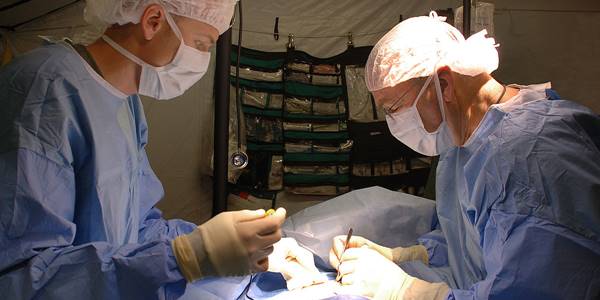
Image: PD

©2021 2 Minute Medicine, Inc. All rights reserved. No works may be reproduced without expressed written consent from 2 Minute Medicine, Inc. Inquire about licensing here. No article should be construed as medical advice and is not intended as such by the authors or by 2 Minute Medicine, Inc.

Tags: arrhythmiasatrial fibrillationCardiac surgerycardiologypericardial effusionPericardiotomyPosterior pericardiotomyPostoperative complications
Previous Post

#VisualAbstract: Mohs micrographic surgery is more cost effective than wide local excision for T2a cutaneous squamous cell carcinomas

Next Post

The use of COVID-19 convalescent plasma not beneficial to patients hospitalized with COVID-19

RelatedReports

Traumatic spinal cord injury rates remain stable in the United States
Orthopedic Surgery

Multimodal prehabilitation improves postoperative outcomes after spinal fusion surgery 

June 15, 2026
Computed tomography improves diagnostic certainty in the emergency department
Cardiology

Two scores for risk stratification of adults presenting with syncope may be effective at identifying those with low risk

May 29, 2026
Antiarrhythmic drugs have no survival benefit in shock-refractory out-of-hospital cardiac arrest
Cardiology

Resuscitative endovascular balloon occlusion of the aorta may not improve outcomes in adults with non-traumatic out-of-hospital cardiac arrest

May 14, 2026
Single-site robotic cholecystectomy is safe, but technically challenging
Gastroenterology

A robotic approach for ventral hernia repair may improve postoperative outcomes

May 4, 2026
Next Post
Novel coronavirus identified from patients with pneumonia in Wuhan, China

The use of COVID-19 convalescent plasma not beneficial to patients hospitalized with COVID-19

#VisualAbstract: High-flow oxygen therapy reduces intubation requirements and decreases recovery time in severe COVID-19 infections compared to conventional oxygen therapy

#VisualAbstract: High-flow oxygen therapy reduces intubation requirements and decreases recovery time in severe COVID-19 infections compared to conventional oxygen therapy

#VisualAbstract: Mohs micrographic surgery is more cost effective than wide local excision for T2a cutaneous squamous cell carcinomas

#VisualAbstract: Incidence of HPV-associated oropharyngeal carcinoma expected to increase for older adults between 2020-2045

2 Minute Medicine® is an award winning, physician-run, expert medical media company. Our content is curated, written and edited by practicing health professionals who have clinical and scientific expertise in their field of reporting. Our editorial management team is comprised of highly-trained MD physicians. Join numerous brands, companies, and hospitals who trust our licensed content.

Recent Reports

  • The physician strike in South Korea was associated with higher mortality
  • 2 Minute Medicine Rewind July 6, 2026
  • Behavioral support does not improve patient-directed opioid tapering success
License Content
Terms of Use | Disclaimer
Cookie Policy
Privacy Statement (EU)
Disclaimer
  • Specialties
    • All Specialties, All Recent Reports
    • Cardiology
    • Chronic Disease
    • Dermatology
    • Emergency
    • Endocrinology
    • Gastroenterology
    • Imaging and Intervention
    • Infectious Disease
    • Nephrology
    • Neurology
    • Obstetrics
    • Oncology
    • Ophthalmology
    • Pediatrics
    • Pharma
    • Preclinical
    • Psychiatry
    • Public Health
    • Pulmonology
    • Rheumatology
    • Surgery
  • Tools
    • EvidencePulse™
    • RVU Search
    • NPI Registry Lookup
  • Pharma
  • AI News
  • The Scan
  • Classics™
    • 2MM+ Online Access
    • Paperback and Ebook
  • Rewinds
  • Partners
    • License Content
    • Submit Press Release
    • Advertise with Us
  • Account
    • Subscribe
    • Sign-in
    • My account
No Result
View All Result

© 2026 2 Minute Medicine, Inc. - Physician-written medical news.