• About
  • Masthead
  • License Content
  • Advertise
  • Submit Press Release
  • RSS/Email List
  • 2MM Podcast
  • Write for us
  • Contact Us
2 Minute Medicine
No Result
View All Result

No products in the cart.

SUBSCRIBE
  • Specialties
    • All Specialties, All Recent Reports
    • Cardiology
    • Chronic Disease
    • Dermatology
    • Emergency
    • Endocrinology
    • Gastroenterology
    • Imaging and Intervention
    • Infectious Disease
    • Nephrology
    • Neurology
    • Obstetrics
    • Oncology
    • Ophthalmology
    • Pediatrics
    • Pharma
    • Preclinical
    • Psychiatry
    • Public Health
    • Pulmonology
    • Rheumatology
    • Surgery
  • Tools
    • EvidencePulse™
    • RVU Search
    • NPI Registry Lookup
  • Pharma
  • AI News
  • The Scan+
  • Classics™+
    • 2MM+ Online Access
    • Paperback and Ebook
  • Rewinds
  • Partners
    • License Content
    • Submit Press Release
    • Advertise with Us
  • Account
    • Subscribe
    • Sign-in
    • My account
2 Minute Medicine
  • Specialties
    • All Specialties, All Recent Reports
    • Cardiology
    • Chronic Disease
    • Dermatology
    • Emergency
    • Endocrinology
    • Gastroenterology
    • Imaging and Intervention
    • Infectious Disease
    • Nephrology
    • Neurology
    • Obstetrics
    • Oncology
    • Ophthalmology
    • Pediatrics
    • Pharma
    • Preclinical
    • Psychiatry
    • Public Health
    • Pulmonology
    • Rheumatology
    • Surgery
  • Tools
    • EvidencePulse™
    • RVU Search
    • NPI Registry Lookup
  • Pharma
  • AI News
  • The Scan+
  • Classics™+
    • 2MM+ Online Access
    • Paperback and Ebook
  • Rewinds
  • Partners
    • License Content
    • Submit Press Release
    • Advertise with Us
  • Account
    • Subscribe
    • Sign-in
    • My account
SUBSCRIBE
2 Minute Medicine
Subscribe
Home All Specialties Cardiology

Personalized cooler dialysate does not reduce cardiovascular events for hemodialysis patients
byJessie WillisandTeddy Guo
November 23, 2022
in Cardiology, Chronic Disease, Nephrology
Reading Time: 2 mins read
0
Share on FacebookShare on Twitter

1. There was no significant difference in the risk of cardiovascular-related death or hospitalization between the personalized cooler dialysate group and standard temperature dialysate group.

2. Additionally, there was no significant difference in the mean drop of intradialytic systolic blood pressure between the two groups.

Evidence Rating Level: 1 (Excellent)

Study Rundown: Cardiovascular disease is the leading cause of death in dialysis patients. The dialysate is typically set to a standard temperature of 36.5°C or 37.0°C. In recent years, many centres have begun to use a cooler dialysate for believed cardiovascular benefits hemodynamic stability during dialysis. This study, MyTEMP, was the first large-scale, cluster-randomized trial assessing the effects of cooler dialysate compared to standard temperature on cardiovascular mortality. Centres across Ontario were randomized to either personalized cooler dialysate or standardized temperature dialysate. The primary outcome was a composite of cardiovascular-related death or hospitalization. This study demonstrated that personalized cooler dialysate did not significantly reduce the risk of the primary outcome. The secondary outcome, which was the effect on the recorded drop in intradialytic systolic blood pressure, was also not significant. Limitations of this study include the small between-group difference between the two groups, as 36.5°C was used in the standard group opposed to 37.0°C. Nonetheless, this large-scale study provides high quality evidence that personalized cooler dialysate does not reduce cardiovascular mortality and hospitalization. Considering a cooler dialysate may result in greater patient discomfort, the adoption of cooler dialysate temperatures internationally should be evaluated.

Click to read the study in The Lancet

Relevant Reading: Randomized controlled trial of individualized dialysate cooling for cardiac protection in hemodialysis patients

RELATED REPORTS

An intradialytic exercise intervention did not improve dialysis adequacy

2 Minute Medicine Rewind May 18, 2026

Point-of-care ultrasound may be effective at identifying nephrolithiasis in the emergency department

In-Depth [cluster-randomized trial]: MyTEMP was a cluster-randomized superiority trial conducted in 84 of the 97 hemodialysis centres across Ontario, Canada. Centres were eligible if they provided maintenance hemodialysis to at least 15 different patients per week. The trial period ran for a total of 4 years between April 3, 2017 to March 31, 2021. Centres were randomized 1:1 to either personalized cooler dialysate (n=42, 8000 patients) or standard temperate dialysate (n=42, 7413). In the personalized cooler dialysate group, the dialysate temperature was set to 0.5 degrees Celsius below the patient’s pre-dialysis body temperature. Standard dialysate temperature was set at 36.5 degrees Celsius. The prespecified primary outcome was a composite of cardiovascular-related death or hospital admission with a major cardiovascular event. The mean age of enrolled participants was 66 years and 39.6% were women. The median length of follow-up was 1.8 years. The mean dialysate temperature was 35.8 and 36.4 degrees Celsius in the personalized and standard group, respectively. The primary outcome occurred in 1711 (21.4%) of the personalized cooler group versus 1658 (22.4%) of the standard temperature group (adjusted hazard ratio 1.00, 96% CI 0.89 to 1.11, p=0.93). The mean drop in intradialytic systolic blood pressure was 0.5 mmHg greater in the standard temperature group compared to the personalized cooler group (p=0.14).

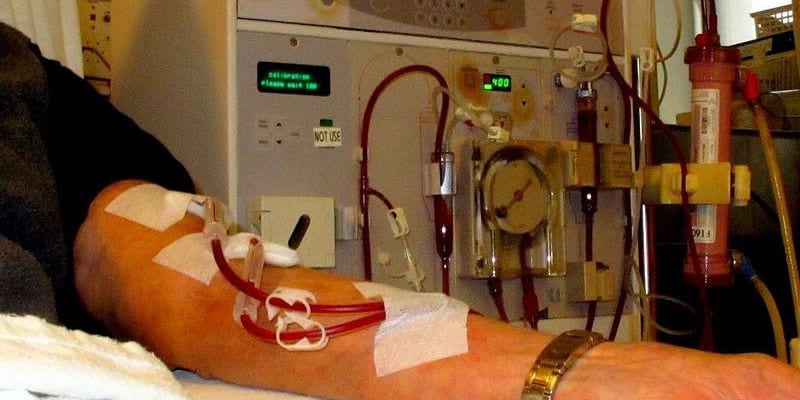
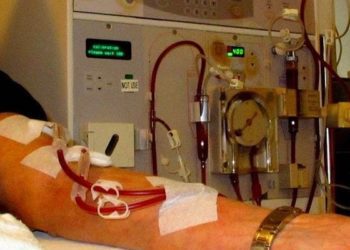
Image: PD

©2022 2 Minute Medicine, Inc. All rights reserved. No works may be reproduced without expressed written consent from 2 Minute Medicine, Inc. Inquire about licensing here. No article should be construed as medical advice and is not intended as such by the authors or by 2 Minute Medicine, Inc.
Tags: cardiovascular eventsdialysisdialysis temperaturehemodialysishypotensionmajor cardiovascular eventsmyocardial infarctionnephrologypersonalized cooler dialysatestroke
Previous Post

Poor pregnancy outcomes including placental pathologies associated with amniotic fluid embolism and contribute to maternal mortality

Next Post

Wellness Check: Exercise

RelatedReports

Fish oil and aspirin did not reduce arteriovenous fistula failure: The FAVOURED trail
Chronic Disease

An intradialytic exercise intervention did not improve dialysis adequacy

May 18, 2026
Transthoracic echocardiography can rule out endocarditis in low-risk bacteremic patients
Weekly Rewinds

2 Minute Medicine Rewind May 18, 2026

May 18, 2026
Renal stones in women linked with increased risk of coronary heart disease
Emergency

Point-of-care ultrasound may be effective at identifying nephrolithiasis in the emergency department

May 11, 2026
Tenofovir disoprovil fumarate HIV prophylaxis linked with minimal kidney impact
Nephrology

Sparsentan (Filspari) becomes first approved treatment for focal segmental glomerulosclerosis

May 6, 2026
Next Post
Exercise improves aromatase inhibitor-induced arthralgia in breast cancer survivors

Wellness Check: Exercise

Opioid-reduced analgesia using esketamine for gynecological surgery associated with similar outcomes as opioid analgesia

#VisualAbstract: Intensive blood pressure control post-endovascular thrombectomy after acute ischemic stroke linked with worse clinical outcomes

#VisualAbstract: Intensive blood pressure control post-endovascular thrombectomy after acute ischemic stroke linked with worse clinical outcomes

2 Minute Medicine® is an award winning, physician-run, expert medical media company. Our content is curated, written and edited by practicing health professionals who have clinical and scientific expertise in their field of reporting. Our editorial management team is comprised of highly-trained MD physicians. Join numerous brands, companies, and hospitals who trust our licensed content.

Recent Reports

  • The physician strike in South Korea was associated with higher mortality
  • 2 Minute Medicine Rewind July 6, 2026
  • Behavioral support does not improve patient-directed opioid tapering success
License Content
Terms of Use | Disclaimer
Cookie Policy
Privacy Statement (EU)
Disclaimer
  • Specialties
    • All Specialties, All Recent Reports
    • Cardiology
    • Chronic Disease
    • Dermatology
    • Emergency
    • Endocrinology
    • Gastroenterology
    • Imaging and Intervention
    • Infectious Disease
    • Nephrology
    • Neurology
    • Obstetrics
    • Oncology
    • Ophthalmology
    • Pediatrics
    • Pharma
    • Preclinical
    • Psychiatry
    • Public Health
    • Pulmonology
    • Rheumatology
    • Surgery
  • Tools
    • EvidencePulse™
    • RVU Search
    • NPI Registry Lookup
  • Pharma
  • AI News
  • The Scan
  • Classics™
    • 2MM+ Online Access
    • Paperback and Ebook
  • Rewinds
  • Partners
    • License Content
    • Submit Press Release
    • Advertise with Us
  • Account
    • Subscribe
    • Sign-in
    • My account
No Result
View All Result

© 2026 2 Minute Medicine, Inc. - Physician-written medical news.