
• About
  • Masthead
  • License Content
  • Advertise
  • Press Releases
  • Newsroom
  • RSS/Email List
  • 2MM Podcast
  • Write for us
  • Contact Us
2 Minute Medicine
No Result
View All Result

No products in the cart.

Sign in
SUBSCRIBE
  • About
  • Specialties
    • All Specialties, All Recent Reports
    • Cardiology
    • Chronic Disease
    • Dermatology
    • Emergency
    • Endocrinology
    • Gastroenterology
    • Imaging and Intervention
    • Infectious Disease
    • Nephrology
    • Neurology
    • Obstetrics
    • Oncology
    • Ophthalmology
    • Pediatrics
    • Pharma
    • Preclinical
    • Psychiatry
    • Public Health
    • Pulmonology
    • Rheumatology
    • Surgery
    • Rewinds
    • The Scan
  • EvidencePulse™
  • HypeCheck™
  • AI News
  • Classics™
    • 2MM+ Online Access
    • Paperback and Ebook
  • Tools
    • NPI Registry Lookup
    • RVU Search
    • Medical School Rankings
  • Partners
    • License Content
    • Advertise with Us
2 Minute Medicine
  • About
  • Specialties
    • All Specialties, All Recent Reports
    • Cardiology
    • Chronic Disease
    • Dermatology
    • Emergency
    • Endocrinology
    • Gastroenterology
    • Imaging and Intervention
    • Infectious Disease
    • Nephrology
    • Neurology
    • Obstetrics
    • Oncology
    • Ophthalmology
    • Pediatrics
    • Pharma
    • Preclinical
    • Psychiatry
    • Public Health
    • Pulmonology
    • Rheumatology
    • Surgery
    • Rewinds
    • The Scan
  • EvidencePulse™
  • HypeCheck™
  • AI News
  • Classics™
    • 2MM+ Online Access
    • Paperback and Ebook
  • Tools
    • NPI Registry Lookup
    • RVU Search
    • Medical School Rankings
  • Partners
    • License Content
    • Advertise with Us
Sign in
SUBSCRIBE
2 Minute Medicine
Sign in
Subscribe
2 Minute MedicineFree on Google PlayGet
✦ EvidencePulse™ by 2 Minute Medicine 2026 evidence scan 3 reports You asked top stroke trials 2026 Synthesizing medical evidence... Top 2026 stroke trial results: OCEANIC — ischemic stroke: 6.2% vs 8.4% OPTION* — mRS 0–1: 43.6% vs 34.2% ORIENTAL* — mRS 0–2: 58.6% vs 46.6% *Higher sICH in intervention arms Participants randomizedN OCEANIC 12,327 OPTION 570 ORIENTAL 564 Ask about guidelines or landmark trials... ↑ Try EvidencePulse™ Ask the evidence.
Get the signal.
Try it now → Physician-trained medical AI by 2 Minute Medicine
Home Wellness

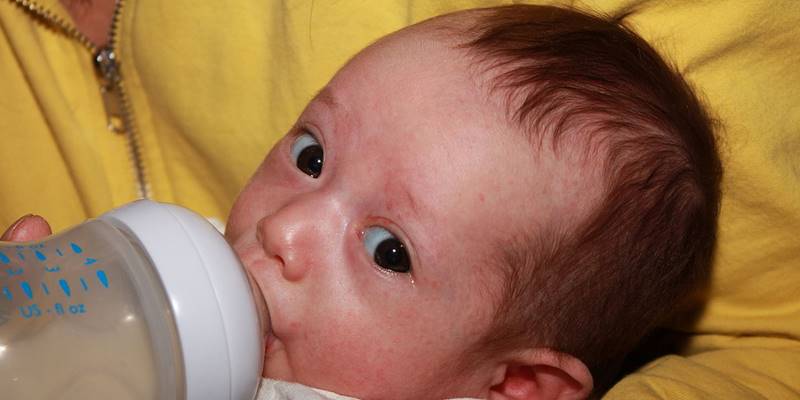
Preterm formula is similarly effective to human milk fortifiers as breastmilk supplement
byYidi WangandAvneesh Bhangu
June 21, 2021
in Wellness
Reading Time: 2 mins read
Head circumference better predicts labor dystocia than weight
Share on FacebookShare on TwitterShare on LinkedIn

1. Low-weight infants fed with breast milk supplemented with pre-term formula had noninferior weight gain compared to infants fed with breast milk supplemented with commercial human milk fortifiers (HMF).

2. The incidence of feed intolerance was lower in low-weight infants fed with breast milk supplemented with pre-term formula compared to infants fed with breast milk supplemented with HMF.

Evidence Rating Level: 1 (Excellent)

For low-birth weight infants, human milk does not provide adequate nutrients at usual feeding volumes. Therefore, several human milk fortifiers (HMF) have been developed as breast milk supplements to supply high nutrient requirements of low-birth weight infants. However, HMFs do pose potential risk of complications such as feed intolerance and necrotizing enterocolitis (NEC) and are very costly, which may preclude accessibility in low-and-middle income countries.

This new noninferiority randomized trial was conducted to determine if preterm formula (PTF) was as clinically effective as HMF supplementation. 123 low-birth weight infants receiving at least 100 ml/kg/d of feeds and consuming 75% of milk or more were randomized to breast milk fortified with PTF (60 participants) or HMF (63 participants). Neonates with major congenital abnormalities were excluded. The primary outcome was rate of in-hospital weight gain from randomization. Overall, there was no difference in weight gain observed between groups up to time of discharge or at 40 weeks’ corrected gestational age. Furthermore, infants in the PFT group had lower incidence of complications such as feed intolerance and NECs. Lastly, the cost differential for PTF was around $0.3 per day, which was significantly lower than that of HMF (around $4 per day). Overall, these findings demonstrated that PFT was a non-inferior, safe, and lower-cost fortification strategy that may be more widely accessible and used. However, a study with longer post-discharge follow-up and a systematic cost-effectiveness analysis would be needed to better understand the clinical efficacy and feasibility of implementing this measure globally. 

Click to read the study in JAMA Pediatrics

RELATED REPORTS

#VisualAbstract: Preterm formula is similarly effective to human milk fortifiers as breastmilk supplement

Wellness Check: Nutrition

Image: PD

©2021 2 Minute Medicine, Inc. All rights reserved. No works may be reproduced without expressed written consent from 2 Minute Medicine, Inc. Inquire about licensing here. No article should be construed as medical advice and is not intended as such by the authors or by 2 Minute Medicine, Inc.


Tags: human milk fortifier (HMF)low-weight infantpre-term formula
Previous Post

Postpartum mental illness increased in frequency during the COVID-19 pandemic

Next Post

#VisualAbstract Granuloma annulare was associated with increased risk of type 2 diabetes, hyperlipidemia, and certain autoimmune conditions

RelatedReports

#VisualAbstract: Preterm formula is similarly effective to human milk fortifiers as breastmilk supplement
StudyGraphics

#VisualAbstract: Preterm formula is similarly effective to human milk fortifiers as breastmilk supplement

June 24, 2021
Improved glycemic control in type 1 diabetics on very low-carbohydrate diets
Wellness

Wellness Check: Nutrition

June 21, 2021
Next Post
#VisualAbstract Granuloma annulare was associated with increased risk of type 2 diabetes, hyperlipidemia, and certain autoimmune conditions

#VisualAbstract Granuloma annulare was associated with increased risk of type 2 diabetes, hyperlipidemia, and certain autoimmune conditions

Compliance-linked incentives increase infant immunizations rates in rural India

Routine vaccination of children declined during the COVID-19 pandemic

Thrombophilia-associated stillbirth risk appears limited to factor V Leiden

Prophylactic anticoagulation associated with lower in-hospital and 60-day mortality for patients hospitalized with COVID-19

✦ EvidencePulse™ by 2 Minute Medicine 2026 evidence scan 3 reports You asked top stroke trials 2026 Synthesizing medical evidence... Top 2026 stroke trial results: OCEANIC — ischemic stroke: 6.2% vs 8.4% OPTION* — mRS 0–1: 43.6% vs 34.2% ORIENTAL* — mRS 0–2: 58.6% vs 46.6% *Higher sICH in intervention arms Participants randomizedN OCEANIC 12,327 OPTION 570 ORIENTAL 564 Ask about guidelines or landmark trials... Try EvidencePulse™ Get the signal. Try it now → Physician-trained medical AI by 2 Minute Medicine

2MM+ All Access

Full details →
$4.99 /month

3-day free trial · cancel anytime

  • ✓100+ physician-written reports
  • ✓EvidencePulse™ + HypeCheck™
  • ✓Ad-free reading + newsletters
Start 3-day free trial

Then $4.99/month. Manage renewal in your account.

NPI Lookup · Free

Look up any US clinician

Search by name or NPI number, live from the CMS NPI Registry.

  • OIG exclusion check
  • Licenses and specialties
  • No account needed
Open NPI Lookup →

2 Minute Medicine® is an award winning, physician-run, expert medical media company. Our content is curated, written and edited by practicing health professionals who have clinical and scientific expertise in their field of reporting. Our editorial management team is comprised of highly-trained MD physicians. Join numerous brands, companies, and hospitals who trust our licensed content.

Recent Reports

  • Pennsylvania reports 1,260 measles cases across 43 counties in 2026
  • Zanidatamab-hrii combinations improved survival in first-line HER2-positive advanced gastroesophageal adenocarcinoma
  • Upacicalcet reduced parathyroid hormone in hemodialysis patients with secondary hyperparathyroidism in PATH-1 and PATH-2
License Content
Terms of Use | Disclaimer
Cookie Policy

Get the app

Read 2 Minute Medicine on iPhone, iPad and Android.

Download on the App StoreGet it on Google Play
QR code for www.2minutemedicine.com/app
On a computer? Scan this with your phone’s camera.
2MM+ All Access Full details →

The medical literature, distilled daily.

Monthly plan selected: $4.99 /month.

$4.99/month

3-day free trial · cancel anytime

Start 3-day free trial

Then $4.99/month. Manage renewal in your account.

Yearly plan selected: $49.90 /year.

$49.90/year

2 months free

Start 3-day free trial

Then $49.90/year.

Membership benefits

  • ✓100+ physician-written reports
  • ✓AI EvidencePulse™ + HypeCheck™
  • ✓Ad-free reading + newsletters
  • ✓NPI watchlist + bulk NPI verification

Already a member? Sign in

  • Get the app
  • About
  • Specialties
    • All Specialties, All Recent Reports
    • Cardiology
    • Chronic Disease
    • Dermatology
    • Emergency
    • Endocrinology
    • Gastroenterology
    • Imaging and Intervention
    • Infectious Disease
    • Nephrology
    • Neurology
    • Obstetrics
    • Oncology
    • Ophthalmology
    • Pediatrics
    • Pharma
    • Preclinical
    • Psychiatry
    • Public Health
    • Pulmonology
    • Rheumatology
    • Surgery
    • Rewinds
    • The Scan
  • EvidencePulse™
  • HypeCheck™
  • AI News
  • Classics™
    • 2MM+ Online Access
    • Paperback and Ebook
  • Tools
    • NPI Registry Lookup
    • RVU Search
    • Medical School Rankings
  • Partners
    • License Content
    • Advertise with Us
No Result
View All Result

© 2026 2 Minute Medicine, Inc. - Physician-written medical news.