• About
  • Masthead
  • License Content
  • Advertise
  • Submit Press Release
  • RSS/Email List
  • 2MM Podcast
  • Write for us
  • Contact Us
2 Minute Medicine
No Result
View All Result

No products in the cart.

SUBSCRIBE
  • About
  • Specialties
    • All Specialties, All Recent Reports
    • Cardiology
    • Chronic Disease
    • Dermatology
    • Emergency
    • Endocrinology
    • Gastroenterology
    • Imaging and Intervention
    • Infectious Disease
    • Nephrology
    • Neurology
    • Obstetrics
    • Oncology
    • Ophthalmology
    • Pediatrics
    • Pharma
    • Preclinical
    • Psychiatry
    • Public Health
    • Pulmonology
    • Rheumatology
    • Surgery
  • Tools+
    • EvidencePulse™
    • HypeCheck™
    • NPI Registry Lookup
    • RVU Search
  • Pharma
  • AI Roundup
  • The Scan+
  • Classics™+
    • 2MM+ Online Access
    • Paperback and Ebook
  • Rewinds
  • Partners
    • License Content
    • Submit Press Release
    • Advertise with Us
  • Account
    • Subscribe
    • My account
    • Cart
    • Sign-in
2 Minute Medicine
  • About
  • Specialties
    • All Specialties, All Recent Reports
    • Cardiology
    • Chronic Disease
    • Dermatology
    • Emergency
    • Endocrinology
    • Gastroenterology
    • Imaging and Intervention
    • Infectious Disease
    • Nephrology
    • Neurology
    • Obstetrics
    • Oncology
    • Ophthalmology
    • Pediatrics
    • Pharma
    • Preclinical
    • Psychiatry
    • Public Health
    • Pulmonology
    • Rheumatology
    • Surgery
  • Tools+
    • EvidencePulse™
    • HypeCheck™
    • NPI Registry Lookup
    • RVU Search
  • Pharma
  • AI Roundup
  • The Scan+
  • Classics™+
    • 2MM+ Online Access
    • Paperback and Ebook
  • Rewinds
  • Partners
    • License Content
    • Submit Press Release
    • Advertise with Us
  • Account
    • Subscribe
    • My account
    • Cart
    • Sign-in
SUBSCRIBE
2 Minute Medicine
Subscribe
EvidencePulse™ by 2 Minute Medicine 2026 evidence scan 3 reports You asked top stroke trials 2026 Synthesizing medical evidence... Top 2026 stroke trial results: OCEANIC — ischemic stroke: 6.2% vs 8.4% OPTION* — mRS 0–1: 43.6% vs 34.2% ORIENTAL* — mRS 0–2: 58.6% vs 46.6% *Higher sICH in intervention arms Participants randomizedN OCEANIC 12,327 OPTION 570 ORIENTAL 564 Ask about guidelines or landmark trials... ↑ Try EvidencePulse™ Ask the evidence.
Get the signal.
Try it now → Physician-trained medical AI by 2 Minute Medicine
Home All Specialties Chronic Disease

Proton pump inhibitor boluses as effective as infusions in ulcer bleeds
byAnees DaudandJames Jiang
September 8, 2014
in Chronic Disease, Emergency, Gastroenterology
Reading Time: 3 mins read
Proton pump inhibitor boluses as effective as infusions in ulcer bleeds
Share on FacebookShare on Twitter

1. Bleeding ulcers in the stomach and duodenum that are deemed high risk for rebleeding are defined by three endoscopically determined characteristics: active bleeding, visible vessel, or an adherent clot.

2. This meta-analysis suggests that, in these high risk situations, intermittent boluses of proton pump inhibitors (PPI) have the same outcomes as the current standard of care, which includes an initial bolus followed by an intravenous infusion of PPI for 72hrs.

Evidence Rating Level: 1 (Excellent)

Study Rundown: Ulcers are one of the most common causes of gastrointestinal bleeds. Current standard of care in patients with high risk bleeding ulcers is to administer an intravenous bolus of a proton pump inhibitor (PPI), followed by a continuous infusion for 72 hours. However, there is also data to suggest that these patients have an equally favorable outcome with intermittent PPI boluses. This could potentially save significant money and resources. This study, a systematic review and meta-analysis, was done to determine whether intermittent bolus PPI is non-inferior to continuous PPI infusion in patients at high risk of rebleeding. Classically, high risk of bleeding is defined endoscopically, where any one of the following is visualized: active bleeding, visible vessel, or adherent clot.

This meta-analysis suggests that in these high-risk situations, intermittent boluses of a PPI have the same outcomes as continuous PPI infusion. A major strength of this study is that only randomized controlled trials were included, and different databases were used to ensure that all were included in the analysis. Weaknesses of the study, which are present in all meta-analyses, are variations in the study protocol in the different studies, which leads a possible bias in the interpretation. Lastly, the nature of study also cannot provide the optimal PPI bolus doses or length of time, since these were variable in the studies.

Click to read the study, published today in JAMA Internal Medicine

RELATED REPORTS

Proton pump inhibitor use associated with increased mortality risk in kidney transplant patients

2 Minute Medicine Rewind June 22, 2020

Proton pump inhibitor use associated with development of chronic kidney disease

Relevant Reading: Intermittent versus continuous pantoprazole infusion in peptic ulcer bleeding: a prospective randomized study

In-Depth [meta-analysis]: All randomized controlled trials from three bibliographic databases that compared bolus PPI to continuous PPI after endoscopic management of a high risk bleeding ulcer were include in this meta-analysis. No restrictions were placed on the frequency of PPI boluses used in the studies, or route of administration (intravenous or oral). Continuous PPI therapy was an 80 mg intravenous bolus followed by a continuous 8 mg per hour intravenous infusion for 72 hours, which is current standard treatment. The primary outcome was recurrent bleeding within seven days. Secondary outcomes included recurrent bleeding in three days and 30 days. A total of 13 studies were included in this analysis.

The primary population for analysis was per protocol. For the primary outcome of recurrent bleeding within seven days, intermittent PPI therapy was non-inferior to continuous PPI (RR 0.72; 1-sided 95% CI upper boundary 0.97). The same held true for the secondary outcomes: recurrent bleeding in three days (RR 0.73; 1-sided 95% CI upper boundary 1.02) and recurrent bleeding in 30 days (RR 0.89; 1-sided 95% CI upper boundary 1.17). Lastly, the same noninferior result was found for mortality, surgery and radiologic intervention, and hospital length of stay.

More from this author: Intensity of medical residency may affect future practice style, Coronary angiography in asymptomatic patients may lead to inappropriate percutaneous interventions, Blood clot prophylaxis medicine inpatient may be unnecessary, Chest pain may be better than EKG, echo for predicting coronary artery disease prognosis, Strict blood pressure control in kidney disease linked to worse outcomes

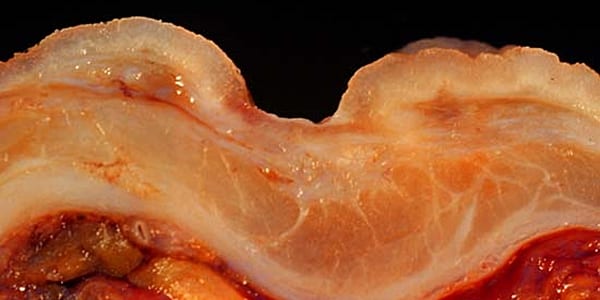
Image: PD

©2012-2014 2minutemedicine.com. All rights reserved. No works may be reproduced without expressed written consent from 2minutemedicine.com. Disclaimer: We present factual information directly from peer reviewed medical journals. No post should be construed as medical advice and is not intended as such by the authors, editors, staff or by 2minutemedicine.com. PLEASE SEE A HEALTHCARE PROVIDER IN YOUR AREA IF YOU SEEK MEDICAL ADVICE OF ANY SORT.


Tags: omeprazolepeptic ulcersPPI
Previous Post

2 Minute Medicine Rewind September 1 – September 8, 2014

Next Post

USPSTF recommends aspirin for women at risk for preeclampsia

RelatedReports

Solitary kidney not associated with contrast-induced nephropathy
Gastroenterology

Proton pump inhibitor use associated with increased mortality risk in kidney transplant patients

June 25, 2020
Weekly Rewinds

2 Minute Medicine Rewind June 22, 2020

June 24, 2020
Proton pump inhibitor use associated with development of chronic kidney disease
Chronic Disease

Proton pump inhibitor use associated with development of chronic kidney disease

January 11, 2016
Classics Series, Landmark Trials in Medicine
Emergency Classics

Omeprazole versus placebo for bleeding peptic ulcer [Classics Series]

March 12, 2015
Next Post

USPSTF recommends aspirin for women at risk for preeclampsia

Dual PDE3/PDE4 inhibitor may be effective treatment for asthma and COPD

Benralizumab does not reduce the rate of acute COPD exacerbations

Hypercortisolemia in ICU patients is due to reduced cortisol metabolism, not increased production

Arterial catheter monitoring in ICU not associated with mortality benefit

EvidencePulse™ by 2 Minute Medicine 2026 evidence scan 3 reports You asked top stroke trials 2026 Synthesizing medical evidence... Top 2026 stroke trial results: OCEANIC — ischemic stroke: 6.2% vs 8.4% OPTION* — mRS 0–1: 43.6% vs 34.2% ORIENTAL* — mRS 0–2: 58.6% vs 46.6% *Higher sICH in intervention arms Participants randomizedN OCEANIC 12,327 OPTION 570 ORIENTAL 564 Ask about guidelines or landmark trials... ↑ Try EvidencePulse™ Ask the evidence.
Get the signal.
Try it now → Physician-trained medical AI by 2 Minute Medicine

2MM+ All Access

Full details →
$4.99 /month

5-day free trial · cancel anytime

  • ✓100+ physician-written reports
  • ✓EvidencePulse™ + HypeCheck™
  • ✓Ad-free reading + newsletters
Start 5-day free trial

Then $4.99/month. Manage renewal in your account.

2 Minute Medicine® is an award winning, physician-run, expert medical media company. Our content is curated, written and edited by practicing health professionals who have clinical and scientific expertise in their field of reporting. Our editorial management team is comprised of highly-trained MD physicians. Join numerous brands, companies, and hospitals who trust our licensed content.

Recent Reports

  • High maternal egg-peanut intake not associated with reduced infant allergy
  • The rotavirus vaccine (ROTASIIL) may reduce the incidence of hospitalization for rotavirus gastroenteritis in children
  • Emergency department triaging decisions supported by artificial intelligence (AI) led to improved triaging accuracy and patient flow
License Content
Terms of Use | Disclaimer
Cookie Policy
Cleantalk Pixel
2MM+ All Access Full details →

The medical literature, distilled daily.

Monthly plan selected: $4.99 /month.

$4.99/month

5-day free trial · cancel anytime

Start 5-day free trial

Then $4.99/month. Manage renewal in your account.

Yearly plan selected: $49.90 /year.

$49.90/year

2 months free · only $4.16/month

Start 5-day free trial

Then $49.90/year. Manage renewal in your account.

Membership benefits

  • ✓100+ physician-written reports
  • ✓AI EvidencePulse™ + HypeCheck™
  • ✓Ad-free reading + newsletters

Already a member? Sign in

  • About
  • Specialties
    • All Specialties, All Recent Reports
    • Cardiology
    • Chronic Disease
    • Dermatology
    • Emergency
    • Endocrinology
    • Gastroenterology
    • Imaging and Intervention
    • Infectious Disease
    • Nephrology
    • Neurology
    • Obstetrics
    • Oncology
    • Ophthalmology
    • Pediatrics
    • Pharma
    • Preclinical
    • Psychiatry
    • Public Health
    • Pulmonology
    • Rheumatology
    • Surgery
  • Tools
    • EvidencePulse™
    • HypeCheck™
    • NPI Registry Lookup
    • RVU Search
  • Pharma
  • AI Roundup
  • The Scan
  • Classics™
    • 2MM+ Online Access
    • Paperback and Ebook
  • Rewinds
  • Partners
    • License Content
    • Submit Press Release
    • Advertise with Us
  • Account
    • Subscribe
    • My account
    • Cart
    • Sign-in
No Result
View All Result

© 2026 2 Minute Medicine, Inc. - Physician-written medical news.