• About
  • Masthead
  • License Content
  • Advertise
  • Press Releases
  • Newsroom
  • RSS/Email List
  • 2MM Podcast
  • Write for us
  • Contact Us
2 Minute Medicine
No Result
View All Result

No products in the cart.

Sign in
SUBSCRIBE
  • About
  • Specialties
    • All Specialties, All Recent Reports
    • Cardiology
    • Chronic Disease
    • Dermatology
    • Emergency
    • Endocrinology
    • Gastroenterology
    • Imaging and Intervention
    • Infectious Disease
    • Nephrology
    • Neurology
    • Obstetrics
    • Oncology
    • Ophthalmology
    • Pediatrics
    • Pharma
    • Preclinical
    • Psychiatry
    • Public Health
    • Pulmonology
    • Rheumatology
    • Surgery
    • Rewinds
    • The Scan
  • EvidencePulse™
  • HypeCheck™
  • AI News
  • Classics™
    • 2MM+ Online Access
    • Paperback and Ebook
  • Tools
    • NPI Registry Lookup
    • RVU Search
    • ICD-10 Code Lookup
    • Medical School Rankings
    • FDA Drug Approvals
    • Drug Safety for Breastfeeding/Pregnancy
    • Clinical Guidelines
    • Medical Calculators
    • ECG Reference
      • QTc Calculator
      • Sgarbossa Criteria
      • ECG Axis Calculator
      • AV Block Helper
  • Partners
    • License Content
    • Advertise with Us
2 Minute Medicine
  • About
  • Specialties
    • All Specialties, All Recent Reports
    • Cardiology
    • Chronic Disease
    • Dermatology
    • Emergency
    • Endocrinology
    • Gastroenterology
    • Imaging and Intervention
    • Infectious Disease
    • Nephrology
    • Neurology
    • Obstetrics
    • Oncology
    • Ophthalmology
    • Pediatrics
    • Pharma
    • Preclinical
    • Psychiatry
    • Public Health
    • Pulmonology
    • Rheumatology
    • Surgery
    • Rewinds
    • The Scan
  • EvidencePulse™
  • HypeCheck™
  • AI News
  • Classics™
    • 2MM+ Online Access
    • Paperback and Ebook
  • Tools
    • NPI Registry Lookup
    • RVU Search
    • ICD-10 Code Lookup
    • Medical School Rankings
    • FDA Drug Approvals
    • Drug Safety for Breastfeeding/Pregnancy
    • Clinical Guidelines
    • Medical Calculators
    • ECG Reference
      • QTc Calculator
      • Sgarbossa Criteria
      • ECG Axis Calculator
      • AV Block Helper
  • Partners
    • License Content
    • Advertise with Us
Sign in
SUBSCRIBE
2 Minute Medicine
Sign in
Subscribe
2 Minute MedicineFree on Google PlayGet
✦EvidencePulse™by 2 Minute Medicine3 reportsYou askedtop stroke trials 2026Synthesizing medical evidence...Top 2026 stroke trial results:OCEANIC — ischemic stroke: 6.2% vs 8.4%OPTION* — mRS 0–1: 43.6% vs 34.2%ORIENTAL* — mRS 0–2: 58.6% vs 46.6%*Higher sICH in intervention armsParticipants randomizedNOCEANIC12,327OPTION570ORIENTAL564Ask about guidelines or landmark trials...↑Try EvidencePulse™Ask the evidence. Get the signal.Try it now →
Home All Specialties Cardiology

TASTE trial: Thrombus aspiration before PCI in STEMI does not reduce mortality
byMatthew GrowdonandXu Gao
September 17, 2014
in Cardiology, Surgery
Reading Time: 4 mins read
TASTE trial: Thrombus aspiration before PCI in STEMI does not reduce mortality
Share on FacebookShare on TwitterShare on LinkedIn

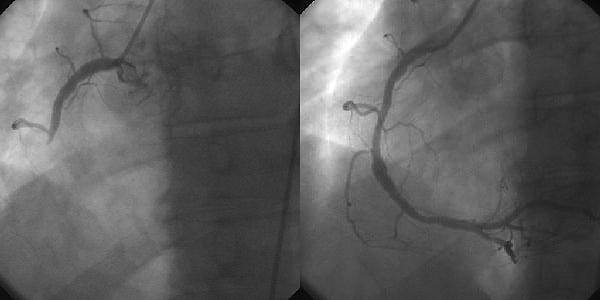
1. Patients with STEMI who underwent coronary artery thrombus aspiration before PCI did not have a significant reduction in mortality at 1 year of follow up.

2. Patients with STEMI who underwent thrombus aspiration before PCI did not have a significant reduction in the incidence of the composite of death, re-hospitalization for myocardial infarction, or stent thrombosis at 1 year.

Evidence Rating Level: 1 (Excellent)    

Study Rundown: Previous research has shown that coronary-artery thrombus aspiration in ST segment elevation myocardial infarctions (STEMIs) before percutaneous coronary intervention (PCI) reduces the thrombus burden and improves ST-segment resolution and coronary flow. However, there have been no adequately powered randomized control studies that have shown improvement in short-term or long-term clinical outcomes. The Thrombus Aspiration in ST-Elevation Myocardial Infarction in Scandinavia (TASTE) trial had previously showed no significant reduction in mortality at 30 days of follow-up.

This study presented long-term follow-up data on 7,244 patients with STEMI from the TASTE trial. Patients with STEMI were randomized after angiography either to receive thrombus-aspiration and PCI, or to undergo PCI only. There was no significant reduction in death from any cause at 1 year between the groups; additionally, there was no significant reduction in the rate of re-hospitalization at 1 year or the incidence of the composite of death, re-hospitalization for myocardial infarction, or stent thrombosis at 1 year. These comparisons remained non-significant when the data was analyzed for the full extent of follow-up (maximum 1,416 days).

The strength of this study is its use of a large randomized control study design to address a clinically relevant question in STEMI management. The results of the TASTE study argue against routine use of thrombus aspiration before PCI in STEMI, based on hard clinical outcomes. The study was strengthened by a very high follow-up rate and a low rate of cross-over between the treatment arms. Drawbacks include the fact that the results were adjudicated from a registry and the fact that the results cannot be generalized to severely ill patients who were more likely to decline study participation.

RELATED REPORTS

The preoperative combination of evolocumab and rosuvastatin may not reduce major adverse cardiovascular events

Late ventricular fibrillation following myocardial infarction is associated with increased risk of 1-year mortality

Click to read the study, published today in NEJM

Relevant Reading: Thrombus aspiration during primary percutaneous coronary intervention

Study author, Dr. Stefan K. James M.D., Ph.D., talks to 2 Minute Medicine: Department of Medical Sciences, Cardiology, and Uppsala Clinical Research Center, Uppsala University, Uppsala, Sweden

“The main finding was that routine thrombus aspiration did not reduce 1 year mortality or any other clinically important endpoints. Therefore thrombus aspiration should not be performed routinely in STEMI. It may be performed in selected cases if there is large residual thrombus burden after initial balloon dilatation. “

In-Depth [randomized controlled trial]: TASTE was a multicenter, randomized control study involving 7,244 patients with STEMI who were assigned randomly to undergo manual thrombus aspiration followed by PCI or to undergo PCI alone. End points were adjudicated from a registry and extended previous findings at 30 days to a longer follow-up of 1 year. Patients were diagnosed with an acute STEMI based on EKG changes; exclusion criteria included urgent need for coronary artery bypass surgery and an inability to provide oral informed consent (most often due to severe medical condition (37.6% of patients). Patients underwent randomization after angiography.

In intention-to-treat analyses, the rate of death from any cause at 1 year was 5.3% in the thrombus-aspiration group compared with 5.6% in the PCI-only group (HR 0.94; 95% CI 0.78 to 1.15, P=0.57). The rate of re-hospitalization at 1 year between the groups was also non-significant (P=0.81), as were the rates of stent thrombosis at 1 year (P=0.51), the incidence of the composite of death, re-hospitalization for myocardial infarction, or stent thrombosis (HR 0.94, 95%CI 0.80 to 1.11, P=0.48). Patients who were not enrolled in TASTE (37.6% because of severe medical conditions, 16.0% because of an inability to perform thrombus aspiration for anatomical reasons, 11.3% because of a judgment that thrombus aspiration was inappropriate) had a higher proportion of risk indicators than enrolled patients and in general had higher rates of negative outcomes compared to patients who were enrolled; however, outcomes were similar in patients who underwent thrombus aspiration and in those treated with PCI alone among the unenrolled group. When the entire follow-up period was considered (maximum 1,416 days), there was no significant difference in the rate of death in the thrombus-aspiration group compared to the PCI-only group (P=0.40).

More from this author: Tofacitinib superior to methotrexate monotherapy for rheumatoid arthritis, Gene mutation associated with antimalarial resistance across Southeast Asia, Moderate sodium intake optimal for cardiovascular health, Transfusion therapy linked with reduced neurovascular disease in sickle cell anemia, Severe subtype of acute lymphoblastic leukemia susceptible to FDA-approved kinase inhibitors

Image: CC/Wiki

©2012-2014 2minutemedicine.com. All rights reserved. No works may be reproduced without expressed written consent from 2minutemedicine.com. Disclaimer: We present factual information directly from peer reviewed medical journals. No post should be construed as medical advice and is not intended as such by the authors, editors, staff or by 2minutemedicine.com. PLEASE SEE A HEALTHCARE PROVIDER IN YOUR AREA IF YOU SEEK MEDICAL ADVICE OF ANY SORT. 

Tags: myocardial infarctionPCISTEMI
Previous Post

Fecal transplantation in recurrent C. difficile infection [Classics Series]

Next Post

Most anticoagulants for venous thromboembolism similarly effective

RelatedReports

Heart attack treatment collage: an engraved heart with a shaded patch of damaged wall beside a dish of two white tablets
Cardiology

The preoperative combination of evolocumab and rosuvastatin may not reduce major adverse cardiovascular events

January 12, 2026
Heart attack treatment collage: an engraved heart with a shaded patch of damaged wall beside a dish of two white tablets
Cardiology

Late ventricular fibrillation following myocardial infarction is associated with increased risk of 1-year mortality

January 12, 2026
Heart attack treatment collage: an engraved heart with a shaded patch of damaged wall beside a dish of two white tablets
Weekly Rewinds

2 Minute Medicine Rewind January 5, 2026

January 13, 2026
Heart attack treatment collage: an engraved heart with a shaded patch of damaged wall beside a dish of two white tablets
Cardiology

The efficacy 3 months of dual antiplatelet therapy is similar to 12 months in patients with acute coronary syndrome

January 12, 2026
Next Post

Most anticoagulants for venous thromboembolism similarly effective

Ultrasound as effective as CT at identifying high-risk kidney stones, reduces radiation exposure

Comorbidities of head and neck cancer may drive malnutrition

PET-CT bests contrast CT for response assessment of lymphoma

✦ EvidencePulse™ by 2 Minute Medicine 3 reports You asked top stroke trials 2026 Synthesizing medical evidence... Top 2026 stroke trial results: OCEANIC — ischemic stroke: 6.2% vs 8.4% OPTION* — mRS 0–1: 43.6% vs 34.2% ORIENTAL* — mRS 0–2: 58.6% vs 46.6% *Higher sICH in intervention arms Participants randomizedN OCEANIC 12,327 OPTION 570 ORIENTAL 564 Ask about guidelines or landmark trials... Try EvidencePulse™ Get the signal. Try it now → Physician-trained medical AI by 2 Minute Medicine

2MM+ All Access

Full details →
$4.99 /month

3-day free trial · cancel anytime

  • ✓100+ physician-written reports
  • ✓EvidencePulse™ + HypeCheck™
  • ✓Ad-free reading + newsletters
Start 3-day free trial

Then $4.99/month. Manage renewal in your account.

NPI Lookup · Free

Look up any US clinician

Search by name or NPI number, live from the CMS NPI Registry.

  • OIG exclusion check
  • Licenses and specialties
  • No account needed
Open NPI Lookup →

2 Minute Medicine® is an award winning, physician-run, expert medical media company. Our content is curated, written and edited by practicing health professionals who have clinical and scientific expertise in their field of reporting. Our editorial management team is comprised of highly-trained MD physicians. Join numerous brands, companies, and hospitals who trust our licensed content.

Recent Reports

  • In topline phase 3 results, nomelcitinib improved PASI 90 and PGA 0/1 responses versus placebo in plaque psoriasis
  • Intraosseous cefuroxime (Ceftin) may improve tissue delivery compared to intravenous administration during total knee arthroplasty
  • 2 Minute Medicine Rewind November 2, 2026
License Content
Terms of Use | Disclaimer
Cookie Policy

Get the app

Read 2 Minute Medicine on iPhone, iPad and Android.

Download on the App StoreGet it on Google Play
QR code for www.2minutemedicine.com/app
On a computer? Scan this with your phone’s camera.
2MM+ All Access Full details →

The medical literature, distilled daily.

Monthly plan selected: $4.99 /month.

$4.99/month

3-day free trial · cancel anytime

Start 3-day free trial

Then $4.99/month. Manage renewal in your account.

Yearly plan selected: $49.90 /year.

$49.90/year

2 months free

Start 3-day free trial

Then $49.90/year.

Membership benefits

  • ✓100+ physician-written reports
  • ✓AI EvidencePulse™ + HypeCheck™
  • ✓Ad-free reading + newsletters
  • ✓NPI watchlist + bulk NPI verification

Already a member? Sign in

  • Get the app
  • About
  • Specialties
    • All Specialties, All Recent Reports
    • Cardiology
    • Chronic Disease
    • Dermatology
    • Emergency
    • Endocrinology
    • Gastroenterology
    • Imaging and Intervention
    • Infectious Disease
    • Nephrology
    • Neurology
    • Obstetrics
    • Oncology
    • Ophthalmology
    • Pediatrics
    • Pharma
    • Preclinical
    • Psychiatry
    • Public Health
    • Pulmonology
    • Rheumatology
    • Surgery
    • Rewinds
    • The Scan
  • EvidencePulse™
  • HypeCheck™
  • AI News
  • Classics™
    • 2MM+ Online Access
    • Paperback and Ebook
  • Tools
    • NPI Registry Lookup
    • RVU Search
    • ICD-10 Code Lookup
    • Medical School Rankings
    • FDA Drug Approvals
    • Drug Safety for Breastfeeding/Pregnancy
    • Clinical Guidelines
    • Medical Calculators
    • ECG Reference
      • QTc Calculator
      • Sgarbossa Criteria
      • ECG Axis Calculator
      • AV Block Helper
  • Partners
    • License Content
    • Advertise with Us
No Result
View All Result

© 2026 2 Minute Medicine, Inc. - Physician-written medical news.