• About
  • Masthead
  • License Content
  • Advertise
  • Submit Press Release
  • RSS/Email List
  • 2MM Podcast
  • Write for us
  • Contact Us
2 Minute Medicine
No Result
View All Result

No products in the cart.

SUBSCRIBE
  • Specialties
    • All Specialties, All Recent Reports
    • Cardiology
    • Chronic Disease
    • Dermatology
    • Emergency
    • Endocrinology
    • Gastroenterology
    • Imaging and Intervention
    • Infectious Disease
    • Nephrology
    • Neurology
    • Obstetrics
    • Oncology
    • Ophthalmology
    • Pediatrics
    • Pharma
    • Preclinical
    • Psychiatry
    • Public Health
    • Pulmonology
    • Rheumatology
    • Surgery
  • Tools
    • EvidencePulse™
    • RVU Search
    • NPI Registry Lookup
  • Pharma
  • AI News
  • The Scan+
  • Classics™+
    • 2MM+ Online Access
    • Paperback and Ebook
  • Rewinds
  • Partners
    • License Content
    • Submit Press Release
    • Advertise with Us
  • Account
    • Subscribe
    • Sign-in
    • My account
2 Minute Medicine
  • Specialties
    • All Specialties, All Recent Reports
    • Cardiology
    • Chronic Disease
    • Dermatology
    • Emergency
    • Endocrinology
    • Gastroenterology
    • Imaging and Intervention
    • Infectious Disease
    • Nephrology
    • Neurology
    • Obstetrics
    • Oncology
    • Ophthalmology
    • Pediatrics
    • Pharma
    • Preclinical
    • Psychiatry
    • Public Health
    • Pulmonology
    • Rheumatology
    • Surgery
  • Tools
    • EvidencePulse™
    • RVU Search
    • NPI Registry Lookup
  • Pharma
  • AI News
  • The Scan+
  • Classics™+
    • 2MM+ Online Access
    • Paperback and Ebook
  • Rewinds
  • Partners
    • License Content
    • Submit Press Release
    • Advertise with Us
  • Account
    • Subscribe
    • Sign-in
    • My account
SUBSCRIBE
2 Minute Medicine
Subscribe
Home All Specialties Cardiology

Bivalirudin during and post-percutaneous coronary intervention reduces bleeding and mortality compared to heparin monotherapy
byNeel MistryandTeddy Guo
December 6, 2022
in Cardiology, Chronic Disease, Neurology
Reading Time: 2 mins read
0
Share on FacebookShare on Twitter

1. Bivalirudin during percutaneous coronary intervention plus high-dose infusion after demonstrated decreased all-cause mortality compared to heparin monotherapy.

2. Risk of major bleeding was marginally greater in the heparin monotherapy group.

Evidence Rating Level: 1 (Excellent)

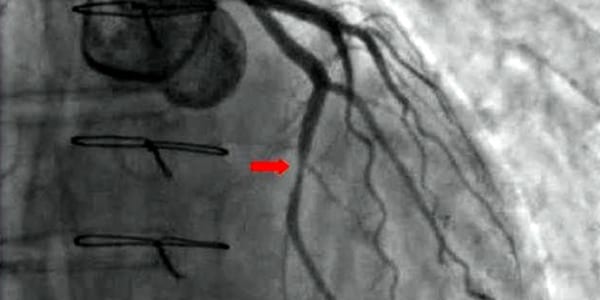
Study Rundown: Percutaneous coronary intervention (PCI) is used as first-line treatment in patients with ST-segment elevation myocardial infarction (STEMI). Although studies show that bivalirudin, a direct-acting thrombin inhibitor, may be used to reduce bleeding, there has been conflicting evidence with differences in methodology. This randomized trial aimed to compare the safety and efficacy of bivalirudin versus heparin monotherapy in patients with ST-segment elevated myocardial infarction (STEMI) undergoing percutaneous coronary intervention (PCI). The primary outcome was a composite of all-cause mortality and major bleeding, as defined by Bleeding Academic Research Consortium (BARC) types 3-5. Patients were randomly assigned to either intervention group and received bivalirudin with a post-PCI high-dose infusion or unfractionated heparin monotherapy. According to study results, patients randomized to bivalirudin demonstrated significantly decreased all-cause mortality and major bleeding at 30 days. This study was strengthened by a large sample size, adding to its validity.

Click to read the study in The Lancet

Relevant Reading: Bivalirudin versus Heparin Monotherapy in Myocardial Infarction

RELATED REPORTS

Apixaban (eliquis) outperforms Rivaroxaban (xarelto) in venous thromboembolism bleeding risk

Placental abruption during pregnancy is not associated with increased risk of cardiovascular mortality in children

2 Minute Medicine: Pharma Roundup – Pfizer’s Talzenna delays prostate cancer progression, apixaban lowers VTE bleeding risk, Lilly’s retatrutide hits Phase III metabolic targets, and FDA warns Novo Nordisk over safety reporting violations [March 2026]

In-depth [randomized-controlled trial]: Between Feb 14, 2019, and Apr 7, 2022, 6016 patients were assigned from 87 clinical sites in China. Included were patients undergoing primary percutaneous coronary intervention (PCI) within 48 hours of STEMI who were not on any anticoagulants, fibrinolytic therapy, or glycoprotein IIb/IIIa inhibitors. Altogether, 6016 patients (3009 to bivalirudin plus high-dose infusion after PCI and 3007 to heparin monotherapy) were included in the final analysis. The primary outcome composite of all-cause mortality and major bleeding at 30 days was significantly decreased in the bivalirudin group compared to the heparin monotherapy group (3.06% vs. 4.39%, respectively, hazard ratio [HR] 0.69, 95% confidence interval [CI] 0.53-0.91, p=0.0070). Although stent thrombosis was more common in the heparin group (n=33, 1.10%) than bivalirudin (n=11, 0.37%), no significant differences occurred concerning reinfarction, stroke, or target vessel revascularization. Findings from this study suggest that treatment with bivalirudin plus high-dose infusion post-PCI may reduce mortality and major bleeding in patients with recent STEMI.

Image: PD

©2022 2 Minute Medicine, Inc. All rights reserved. No works may be reproduced without expressed written consent from 2 Minute Medicine, Inc. Inquire about licensing here. No article should be construed as medical advice and is not intended as such by the authors or by 2 Minute Medicine, Inc.

Tags: acute myocardial infarctionBivalirudinbleedingbleeding riskcardiovascular diseasecardiovascular mortalitygastrointestinal bleedingheparinmyocardial infarctionpercutaneous coronary interventionpercutaneous coronary intervention (PCI)STEMIstroke
Previous Post

#VisualAbstract: Continuation of renin–angiotensin system inhibitors does not impact disease progression in those with advanced chronic kidney disease

Next Post

#VisualAbstract: Double sequential external defibrillation and vector-change defibrillation improve outcomes in patients with refractory ventricular fibrillation

RelatedReports

Nearly Half of All Pediatric Buprenorphine Exposures Result in Hospitalization
Cardiology

Apixaban (eliquis) outperforms Rivaroxaban (xarelto) in venous thromboembolism bleeding risk

April 9, 2026
Cardiology

Placental abruption during pregnancy is not associated with increased risk of cardiovascular mortality in children

April 1, 2026
2 Minute Medicine: Pharma Roundup: Price Hikes, Breakthrough Approvals, Legal Showdowns, Biotech Expansion, and Europe’s Pricing Debate [May 12nd, 2025]
Endocrinology

2 Minute Medicine: Pharma Roundup – Pfizer’s Talzenna delays prostate cancer progression, apixaban lowers VTE bleeding risk, Lilly’s retatrutide hits Phase III metabolic targets, and FDA warns Novo Nordisk over safety reporting violations [March 2026]

March 30, 2026
Reduced gestational weight gain with lifestyle intervention
Cardiology

Replacing sedentary time with physical activity may lower risk of all-cause mortality

March 2, 2026
Next Post
#VisualAbstract: Double sequential external defibrillation and vector-change defibrillation improve outcomes in patients with refractory ventricular fibrillation

#VisualAbstract: Double sequential external defibrillation and vector-change defibrillation improve outcomes in patients with refractory ventricular fibrillation

ACP offers recommendations to improve the ACA, patient care

Parent decision making in poor-prognosis childhood cancer may extend beyond values and preferences

Risk of autism in offspring linked to maternal pregestational diabetes and severe obesity

  Vitamin C supplementation in pregnancy improves respiratory function in children of smoking mothers at 5 years of age

2 Minute Medicine® is an award winning, physician-run, expert medical media company. Our content is curated, written and edited by practicing health professionals who have clinical and scientific expertise in their field of reporting. Our editorial management team is comprised of highly-trained MD physicians. Join numerous brands, companies, and hospitals who trust our licensed content.

Recent Reports

  • Increasing the volume of pericapsular nerve block may not improve postoperative pain control after total hip arthroplasty
  • Physical therapy yields modest improvements in chronic low back pain
  • Proximal hypoglossal nerve stimulation found effective for obstructive sleep apnea
License Content
Terms of Use | Disclaimer
Cookie Policy
Privacy Statement (EU)
Disclaimer

The Classics in Medicine Paperback Released!

Over the past 30 years, the transition from print to digital media has contributed to an exponential increase in medical literature. In response, 2 Minute Medicine presents 160+ authoritative, physician-written summaries of the most cited landmark trials in medicine.

amazon-logo_blackGet-it-on-iBooks-badge

Click anywhere to close this announcement

  • Specialties
    • All Specialties, All Recent Reports
    • Cardiology
    • Chronic Disease
    • Dermatology
    • Emergency
    • Endocrinology
    • Gastroenterology
    • Imaging and Intervention
    • Infectious Disease
    • Nephrology
    • Neurology
    • Obstetrics
    • Oncology
    • Ophthalmology
    • Pediatrics
    • Pharma
    • Preclinical
    • Psychiatry
    • Public Health
    • Pulmonology
    • Rheumatology
    • Surgery
  • Tools
    • EvidencePulse™
    • RVU Search
    • NPI Registry Lookup
  • Pharma
  • AI News
  • The Scan
  • Classics™
    • 2MM+ Online Access
    • Paperback and Ebook
  • Rewinds
  • Partners
    • License Content
    • Submit Press Release
    • Advertise with Us
  • Account
    • Subscribe
    • Sign-in
    • My account
No Result
View All Result

© 2026 2 Minute Medicine, Inc. - Physician-written medical news.