• About
  • Masthead
  • License Content
  • Advertise
  • Press Releases
  • Newsroom
  • RSS/Email List
  • 2MM Podcast
  • Write for us
  • Contact Us
2 Minute Medicine
No Result
View All Result

No products in the cart.

Sign in
SUBSCRIBE
  • About
  • Specialties
    • All Specialties, All Recent Reports
    • Cardiology
    • Chronic Disease
    • Dermatology
    • Emergency
    • Endocrinology
    • Gastroenterology
    • Imaging and Intervention
    • Infectious Disease
    • Nephrology
    • Neurology
    • Obstetrics
    • Oncology
    • Ophthalmology
    • Pediatrics
    • Pharma
    • Preclinical
    • Psychiatry
    • Public Health
    • Pulmonology
    • Rheumatology
    • Surgery
    • Rewinds
    • The Scan
  • EvidencePulse™
  • HypeCheck™
  • AI News
  • Classics™
    • 2MM+ Online Access
    • Paperback and Ebook
  • Tools
    • NPI Registry Lookup
    • RVU Search
  • Partners
    • License Content
    • Advertise with Us
2 Minute Medicine
  • About
  • Specialties
    • All Specialties, All Recent Reports
    • Cardiology
    • Chronic Disease
    • Dermatology
    • Emergency
    • Endocrinology
    • Gastroenterology
    • Imaging and Intervention
    • Infectious Disease
    • Nephrology
    • Neurology
    • Obstetrics
    • Oncology
    • Ophthalmology
    • Pediatrics
    • Pharma
    • Preclinical
    • Psychiatry
    • Public Health
    • Pulmonology
    • Rheumatology
    • Surgery
    • Rewinds
    • The Scan
  • EvidencePulse™
  • HypeCheck™
  • AI News
  • Classics™
    • 2MM+ Online Access
    • Paperback and Ebook
  • Tools
    • NPI Registry Lookup
    • RVU Search
  • Partners
    • License Content
    • Advertise with Us
Sign in
SUBSCRIBE
2 Minute Medicine
Sign in
Subscribe
✦ EvidencePulse™ by 2 Minute Medicine 2026 evidence scan 3 reports You asked top stroke trials 2026 Synthesizing medical evidence... Top 2026 stroke trial results: OCEANIC — ischemic stroke: 6.2% vs 8.4% OPTION* — mRS 0–1: 43.6% vs 34.2% ORIENTAL* — mRS 0–2: 58.6% vs 46.6% *Higher sICH in intervention arms Participants randomizedN OCEANIC 12,327 OPTION 570 ORIENTAL 564 Ask about guidelines or landmark trials... ↑ Try EvidencePulse™ Ask the evidence.
Get the signal.
Try it now → Physician-trained medical AI by 2 Minute Medicine
Home All Specialties Cardiology

Cardiovascular outcomes are similar for arthritis patients treated with selective and nonselective NSAIDs
byDayton McMillanandShaidah Deghan, MSc. MD
December 29, 2016
in Cardiology, Chronic Disease
Reading Time: 3 mins read
Placebo formulation impacts effectiveness of pain control in osteoarthritis
Share on FacebookShare on TwitterShare on LinkedIn

1. Patients with arthritis treated with celecoxib experienced cardiovascular (CV) outcomes at a rate noninferior to those treated with ibuprofen or naproxen.

2. Celecoxib treated patients experienced adverse gastrointestinal events at a lower rate compared to patients treated with ibuprofen or naproxen.

Evidence Rating: 1 (Excellent)

Study Rundown: Nonsteroidal anti-inflammatory drugs (NSAIDs) are commonly used for pain management as they inhibit prostaglandin production. Selective NSAIDs are theorized to reduce gastrointestinal NSAID side effects while being similarly efficacious for pain control compared to nonselective NSAIDs. Previous research suggested selective NSAID use may result in more CV adverse events compared with nonselective NSAID use. This study aimed to assess CV and side effects seen when arthritis patients are treated with selective (celecoxib) or nonselective (ibuprofen or naproxen) NSAIDs and determine if the celecoxib regimen was noninferior to the ibuprofen or naproxen regimens.

A randomized controlled trial was conducted which included patients with arthritis that had CV disease or arthritis patients who were at increased risk of CV disease. Patients were treated with one of the three NSAIDs mentioned and followed to assess for potential side effects. CV side effect rates seen in patients treated with celecoxib were not worse than those of patients treated with ibuprofen or naproxen. Gastrointestinal side effects were observed significantly less in the celecoxib group.

Click to read the study, published today in NEJM

RELATED REPORTS

Low-dose radiotherapy may be effective as a short-term therapeutic option in knee osteoarthritis

Chronic exposure to particulate matter is associated with increased cardiovascular risk

Relevant Reading: Cardiovascular risk and inhibition of cyclooxygenase: a systematic review of the observational studies of selective and nonselective inhibitors of cyclooxygenase 2

In-Depth [randomized controlled trial]: From 2006 to 2014, at 926 medical centers in 13 countries, 24 222 patients were enrolled in the study. Patients were assigned to celecoxib, naproxen, or ibuprofen groups in a randomized 1:1:1 fashion. Patients were eligible for the study if they required NSAID treatment for arthritis pain, and had either established CV disease or were at an increased risk for CV disease development. The celecoxib group had 8,072 patients (mean [±SD] daily dose, 209±37 mg), 7,969 patients in the naproxen group (852±103 mg), and 8,040 patients in the ibuprofen group (2045±246 mg). Mean treatment and follow-up duration for all patients was, respectively, 20.3±16.0 and 34.1±13.4 months.

The primary study outcome was death from any CV cause, secondary outcome was occurrence of a major CV event, and additional outcomes measured were gastrointestinal or renal adverse events. An intention-to-treat analysis revealed that the primary outcome occurred in 2.3% of the celecoxib group, 2.5% of the naproxen group, and 2.7% in the ibuprofen group. The HR for celecoxib compared to naproxen was 0.93 (95%CI 0.76-1.13; p < 0.001 for noninferiority). The HR for celecoxib compared to ibuprofen was 0.85 (95%CI 0.70-1.04; p < 0.001 for noninferiority). For secondary outcomes, the HR for celecoxib compared to naproxen was 0.97 (95%CI 0.83-1.12; p = 0.64), and the HR for celecoxib compared to ibuprofen was 0.87 (95%CI, 0.75-1.01; p = 0.06). Serious gastrointestinal events occurred significantly less in the celecoxib group comparted to the ibuprofen (HR 0.65; 95%CI 0.50-0.85; p = 0.002) and naproxen (HR 0.71; 95%CI 0.54-0.93; p = 0.01) groups. Significant renal events occurred significantly less in the celecoxib group compared to the ibuprofen group (HR 0.61; 95%CI 0.44-0.85; p = 0.004).

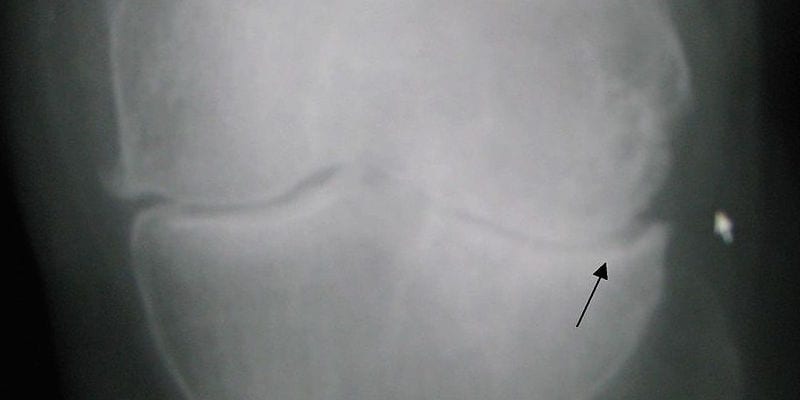
Image: CC/Wiki

©2016 2 Minute Medicine, Inc. All rights reserved. No works may be reproduced without expressed written consent from 2 Minute Medicine, Inc. Inquire about licensing here. No article should be construed as medical advice and is not intended as such by the authors or by 2 Minute Medicine, Inc.


Tags: cardiovascular risknsaidsosteoarthritis
Previous Post

Prenatal fish oil supplementation associated with lower risk of asthma in children: The COPSAC trial

Next Post

No significant difference found at 5-year follow-up between bilateral and single CABG: The ART trial

RelatedReports

A detailed illustration of a human knee joint, with visual elements representing therapy options, including pills and a prosthetic component.
Chronic Disease

Low-dose radiotherapy may be effective as a short-term therapeutic option in knee osteoarthritis

October 8, 2026
A senior woman looks thoughtfully at a balance scale with a stethoscope and a heart illustration, symbolizing the assessment of cardiovascular risk and treatment decisions.
Cardiology

Chronic exposure to particulate matter is associated with increased cardiovascular risk

September 10, 2026
Fatty liver disease may independently predict high-risk coronary disease
Cardiology

Weight loss is associated with improved vascular function in patients with metabolic dysfunction-associated steatotic liver disease

August 21, 2026
Uninterrupted warfarin therapy safe for endovascular procedures
Orthopedic Surgery

Joint fusion superior to watchful waiting for hallux rigidus 

August 10, 2026
Next Post
PCI not superior to medical therapy alone in stable coronary disease: The COURAGE study

No significant difference found at 5-year follow-up between bilateral and single CABG: The ART trial

Earlier puberty associated with increased risk of depression in girls

Effect of a primary care-based psychological intervention on common mental disorders in Zimbabwe

Diabetes and ischemic heart disease account for highest personal health care spending in U.S.

✦ EvidencePulse™ by 2 Minute Medicine 2026 evidence scan 3 reports You asked top stroke trials 2026 Synthesizing medical evidence... Top 2026 stroke trial results: OCEANIC — ischemic stroke: 6.2% vs 8.4% OPTION* — mRS 0–1: 43.6% vs 34.2% ORIENTAL* — mRS 0–2: 58.6% vs 46.6% *Higher sICH in intervention arms Participants randomizedN OCEANIC 12,327 OPTION 570 ORIENTAL 564 Ask about guidelines or landmark trials... Try EvidencePulse™ Get the signal. Try it now → Physician-trained medical AI by 2 Minute Medicine

2MM+ All Access

Full details →
$4.99 /month

3-day free trial · cancel anytime

  • ✓100+ physician-written reports
  • ✓EvidencePulse™ + HypeCheck™
  • ✓Ad-free reading + newsletters
Start 3-day free trial

Then $4.99/month. Manage renewal in your account.

NPI Lookup · Free

Look up any US clinician

Search by name or NPI number, live from the CMS NPI Registry.

  • OIG exclusion check
  • Licenses and specialties
  • No account needed
Open NPI Lookup →

2 Minute Medicine® is an award winning, physician-run, expert medical media company. Our content is curated, written and edited by practicing health professionals who have clinical and scientific expertise in their field of reporting. Our editorial management team is comprised of highly-trained MD physicians. Join numerous brands, companies, and hospitals who trust our licensed content.

Recent Reports

  • Elevated low-density lipoprotein cholesterol is a risk factor for atherosclerotic disease irrespective of familial hypercholesterolemia status
  • Children with autism spectrum disorder may have reduced fecal microbial diversity
  • Variable homicide mortality rates among women aged 15-44 years depending on state abortion policy
License Content
Terms of Use | Disclaimer
Cookie Policy
2MM+ All Access Full details →

The medical literature, distilled daily.

Monthly plan selected: $4.99 /month.

$4.99/month

3-day free trial · cancel anytime

Start 3-day free trial

Then $4.99/month. Manage renewal in your account.

Yearly plan selected: $49.90 /year.

$49.90/year

2 months free

Start 3-day free trial

Then $49.90/year.

Membership benefits

  • ✓100+ physician-written reports
  • ✓AI EvidencePulse™ + HypeCheck™
  • ✓Ad-free reading + newsletters
  • ✓NPI watchlist + bulk NPI verification

Already a member? Sign in

  • About
  • Specialties
    • All Specialties, All Recent Reports
    • Cardiology
    • Chronic Disease
    • Dermatology
    • Emergency
    • Endocrinology
    • Gastroenterology
    • Imaging and Intervention
    • Infectious Disease
    • Nephrology
    • Neurology
    • Obstetrics
    • Oncology
    • Ophthalmology
    • Pediatrics
    • Pharma
    • Preclinical
    • Psychiatry
    • Public Health
    • Pulmonology
    • Rheumatology
    • Surgery
    • Rewinds
    • The Scan
  • EvidencePulse™
  • HypeCheck™
  • AI News
  • Classics™
    • 2MM+ Online Access
    • Paperback and Ebook
  • Tools
    • NPI Registry Lookup
    • RVU Search
  • Partners
    • License Content
    • Advertise with Us
No Result
View All Result

© 2026 2 Minute Medicine, Inc. - Physician-written medical news.