• About
  • Masthead
  • License Content
  • Advertise
  • Submit Press Release
  • RSS/Email List
  • 2MM Podcast
  • Write for us
  • Contact Us
2 Minute Medicine
No Result
View All Result

No products in the cart.

SUBSCRIBE
  • About
  • Specialties
    • All Specialties, All Recent Reports
    • Cardiology
    • Chronic Disease
    • Dermatology
    • Emergency
    • Endocrinology
    • Gastroenterology
    • Imaging and Intervention
    • Infectious Disease
    • Nephrology
    • Neurology
    • Obstetrics
    • Oncology
    • Ophthalmology
    • Pediatrics
    • Pharma
    • Preclinical
    • Psychiatry
    • Public Health
    • Pulmonology
    • Rheumatology
    • Surgery
  • Tools+
    • EvidencePulse™
    • HypeCheck™
    • NPI Registry Lookup
    • RVU Search
  • Pharma
  • AI Roundup
  • The Scan+
  • Classics™+
    • 2MM+ Online Access
    • Paperback and Ebook
  • Rewinds
  • Partners
    • License Content
    • Submit Press Release
    • Advertise with Us
  • Account
    • Subscribe
    • My account
    • Cart
    • Sign-in
2 Minute Medicine
  • About
  • Specialties
    • All Specialties, All Recent Reports
    • Cardiology
    • Chronic Disease
    • Dermatology
    • Emergency
    • Endocrinology
    • Gastroenterology
    • Imaging and Intervention
    • Infectious Disease
    • Nephrology
    • Neurology
    • Obstetrics
    • Oncology
    • Ophthalmology
    • Pediatrics
    • Pharma
    • Preclinical
    • Psychiatry
    • Public Health
    • Pulmonology
    • Rheumatology
    • Surgery
  • Tools+
    • EvidencePulse™
    • HypeCheck™
    • NPI Registry Lookup
    • RVU Search
  • Pharma
  • AI Roundup
  • The Scan+
  • Classics™+
    • 2MM+ Online Access
    • Paperback and Ebook
  • Rewinds
  • Partners
    • License Content
    • Submit Press Release
    • Advertise with Us
  • Account
    • Subscribe
    • My account
    • Cart
    • Sign-in
SUBSCRIBE
2 Minute Medicine
Subscribe
Home All Specialties Cardiology

Characterizing risk of stroke following anticoagulation reversal in patients with prior intracranial hemorrhage and heart valves
byPaary BalakumarandAlex Chan
August 13, 2024
in Cardiology, Hematology
Reading Time: 2 mins read
Thrombophilia-associated stillbirth risk appears limited to factor V Leiden
Share on FacebookShare on Twitter

1. In a cohort of patients with mechanical heart valves and a prior history of intracranial hemorrhage (ICH), the risk of thromboembolism, ischemic stroke, and valve thrombosis was low following anticoagulation reversal therapy (PCC or FFP) 

2. The timing of anticoagulation reinitiation was not associated with the risk of ICH expansion however bridging with IV heparin increased the risk of ICH

Evidence Rating Level: 2 (Good) 

In patients with intracranial hemorrhage (ICH) and mechanical heart valves, the optimal time for reinitiation of oral anticoagulation is unknown. For patients with ICH, reversal of anticoagulation is essential for treatment. In patients with mechanical heart valves, the risk of thromboembolic events after anti-coagulation reversal is unknown. Keeping these patients off anticoagulants can incur a significant risk of ischemic stroke or systemic embolism. This large retrospective observational cohort study included patients with mechanical heart valves that had previous ICH. The aim was to investigate the effect of reversal therapy and ischemic stroke, the duration of anticoagulation and risk of ischemic stroke or systemic embolism, and the timing of anticoagulation resumption and risk of rebleeding and ICH expansion. The primary end points of the study were thromboembolic events while off anticoagulation and ICH expansion after anticoagulation resumption. 171 patients were identified who had both ICH and a mechanical heart valve. The mean age of the participants was 72 years old with 68% of them being men. There was no significant increase in risk of ischemic stroke or systemic embolism in patients who received anticoagulation reversal therapy. Additionally, there was no difference between the method of reversal therapy (prothrombin complex concentrate or fresh-frozen plasma). Time off of anticoagulation was not associated with ischemic stroke or TIA occurrence. Most patients who developed a stroke after being off anticoagulation did so after 7 days. All patients who developed a stroke earlier had additional risk factors. ICH expansion after anticoagulation resumption occurred in 17 patients (9.9%). The timing of anticoagulation resumption was not associated with risk of ICH expansion (p = 0.41). Heparin was a bridging anticoagulation therapy in 49 patients but resulted in a significantly higher rate of ICH compared to patients started on warfarin (p = 0.004). 

Click to read the study in Neurology

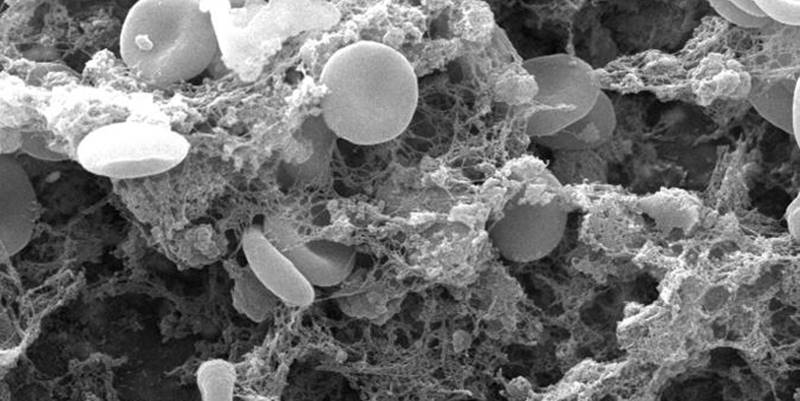
Image: PD

RELATED REPORTS

2 Minute Medicine Rewind September 7, 2026

The mortality in-hospital for patients undergoing elective catheter ablation for atrial fibrillation is low

2 Minute Medicine Rewind August 31, 2026

©2024 2 Minute Medicine, Inc. All rights reserved. No works may be reproduced without expressed written consent from 2 Minute Medicine, Inc. Inquire about licensing here. No article should be construed as medical advice and is not intended as such by the authors or by 2 Minute Medicine, Inc. 

Tags: anticoagulationatrial fibrillationcardiologyneurologystrokethrombosis
Previous Post

Improved adherence but worsening disparities in follow-up after cardiovascular hospitalizations

Next Post

High rates of diagnostic discordance in hospitalizations for community-acquired pneumonia

RelatedReports

Long-term outcomes for off-pump and on-pump CABG are similar
Weekly Rewinds

2 Minute Medicine Rewind September 7, 2026

September 7, 2026
Rivaroxaban likely reduces risk of recurrent stroke in specific subgroup of patients with embolic stroke of undetermined source
Cardiology

The mortality in-hospital for patients undergoing elective catheter ablation for atrial fibrillation is low

September 4, 2026
Rivaroxaban likely reduces risk of recurrent stroke in specific subgroup of patients with embolic stroke of undetermined source
Weekly Rewinds

2 Minute Medicine Rewind August 31, 2026

August 31, 2026
Chronic Disease

One in four National Football League (NFL) players who died between 2016-2021 had evidence of chronic traumatic encephalopathy

August 27, 2026
Next Post
Prescription of antibiotics for acute respiratory infections increasing

High rates of diagnostic discordance in hospitalizations for community-acquired pneumonia

#VisualAbstract: Atezolizumab and Chemotherapy Improve Outcomes in Advanced or Recurrent Endometrial Cancer

#VisualAbstract: Atezolizumab and Chemotherapy Improve Outcomes in Advanced or Recurrent Endometrial Cancer

Patient Basics: Colonoscopy

Cancer screening costs in the United States may exceed $40 billion annually

EvidencePulse™ by 2 Minute Medicine 2026 evidence scan 3 reports You asked top stroke trials 2026 Synthesizing medical evidence... Top 2026 stroke trial results: OCEANIC — ischemic stroke: 6.2% vs 8.4% OPTION* — mRS 0–1: 43.6% vs 34.2% ORIENTAL* — mRS 0–2: 58.6% vs 46.6% *Higher sICH in intervention arms Participants randomizedN OCEANIC 12,327 OPTION 570 ORIENTAL 564 Ask about guidelines or landmark trials... ↑ Try EvidencePulse™ Ask the evidence.
Get the signal.
Try it now → Physician-trained medical AI by 2 Minute Medicine

2MM+ All Access

Full details →
$4.99 /month

5-day free trial · cancel anytime

  • ✓100+ physician-written reports
  • ✓EvidencePulse™ + HypeCheck™
  • ✓Ad-free reading + newsletters
Start 5-day free trial

Then $4.99/month. Manage renewal in your account.

2 Minute Medicine® is an award winning, physician-run, expert medical media company. Our content is curated, written and edited by practicing health professionals who have clinical and scientific expertise in their field of reporting. Our editorial management team is comprised of highly-trained MD physicians. Join numerous brands, companies, and hospitals who trust our licensed content.

Recent Reports

  • Molecularly guided therapy may improve outcomes in patients with unfavourable cancer of unknown primary compared with standard chemotherapy
  • Methadone initiation linked to lower mortality compared to buprenorphine-naloxone after opioid overdose
  • Continuous femoral nerve block is not superior to continuous adductor canal block for postoperative pain following ACL reconstruction
License Content
Terms of Use | Disclaimer
Cookie Policy
Cleantalk Pixel
  • About
  • Specialties
    • All Specialties, All Recent Reports
    • Cardiology
    • Chronic Disease
    • Dermatology
    • Emergency
    • Endocrinology
    • Gastroenterology
    • Imaging and Intervention
    • Infectious Disease
    • Nephrology
    • Neurology
    • Obstetrics
    • Oncology
    • Ophthalmology
    • Pediatrics
    • Pharma
    • Preclinical
    • Psychiatry
    • Public Health
    • Pulmonology
    • Rheumatology
    • Surgery
  • Tools
    • EvidencePulse™
    • HypeCheck™
    • NPI Registry Lookup
    • RVU Search
  • Pharma
  • AI Roundup
  • The Scan
  • Classics™
    • 2MM+ Online Access
    • Paperback and Ebook
  • Rewinds
  • Partners
    • License Content
    • Submit Press Release
    • Advertise with Us
  • Account
    • Subscribe
    • My account
    • Cart
    • Sign-in
No Result
View All Result

© 2026 2 Minute Medicine, Inc. - Physician-written medical news.

2MM+ All Access Full details →

The medical literature, distilled daily.

Monthly plan selected: $4.99 /month.

$4.99/month

5-day free trial · cancel anytime

Start 5-day free trial

Then $4.99/month. Manage renewal in your account.

Yearly plan selected: $49.90 /year.

$49.90/year

2 months free · only $4.16/month

Start 5-day free trial

Then $49.90/year. Manage renewal in your account.

Membership benefits

  • ✓100+ physician-written reports
  • ✓AI EvidencePulse™ + HypeCheck™
  • ✓Ad-free reading + newsletters

Already a member? Sign in