
• About
  • Masthead
  • License Content
  • Advertise
  • Submit Press Release
  • RSS/Email List
  • 2MM Podcast
  • Write for us
  • Contact Us
2 Minute Medicine
No Result
View All Result

No products in the cart.

SUBSCRIBE
  • Specialties
    • All Specialties, All Recent Reports
    • Cardiology
    • Chronic Disease
    • Dermatology
    • Emergency
    • Endocrinology
    • Gastroenterology
    • Imaging and Intervention
    • Infectious Disease
    • Nephrology
    • Neurology
    • Obstetrics
    • Oncology
    • Ophthalmology
    • Pediatrics
    • Pharma
    • Preclinical
    • Psychiatry
    • Public Health
    • Pulmonology
    • Rheumatology
    • Surgery
  • Tools
    • EvidencePulse™
    • RVU Search
    • NPI Registry Lookup
  • Pharma
  • AI News
  • The Scan+
  • Classics™+
    • 2MM+ Online Access
    • Paperback and Ebook
  • Rewinds
  • Partners
    • License Content
    • Submit Press Release
    • Advertise with Us
  • Account
    • Subscribe
    • Sign-in
    • My account
2 Minute Medicine
  • Specialties
    • All Specialties, All Recent Reports
    • Cardiology
    • Chronic Disease
    • Dermatology
    • Emergency
    • Endocrinology
    • Gastroenterology
    • Imaging and Intervention
    • Infectious Disease
    • Nephrology
    • Neurology
    • Obstetrics
    • Oncology
    • Ophthalmology
    • Pediatrics
    • Pharma
    • Preclinical
    • Psychiatry
    • Public Health
    • Pulmonology
    • Rheumatology
    • Surgery
  • Tools
    • EvidencePulse™
    • RVU Search
    • NPI Registry Lookup
  • Pharma
  • AI News
  • The Scan+
  • Classics™+
    • 2MM+ Online Access
    • Paperback and Ebook
  • Rewinds
  • Partners
    • License Content
    • Submit Press Release
    • Advertise with Us
  • Account
    • Subscribe
    • Sign-in
    • My account
SUBSCRIBE
2 Minute Medicine
Subscribe
Home All Specialties Cardiology

Left atrial appendage occlusion is an effective alternative to oral anticoagulation in atrial fibrillation
byDavid XiangandKiera Liblik
August 24, 2022
in Cardiology, Emergency
Reading Time: 3 mins read
0
Share on FacebookShare on Twitter

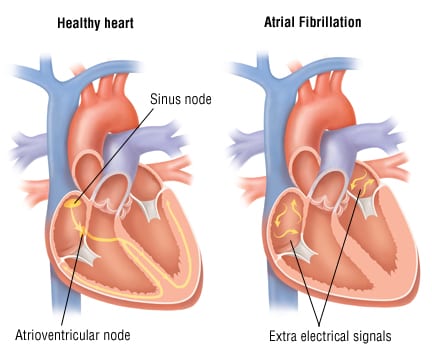
1. The overall benefit of left atrial appendage occlusion (LAOO) for prevention of stroke in patients with atrial fibrillation (AF) depends on stroke and bleeding risks in individual patients.

2. There needs to be a sufficiently low stroke risk for left atrial appendage occlusion to be beneficial.

Evidence Rating Level: 1 (Excellent)

Study Rundown: LAAO is a potential alternative to oral anticoagulation for the prevention of stroke in patients with AF. Prior clinical trials have demonstrated that LAAO is non-inferior to oral anticoagulants (OACs) such as warfarin and direct OACs. It is associated with a significant reduction in risks for intracranial hemorrhage and major bleeding. However, concerns still exist over the potential increased risk for ischemic stroke or systemic embolism. There is a gap in knowledge as to understanding the net clinical benefit of LAAO compared with oral anticoagulants across a range of individual patient combinations of stroke risk and bleeding risk. Overall, this study found that the relative clinical benefit of LAAO and OACs in patients with AF depends on the patient’s baseline risks for stroke and bleeding and that the LAAO strategy is preferred in patients with the highest risk for bleeding. This study was limited by having clinical data on LAAO only from Boston Scientific, and therefore does not apply to other types of LAAO devices. The discussion of the comparative efficacy of DOACs versus LAAO is limited. Nevertheless, these study’s findings are significant, as they demonstrate that LAAO can potentially serve as an alternative to OACs in the prevention of stroke in AF patients, with the highest benefit in patients with the highest risk for bleeding.

Click to read the study in AIM

Relevant Reading: Left Atrial Appendage Occlusion Versus Anticoagulation in Atrial Fibrillation: Equipoise When Bleeding Risk Is High

RELATED REPORTS

Adjuvanted influenza vaccines and high-dose influenza vaccines may have similar effectiveness in adult patients

Resuscitative endovascular balloon occlusion of the aorta may not improve outcomes in adults with non-traumatic out-of-hospital cardiac arrest

Activated factor VIII-mimetic prophylaxis associated with reduced bleeding in hemophilia A

In-Depth [descision analysis]: This decision analysis with a Markov model was conducted to simulate a virtual clinical trial of stroke prevention strategies in a cohort of 70-year-old men and women with nonvalvular AF and without prior stroke. The model was based on a patient-level meta-analysis using prior long-term trials that compared LAAO with oral anticoagulation. The model included 5 categories of health based on functional status, including alive without prior stroke, alive with prior stroke, and mild, moderate, or severe post-stroke disability, and death. The primary outcome measured was the quality-adjusted life-year (QALY), which is the cumulative survival duration in each health state, with secondary endpoints being life expectancy or life years. Outcomes in the primary analysis were assessed via Monte Carlo simulations and log-normal distributions for all hazard ratios and beta distributions for all probabilities and utilities. Based on the primary analysis, the combined risks favored LAAO for higher bleeding risk, but that benefit became less certain at higher stroke risks. At a HAS-BLED score of 5, LAAO was favored in more than 80% of the models for CHA2-DS2-VASc scores between two and five. The probability of LAAO in QALYs at lower bleeding risks (HAS-BLED score of 0 to 1) was limited to only patients with lower stroke risks, or those with CHA2DS2-VASc scores of 2. Due to this, and the fact that DOACs provide lower bleeding risks than warfarin, the net benefit of LAAO is still uncertain as compared to DOACs. Overall, this study demonstrates that the relative clinical benefit of LAAO and OACs in patients with AF depends on the patient’s baseline risks for bleeding and stroke, and that LAAO is preferred in those with the highest risk for bleeding.

Image: PD

©2022 2 Minute Medicine, Inc. All rights reserved. No works may be reproduced without expressed written consent from 2 Minute Medicine, Inc. Inquire about licensing here. No article should be construed as medical advice and is not intended as such by the authors or by 2 Minute Medicine, Inc.

Tags: arrhythmiaatrial fibrillationbleeding riskcardiologydirect oral anticoagulant (DOAC)DOACemergencyleft atrial appendage occlusionstroke
Previous Post

Fazirsiran is associated with decreased levels of misfolded alpha1-antitrypsin protein

Next Post

Mepolizumab reduced exacerbations in children with exacerbation-prone eosinophilic asthma

RelatedReports

Live attenuated vaccine less effective in recent influenza season
Emergency

Adjuvanted influenza vaccines and high-dose influenza vaccines may have similar effectiveness in adult patients

May 15, 2026
Antiarrhythmic drugs have no survival benefit in shock-refractory out-of-hospital cardiac arrest
Cardiology

Resuscitative endovascular balloon occlusion of the aorta may not improve outcomes in adults with non-traumatic out-of-hospital cardiac arrest

May 14, 2026
Combined immunotherapy may improve survival in metastatic pancreatic cancer
Hematology

Activated factor VIII-mimetic prophylaxis associated with reduced bleeding in hemophilia A

May 11, 2026
PCI not superior to medical therapy alone in stable coronary disease: The COURAGE study
Cardiology

Invasive management for non-ST-segment elevation myocardial infarction in frail patients may not improve mortality

April 30, 2026
Next Post
Microbe-rich environment associated with lower rates of asthma

Mepolizumab reduced exacerbations in children with exacerbation-prone eosinophilic asthma

Steroids and opioids often inappropriately prescribed in the emergency department for pediatric pneumonia and sinusitis

Prehospital needle decompression associated with decreased mortality in trauma patients

#VisualAbstract: Removal of asymptomatic kidney stones reduces risk of relapse

#VisualAbstract: Provision of 1-year mortality data for patients hospitalized with heart failure does not influence clinical decision-making – The REVEAL-HF trial

2 Minute Medicine® is an award winning, physician-run, expert medical media company. Our content is curated, written and edited by practicing health professionals who have clinical and scientific expertise in their field of reporting. Our editorial management team is comprised of highly-trained MD physicians. Join numerous brands, companies, and hospitals who trust our licensed content.

Recent Reports

  • Delayed initiation of antibiotic therapy is associated with worse outcomes in skin and soft tissue infections
  • Caloric restriction and intermittent fasting show mixed human longevity data
  • Selective serotonin reuptake inhibitors may reduce risk of total joint arthroplasty in osteoarthritis
License Content
Terms of Use | Disclaimer
Cookie Policy
Privacy Statement (EU)
Disclaimer
  • Specialties
    • All Specialties, All Recent Reports
    • Cardiology
    • Chronic Disease
    • Dermatology
    • Emergency
    • Endocrinology
    • Gastroenterology
    • Imaging and Intervention
    • Infectious Disease
    • Nephrology
    • Neurology
    • Obstetrics
    • Oncology
    • Ophthalmology
    • Pediatrics
    • Pharma
    • Preclinical
    • Psychiatry
    • Public Health
    • Pulmonology
    • Rheumatology
    • Surgery
  • Tools
    • EvidencePulse™
    • RVU Search
    • NPI Registry Lookup
  • Pharma
  • AI News
  • The Scan
  • Classics™
    • 2MM+ Online Access
    • Paperback and Ebook
  • Rewinds
  • Partners
    • License Content
    • Submit Press Release
    • Advertise with Us
  • Account
    • Subscribe
    • Sign-in
    • My account
No Result
View All Result

© 2026 2 Minute Medicine, Inc. - Physician-written medical news.