

Patient Basics: Cellulitis
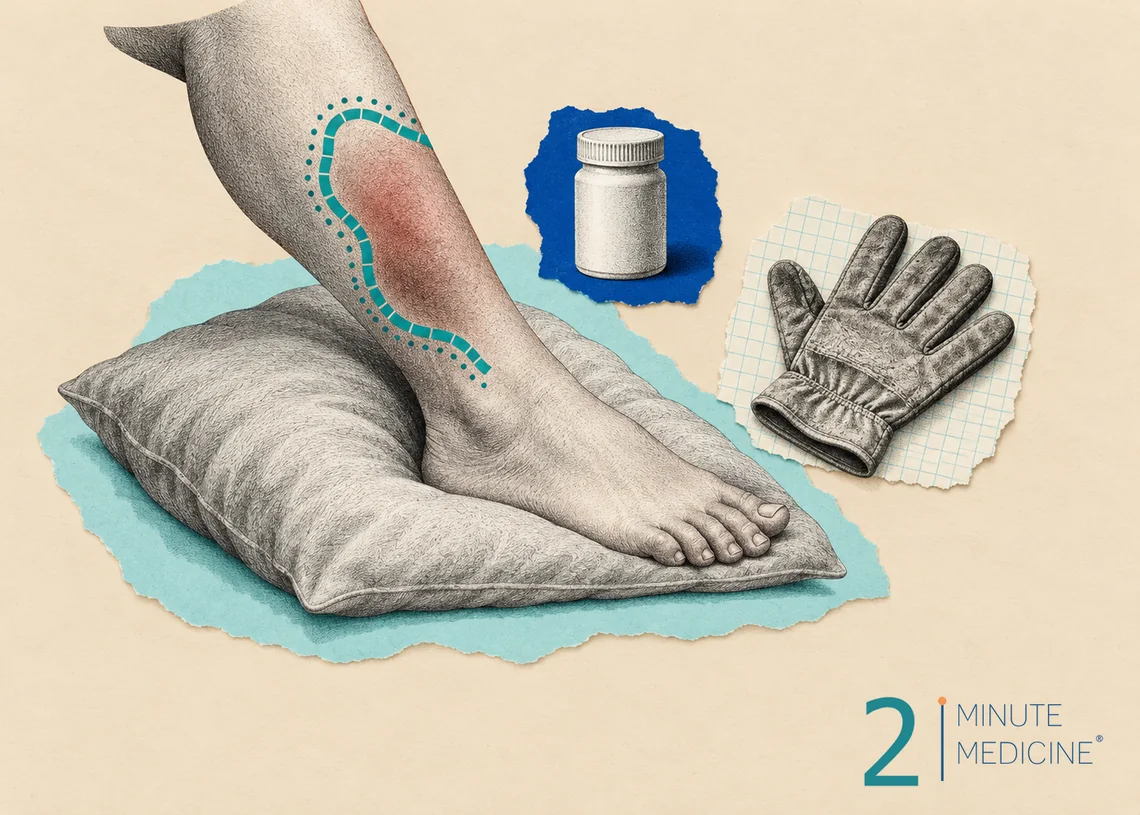
Cellulitis is a bacterial infection of the deeper layers of the skin and the fat just beneath it. It causes a warm, swollen, tender area that spreads, most often on a lower leg, though it can also affect the hands, fingers, arms and face. It usually starts when germs get in through a break in the skin. Antibiotics cure most cases, but cellulitis can spread quickly, so see a doctor the same day if you think you have it.
Key points
- Strep and staph bacteria cause most cases.
- Look for skin that is swollen, warm, painful and spreading, often with fever or chills.
- On darker skin, the area may look purple, brown or gray more than red.
- Most people get better with antibiotic pills and by raising the affected limb.
- Treating athlete’s foot, dry cracked skin and leg swelling helps stop it from coming back.
What causes cellulitis
Bacteria normally live on the skin without causing harm. When the skin barrier breaks, they can get into the deeper layers and multiply. The usual culprits are Streptococcus (strep) and Staphylococcus aureus (staph), including a drug-resistant type called MRSA.
Germs can get in through:
- Cuts, scrapes, burns and surgical wounds
- Insect or animal bites
- Cracked skin between the toes from athlete’s foot
- Very dry skin, eczema or other rashes
- Ulcers or sores on the legs or feet
You are more likely to get cellulitis if you have:
- Swollen legs from poor vein circulation or lymphedema (fluid buildup after lymph nodes are damaged or removed)
- Diabetes or a weak immune system
- Obesity
- Had cellulitis before
Cellulitis symptoms
- An area of skin that is swollen, tight, warm and tender, often with a blurry edge
- Redness on lighter skin. On brown or black skin, it may look darker, purplish or hard to see, so warmth and swelling are key clues.
- Spreading over hours to days
- Fever, chills and feeling unwell
- Skin that looks pitted, like orange peel
- Blisters, or red streaks leading away from the area
Cellulitis almost always affects one side. Red, swollen skin on both legs is more often caused by something else, such as poor circulation, a skin reaction or fluid buildup. A form of cellulitis closer to the skin’s surface, called erysipelas, has a raised, sharp edge and often affects the face or legs.
How it’s diagnosed
A doctor can usually tell by looking at and feeling the skin. They may draw around the edge of the affected area with a pen, so you both can see if it is spreading or shrinking.
Tests are often not needed. Your doctor may order:
- Blood tests if you have a fever or seem very unwell
- A swab of any pus, to find the germ and the best antibiotic
- An ultrasound to look for a hidden pocket of pus (abscess) or a blood clot in the leg, which can look similar
How cellulitis is treated
Antibiotics
Most people take antibiotic pills, such as cephalexin, at home. If MRSA is a concern, for example when there is pus, doctors may use other antibiotics such as doxycycline or trimethoprim-sulfamethoxazole. Treatment often lasts 5 to 10 days. Take every dose, even after you feel better.
You may need to stay in the hospital for antibiotics through a vein if:
- You have a high fever, low blood pressure or confusion
- The infection spreads quickly or doesn’t improve with pills
- You have a weak immune system
- The infection is near your eye
Draining pus
Yellow or white pus from a wound or a tender lump means a pocket of pus (abscess) has formed. A doctor will open and drain it. This is often the most important part of treatment.
Home care
- Raise the affected limb above the level of your heart as much as you can. This reduces swelling and helps healing.
- Rest, and drink plenty of fluids.
- Take acetaminophen or ibuprofen for pain and fever if your doctor says it’s OK.
- Keep any wound clean and covered.
- Treat athlete’s foot or other skin problems on the same limb.
Recovery
Fever and pain should ease within 1 to 3 days. The redness may look a little bigger on the first day of treatment before it starts to shrink. This is common. Swelling and skin color changes can take a few weeks to fade, and the skin may peel as it heals.
Lowering your risk
- Clean cuts and scrapes with soap and water, and cover them.
- Treat athlete’s foot and keep the skin between your toes dry.
- Moisturize dry, cracked skin.
- Control leg swelling with compression stockings and by raising your legs.
- If you have diabetes, check your feet every day.
- Wear gloves for gardening and shoes outdoors.
If cellulitis keeps coming back, your doctor may suggest taking a low-dose antibiotic for months to prevent it.
When to see a doctor
- A warm, swollen, painful patch of skin that is spreading
- Fever along with a skin wound or sore
- No improvement after 2 to 3 days of antibiotics
Get emergency care if:
- The area spreads very fast, or pain is far worse than the skin looks
- The skin turns dusky, purple or black, blisters, or becomes numb
- You have a high fever, confusion, a racing heart or feel faint
- You have swelling around an eye, pain when moving the eye or vision changes
These can be signs of a deeper, more dangerous infection.
Common questions about cellulitis
Is cellulitis contagious?
Usually not. Cellulitis is an infection under the skin, so it doesn’t spread through normal contact. Pus from an open wound or abscess can carry bacteria, including MRSA, to other people. Keep wounds covered, wash your hands, and don’t share towels or razors until it heals.
What causes cellulitis around the eye?
Cellulitis around the eye (periorbital cellulitis) often starts from a bug bite, a scratch, a stye or a sinus infection. It is most common in children and causes a swollen, red or dark eyelid. Pain when moving the eye, bulging or vision changes mean the infection may be deeper and needs emergency care.
What is pelvic cellulitis?
Pelvic cellulitis is an infection of the tissue around the uterus, not the skin. It can follow childbirth, a cesarean section, a hysterectomy or another procedure in the pelvis. Symptoms include fever, lower belly pain and tenderness. It is treated with antibiotics, often through a vein in the hospital.
Questions to ask your doctor
- How will I know the antibiotic is working?
- Do you think the infection is from strep, staph or MRSA?
- Should the area be drained?
- What caused the infection, and how can I prevent another?
- When should I come back if it isn’t getting better?
Learn more
- Cellulitis (MedlinePlus, U.S. National Library of Medicine)
- Cellulitis (DermNet)
This guide is general information and doesn’t replace advice from your own doctor. Last updated October 2026.
RelatedReports








 Get the app