

Patient Basics: Hemorrhoids
Hemorrhoids (piles) are swollen veins in the lower rectum or around the anus. They can itch, ache, or bleed bright red blood when you pass stool. They’re very common, and most get better with softer stools and simple care at home. Any rectal bleeding should still be checked by a doctor, because other conditions can cause it too.
Key points
- Straining on the toilet, constipation, pregnancy and sitting for a long time all raise the pressure on these veins.
- Internal hemorrhoids often bleed but rarely hurt. External ones can itch and become painful.
- More fiber, more fluids and less time on the toilet are the first treatment.
- If home care doesn’t help, a doctor can shrink or remove hemorrhoids in the office or with surgery.
- Don’t assume bleeding is from hemorrhoids. Dark blood, heavy bleeding or a change in bowel habits needs a prompt visit.
Internal and external hemorrhoids
Everyone has pads of blood vessels lining the anal canal. They help seal it shut and control stool. When these pads swell and stretch, they’re called hemorrhoids.
- Internal hemorrhoids form inside the rectum, where there are few nerves that sense pain. They tend to bleed. Larger ones can bulge out of the anus during a bowel movement (prolapse) and then slip back in, or need to be pushed back.
- External hemorrhoids form under the skin around the anus. They can itch or ache. If a blood clot forms inside one (a thrombosed hemorrhoid), it can turn into a hard, bluish, very painful lump.
When a clotted hemorrhoid heals, it may leave a small flap of loose skin called a skin tag.
What causes hemorrhoids
- Straining to pass hard stool
- Long-term constipation or diarrhea
- Sitting on the toilet for long stretches, for example while reading or using a phone
- Pregnancy and childbirth
- Obesity
- Heavy lifting
- A low-fiber diet
- Getting older, as the tissue that supports the veins weakens
Symptoms
- Bright red blood on the toilet paper when you wipe, on the stool or in the toilet bowl
- Itching or irritation around the anus
- Aching or discomfort, especially when sitting
- A soft lump at the anus that may come and go (a prolapsed hemorrhoid)
- A feeling that you haven’t fully emptied your bowel
- Mucus on the toilet paper
Sudden, severe pain with a firm lump usually means a clot in an external hemorrhoid.
How they’re diagnosed
A doctor can usually see external hemorrhoids by looking. For internal ones, they gently check inside the rectum with a gloved finger, then may look with a short, lighted tube called an anoscope. These exams are quick and only mildly uncomfortable.
Bleeding can also come from a small tear in the anus (fissure), inflammation of the bowel, polyps or colorectal cancer. Your doctor may suggest a colonoscopy if you’re 45 or older, have a family history of colon cancer, or have other warning signs such as weight loss or low iron.
Hemorrhoid treatment
Care at home
- Soften your stools. Eat more fruit, vegetables, beans and whole grains, or take a fiber supplement such as psyllium. Drink plenty of water.
- Don’t strain or linger. Go when you feel the urge, and get up once you’re done. Raising your feet on a small stool can make it easier to pass stool.
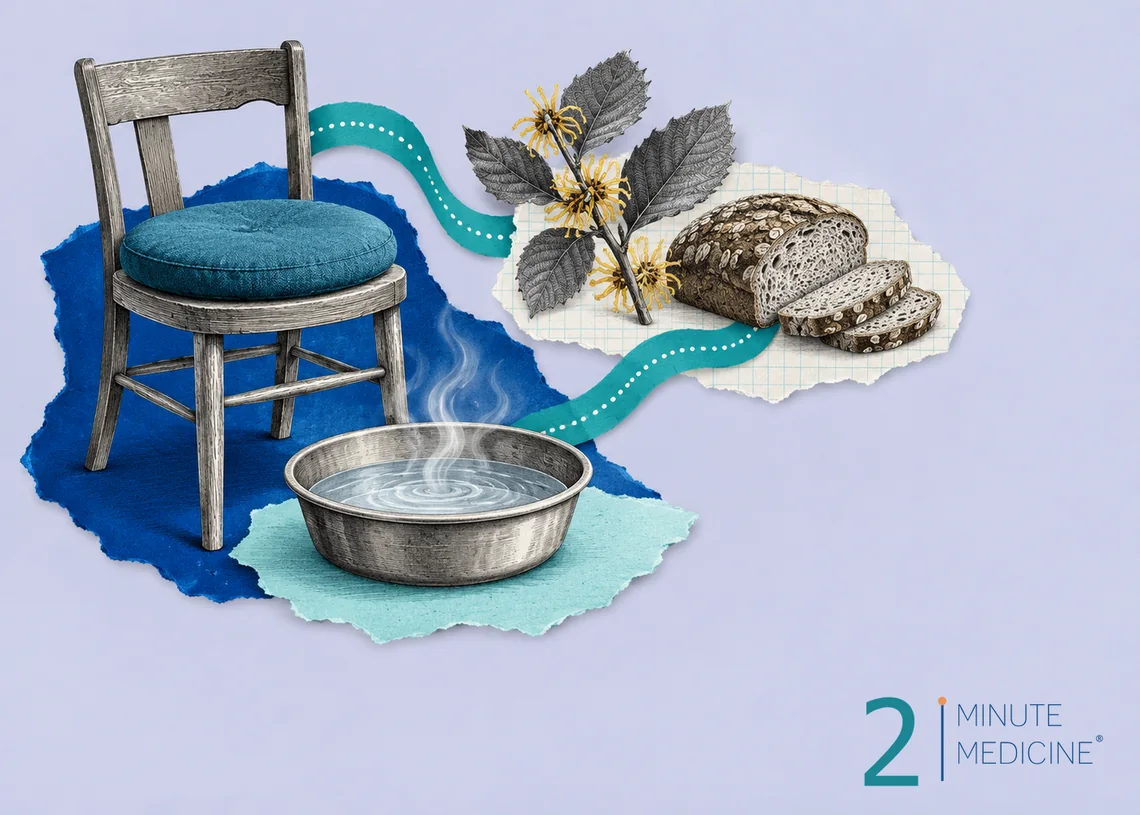
- Take warm baths. Sit in a few inches of warm water for 10 to 15 minutes, a few times a day. A shallow basin that fits over the toilet seat (a sitz bath) works well.
- Use soothing products. Witch hazel pads, numbing creams with lidocaine, and hydrocortisone creams can ease itching and swelling. Use hydrocortisone for no more than a week unless your doctor says otherwise, because it can thin the skin.
- Keep the area clean and dry. Rinse with water or use plain, unscented wipes, and pat dry. Scented wipes and harsh soaps can make itching worse.
- Ease the pain with acetaminophen or ibuprofen, and a cold pack wrapped in a cloth.
Symptoms often settle within a week. A clotted external hemorrhoid usually shrinks over one to two weeks.
Office treatments
For internal hemorrhoids that keep bleeding or bulging, a doctor may suggest:
- Rubber band ligation. A tiny band is placed around the base of the hemorrhoid. It cuts off the blood supply, and the hemorrhoid falls off within about a week. This is the most common office treatment.
- Sclerotherapy. A chemical solution is injected to shrink the hemorrhoid.
- Infrared coagulation. A beam of light or heat scars the tissue so the hemorrhoid shrinks.
If a clotted external hemorrhoid is very painful and it’s been only a day or two, a doctor can numb the area and remove the clot through a small cut.
Surgery
Large hemorrhoids, or ones that keep coming back, may need an operation. A hemorrhoidectomy removes them and works best long term, but recovery can be painful for a couple of weeks. Other operations staple the tissue back into place or tie off the arteries that feed the hemorrhoid. These tend to hurt less afterward but are a little more likely to need repeat treatment.
Lowering your risk
- Make fiber-rich foods part of every meal.
- Drink enough fluids through the day.
- Stay active. Exercise keeps the bowel moving.
- Limit time on the toilet to a few minutes, and leave your phone outside.
- Treat constipation or diarrhea early.
When to see a doctor
- Rectal bleeding for the first time, or bleeding that keeps happening
- Blood that’s dark red or maroon, or stools that are black
- Bleeding along with a change in bowel habits, belly pain or weight loss
- A lump that’s very painful or won’t go back in
- No improvement after a week of home care
Get emergency care for heavy rectal bleeding, or bleeding with dizziness, a racing heart or fainting.
Common questions about hemorrhoids
Can a hemorrhoid be a hard lump?
Yes. A hard, painful lump at the anus is usually an external hemorrhoid with a blood clot inside (a thrombosed hemorrhoid). It can be the size of a pea or a grape and look bluish. The pain is worst for the first two or three days, and the lump shrinks over one to two weeks.
Why do I keep getting hemorrhoids?
Usually because the pressure on the veins hasn’t changed. Ongoing constipation, straining, long sits on the toilet, heavy lifting and pregnancy all keep pushing on them. More fiber and water and shorter toilet visits are the best way to stop them coming back. If they still return, ask about office treatment.
How do you get rid of internal hemorrhoids?
Start with softer stools from fiber and water, and stop straining. Most small internal hemorrhoids settle within a week or two. If they keep bleeding or bulging out, rubber band ligation in the office is the most common fix, and surgery is kept for large ones.
Is bright red blood when I wipe always from hemorrhoids?
No. Hemorrhoids are the most common cause, but a small tear in the anus, bowel inflammation, polyps and colorectal cancer can also bleed. See a doctor about any new rectal bleeding, especially if you’re 45 or older or it keeps happening.
Questions to ask your doctor
- Are these internal or external hemorrhoids?
- Could anything else be causing the bleeding?
- Do I need a colonoscopy?
- Which creams or pads are safe for me to use, and for how long?
- If home care isn’t enough, which treatment would you suggest?
Learn more
- Hemorrhoids (National Institute of Diabetes and Digestive and Kidney Diseases)
This guide is general information and doesn’t replace advice from your own doctor. Last updated October 2026.






 Get the app