

Patient Basics: Implantable Cardioverter Defibrillator (ICD)
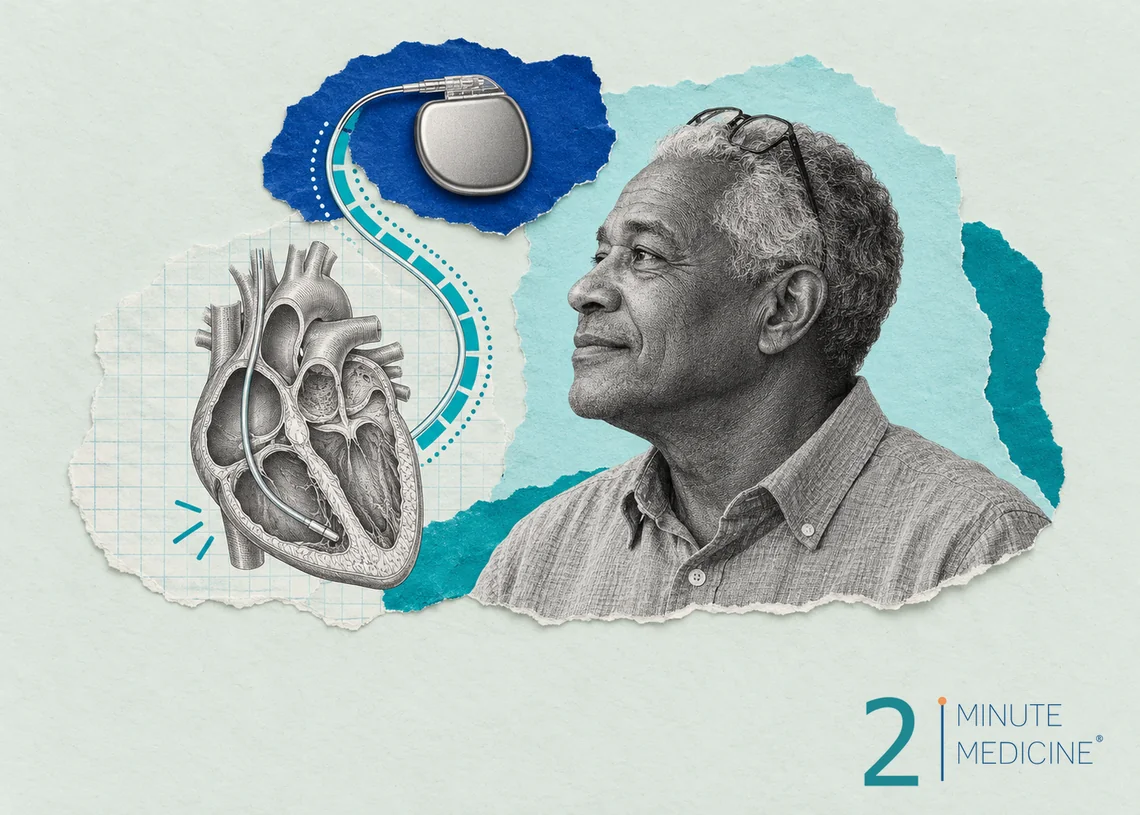
An implantable cardioverter defibrillator (ICD) is a small battery-powered device placed under the skin of the chest that watches every heartbeat and can stop a dangerous fast rhythm. It’s for people at high risk of sudden cardiac arrest. Putting one in is usually a short procedure with no more than an overnight hospital stay, and most people go back to normal activities within a few weeks.
Key points
- The device stops dangerous fast rhythms in the heart’s lower chambers with quick pacing or a shock.
- It also works as a pacemaker if the heart beats too slowly.
- A shock feels like a sudden kick in the chest. One shock and you feel fine: call your doctor. Several shocks, or you feel unwell: call 911.
- For about a month after placement, avoid lifting your arm high on the device side.
- Most household electronics are fine. Keep phones and magnets about 6 inches from the device.
What an ICD does
An ICD has two parts. The generator is a sealed metal case, a little smaller than a deck of cards, that holds the battery and a tiny computer. One or more thin, insulated wires (leads) run from it through a vein into the heart.
The ICD checks every beat. If the lower chambers (ventricles) start racing, a rhythm called ventricular tachycardia, the device first sends a burst of fast, painless pacing beats to bring the rhythm back in line. If that doesn’t work, or if the ventricles start quivering instead of pumping (ventricular fibrillation), it gives a shock within seconds. Resetting the rhythm with a shock is called cardioversion or defibrillation, which gives the device its name. The ICD also stores a record of each event for your care team.
Types of ICD
- Single-chamber: one lead in the right ventricle. Model names often end in VR.
- Dual-chamber: leads in the right atrium and right ventricle, which helps with pacing and telling rhythms apart. Model names often end in DR.
- Biventricular (CRT-D): adds a lead for the left ventricle, so both sides of a weak heart pump in step. It’s used for some people with heart failure.
- Subcutaneous ICD: the lead runs under the skin beside the breastbone, with nothing inside the heart or veins. It can shock but can’t pace a slow heartbeat for long.
- Extravascular ICD: a newer design with the lead placed just under the breastbone, outside the heart and veins.
Some people wear a defibrillator vest for a few months first, such as after a heart attack, to see if the heart recovers.
Who needs an ICD
- People who survived a cardiac arrest or a dangerous fast rhythm from the ventricles
- People whose heart pumps weakly, usually an ejection fraction of 35% or less, despite at least a few months of the right medicines
- Some people with inherited heart conditions, such as hypertrophic cardiomyopathy, long QT syndrome or Brugada syndrome, who have high-risk features
Your cardiologist will weigh the benefits and risks with you.
Getting an ICD
Before
You’ll have an ECG, an echocardiogram and blood tests. Ask which medicines to pause, especially blood thinners and diabetes medicines. You usually won’t eat or drink after midnight.
During ICD placement
The procedure is done in a heart rhythm lab by an electrophysiologist. You’ll get medicine to make you sleepy, or general anesthesia, plus numbing medicine. The doctor makes a cut about 2 to 3 inches long below the collarbone, usually on the left. Using X-ray to guide them, they thread the leads through a vein into the heart, test them, and attach them to the generator. The generator is tucked into a pocket under the skin, and the cut is closed. It usually takes 1 to 2 hours.
After
Many people go home the same day or the next morning, after a chest X-ray and a device check. The area will be sore and bruised for several days.
Recovery
- Keep the cut clean and dry as instructed, and don’t use lotion on it until it heals.
- For about 4 to 6 weeks, don’t raise the arm on the device side above your shoulder, and avoid heavy lifting, pushing or pulling. This lets the leads settle in place.
- Ask your doctor about driving. Rules depend on why you got the ICD, whether you’ve had a shock, and your state’s laws. Commercial driving usually isn’t allowed.
What an ICD shock feels like
Most people describe a sudden thump or kick in the chest that lasts a second. Some feel dizzy just before it. Someone touching you may feel a tingle but won’t be hurt.
- One shock, and you feel fine afterward: sit down, rest, and call your doctor’s office the same day.
- Two or more shocks in a day, or a shock with chest pain, shortness of breath or confusion, or fainting: call 911.
Sometimes an ICD shocks when it doesn’t need to, for example during atrial fibrillation or because of a lead problem. Your team can change the settings to prevent this. Anxiety after a shock is common, and counseling can help.
Living with an ICD
- Checkups. A bedside monitor or phone app usually sends device data to your clinic. You’ll also have in-person checks once or twice a year.
- Battery. It typically lasts about 5 to 10 years. Replacing the generator is a shorter procedure, and the leads are usually left in place.
- Phones and magnets. Keep cell phones, earbuds and their cases, and other magnets at least 6 inches from the device. Don’t carry a phone in a shirt pocket over it.
- Other electronics. Household appliances are fine. Avoid arc welding and large industrial magnets.
- Medical tests. Many newer ICDs allow MRI scans with special preparation. Always tell doctors and dentists that you have an ICD.
- Travel. Carry your device ID card. Walking through airport security is fine. Ask that a handheld wand not be held over the device.
- Activity. Most people can exercise. Avoid contact sports that could hit the device.
If your health changes a lot, the shock function can be turned off without surgery. It’s worth talking about this with your doctor and family ahead of time.
Possible risks
- Bleeding or a pocket of blood under the skin
- Infection, which may mean removing the whole device
- A lead moving out of place or wearing out over time
- A collapsed lung, or rarely, injury to the heart or a blood vessel
- Shocks that aren’t needed
When to call your doctor
- Fever, or redness, swelling or fluid at the cut
- Swelling in the arm on the device side
- One shock and you feel fine
- Hiccups that won’t stop, which can mean a lead is out of place
Call 911 for more than one shock, a shock with chest pain or trouble breathing, or fainting.
Common questions about ICDs
What does ICD stand for in medical terms?
In heart care, ICD means implantable cardioverter defibrillator, a device that stops dangerous fast heart rhythms. In medical records and billing, ICD usually means International Classification of Diseases, the system of diagnosis codes such as ICD-10. The context tells you which one is meant.
Is an ICD the same as a pacemaker?
No, though they look alike and are placed the same way. A pacemaker treats a heartbeat that’s too slow. An ICD watches for dangerous fast rhythms and can shock the heart back to normal. Every ICD can also pace a slow heartbeat, so many people with one don’t need a separate pacemaker.
Can you live a normal life with an ICD?
Most people can. After the first month of healing, you can usually work, travel, exercise, have sex and use household electronics. You’ll need regular device checks and some care around strong magnets and phones. Driving rules depend on your situation, so ask your doctor.
Questions to ask your doctor
- Why do you recommend an ICD for me?
- Which type of ICD is best for me?
- When can I drive, lift and exercise again?
- What should I do if I get a shock?
- How will my device be monitored at home?
Learn more
- Implantable cardioverter-defibrillator (MedlinePlus, U.S. National Library of Medicine)
- Defibrillators (National Heart, Lung, and Blood Institute)
This guide is general information and doesn’t replace advice from your own doctor. Last updated October 2026.
RelatedReports






 Get the app