

Inhaled corticosteroids do not improve outcomes in sickle cell disease patients without asthma
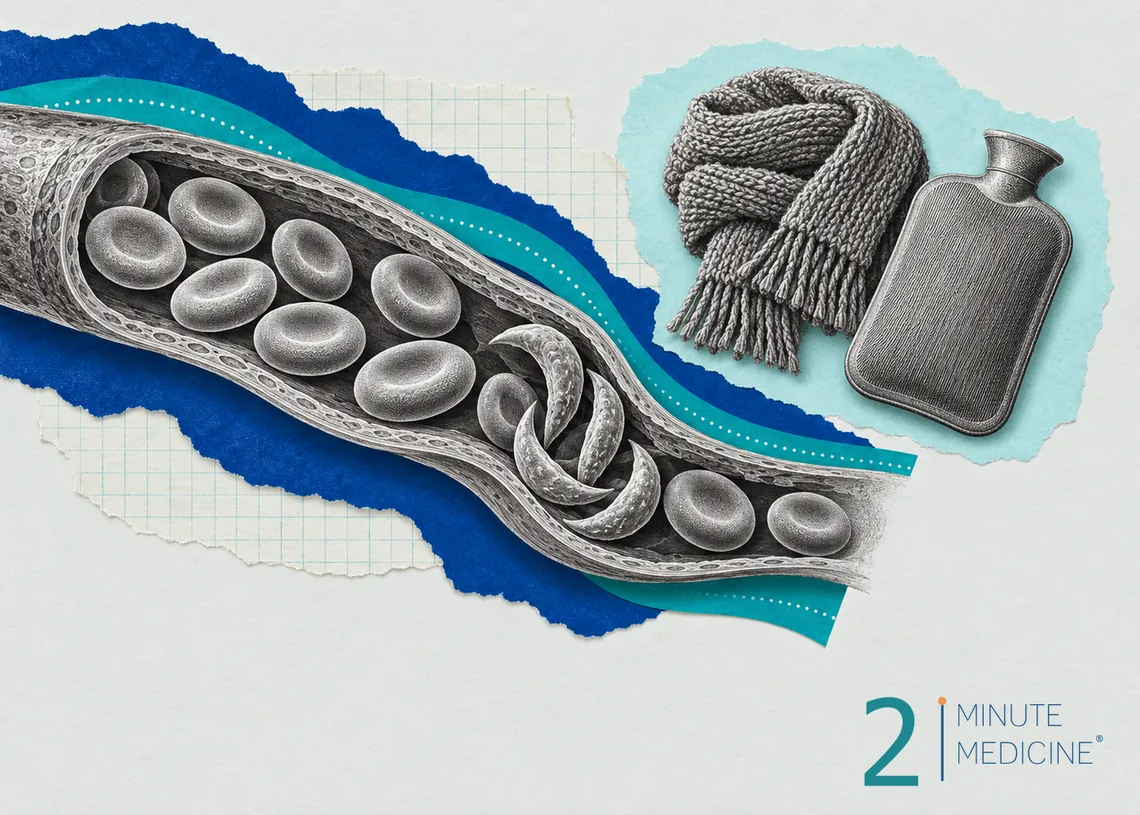
1. In this randomized clinical trial of sickle cell disease (SCD) adult patients without asthma, use of inhaled mometasone was associated with increased soluble vascular cell adhesion molecule 1 (VCAM-1) levels, a marker of SCD severity.
2. Secondary outcomes, such as laboratory results, functional outcomes, patient-reported outcomes, and healthcare utilization, generally favored the placebo group, although results were not statistically significant.
Evidence Rating Level: 1 (Excellent)
Study Rundown: Sickle cell disease (SCD) patients with episodic cough and wheeze (ECW) without asthma have high rates of pain episodes and acute chest syndrome (ACS). A previous study demonstrated that mometasone, an inhaled corticosteroid, improved daily pain and reduced vascular cell adhesion molecule 1 (VCAM-1) levels in patients with SCD and ECW without asthma. This study aimed to further examine potential efficacy of mometasone as a management and treatment option for SCD patients with ECW without asthma. Across 77 SCD (HbSS or HbSβ⁰) patients recruited between December 2018 and May 2022, soluble VCAM-1 levels increased by 42% in patients receiving mometasone compared to the placebo group, as well as 0.23% increase in intracellular adhesion molecule 3 (ICAM-3) levels. There were no significant differences in markers of hemolysis (plasma-free hemoglobin, lactate dehydrogenase, total bilirubin, reticulocyte count). Rates of healthcare service utilization (emergency department visits, acute visits for pain, hospital and intensive care unit admissions, and ACS) were higher in the mometasone group, although differences were not significant, either. A higher number of serious adverse events occurred in the mometasone group compared with the placebo group; eight episodes of ACS occurred in five individuals in the mometasone group, and four episodes of ACS occurred in three individuals in the placebo group. The single-center nature of the study limits its generalizability, and the small sample size decreases its statistical power. In addition, the study was not powered to detect differences in clinical outcomes. Lastly, spirometry and sputum collection were discontinued during the COVID-19 pandemic due to restrictions. Overall, the results of this study do not offer conclusive evidence on whether mometasone is effective for symptom management of SCD patients without asthma, and patients should use caution when considering mometasone.
Click here to read the study in JAMA Network Open
Relevant Reading: Effects of corticosteroids in patients with sickle cell disease and acute complications: a systematic review and meta-analysis
In-Depth [randomized controlled trial]: This study was a single-center, triple-blind , placebo-controlled, phase 2 randomized clinical trial. Participants were recruited from December 2018 to May 2022, with eligibility criteria being 18 years or older, had SCD (HbSS or HbSβ⁰), did not have asthma diagnosis or did not use asthma medications, were not currently experiencing pain/respiratory symptoms, reported ECW in the past 2 months, and were already taking maximum dose of hydroxyurea barring contraindication. Patients were ineligible if they were pregnant/planning a pregnancy, had more than 15 ED visits in the past year for SCD pain, discharged from a hospital in the past week, or screened positive for possible undiagnosed asthma. Once enrolled into the study, participants were randomly assigned to the treatment group (n=40) or the placebo group (n=37). The treatment group received 220 μg of inhaled mometasone furoate dry powder once daily; the placebo group received a matching placebo inhaler. Participants were followed up at weeks 0, 8, 16, 32, 40, 48, and 52; medications were started at week 0 and ended at week 48. At each visit, serum and sputum were collected, spirometry testing was administered, inhaled nitric oxide levels were measured, a Six-Minute Walk Test was completed, and patient-reported health-related quality of life data were collected. However, sputum collection and spirometry were halted during the COVID-19 pandemic. The primary endpoint was the VCAM-1 levels; participants in the treatment group had a 42% increase in VCAM-1 levels compared to placebo at the end of the study. Post hoc analysis showed no significant changes in VCAM-1 levels by week 8 (inhaled mometasone vs placebo: 0.001% [95% CI, −8.40% to 8.41%] vs −5.55% [95% CI, −16.48% to 5.37%]; p=0.40), but by week 16, soluble VCAM-1 levels had risen significantly in the inhaled mometasone group vs. the placebo group (3.6% [95% CI, −8.92% to 16.12%] vs −16.1% [95% CI, −27.25% to −4.97%]; p=0.02). Secondary endpoints included other markers of immune system activation/inflammation, hemolysis, organ damage, rates of healthcare service utilization, and rates of serious adverse events. ICAM-3, a marker of inflammation, showed an increase of 0.23% (95% CI, 0.019%-0.45%; p=0.02) in the mometasone group. Rates of healthcare utilization were higher across the board for the mometasone group, but results were not statistically significant (emergency department visit: rate ratio [RR], 1.59; 95% CI, 0.81-3.12; p=0.18, acute visits for pain: RR, 1.71; 95% CI, 0.64-4.56; p=0.28), hospital admissions (RR, 1.21; 95% CI, 0.52-2.81; p=0.65), intensive care unit admissions (RR, 2.18; 95% CI, 0.20-24.03; p=0.52), and ACS (RR, 4.27; 95% CI, 0.82-22.38; p=0.09). Higher numbers of adverse events occurred in the mometasone group (n=15) compared with the placebo group (n=11); eight episodes of ACS occurred in five individuals in the mometasone group, and four episodes of ACS occurred in three individuals in the placebo group. No deaths occurred during the study. Markers of hemolysis or organ damage were not significantly different between the groups. Overall, the results of this study suggested that 48 weeks of inhaled mometasone was not effective for symptom management of patients with SCD and episodic cough and wheeze without asthma.
Citation: Curtis SA, McCuskee S, Cohen RT, Liu A, Probst MA, Mitchell T, et al. Inhaled Corticosteroids and Sickle Cell Disease Severity in Adults Without Asthma: A Randomized Clinical Trial. JAMA Netw Open. 2026 Nov 2;9(11):e2642232. doi: 10.1001/jamanetworkopen.2026.42232. PMID: 43007675.
© 2026 2 Minute Medicine, Inc. All rights reserved. No part of this article may be reproduced, distributed or transmitted in any form or by any means without the prior written permission of 2 Minute Medicine, Inc. To license this content, contact 2 Minute Medicine, Inc. This article is for informational and educational purposes only; it is not medical advice and does not replace the judgment of a qualified healthcare professional.
Image: © 2 Minute Medicine
RelatedReports








 Get the app